
The famed R&B song, which was written by artist Percy Mayfield and recorded, of course, by the legendary American songwriter, Ray Charles, was a No. 1 hit in the United States upon its release in 1961.
The tune also won the Grammy Award for Best Rhythm and Blues Recording and has gone on to become one of Charles’ longest-lasting hits.
Videos by American Songwriter
Written by Mayfield, who first recorded an a cappella rendition in 1960 as a demo to send to music executive Art Rupe, the track raised Charles’ eyebrows enough for him to get it on wax. Charles recorded it with The Raelettes vocalist Margie Hendrix backing him up.

Take a listen here before we keep going. (It’s so good!)
Charles’ track hit the No. 1 spot for two weeks on the Billboard Hot 100, beginning on October 9, 1961. Originally, the tune came out as the B-side to Charles’ single, “The Danger Zone.” Both were released in August 1961.
Above all else, the track is just supremely catchy. It’s one of those songs that could be on the old game show, Name That Tune because, within the first two or three notes, it’s immediately recognizable. That descending blues piano line, one note after the other—you know what’s about to hit your eardrums. And then the horns come in, too, doubling the line. Chef’s kiss!
For Charles, who died in 2004 at the age of 73, many decades after the song was released, the content of the track was too good to pass up. Long had he created a reputation for himself as a lover of all things, um … pleasurable. So, to write a song that calls that out and calls out his necessary departure was an admirable, self-aware move that helped secure his legend.
While domestic arguments certainly aren’t the goal for any partnership, this song certainly is the anthem for them. The chorus, most often sung by women, begins:
Hit the road Jack and don’t you come back
No more, no more, no more, no more
Hit the road Jack and don’t you come back no more
What you say?
Hit the road Jack and don’t you come back
No more, no more, no more, no more
Hit the road Jack and don’t you come back no more
Then Charles comes in:
Old woman, old woman, don’t treat me so mean
You’re the meanest old woman that I’ve ever seen
I guess if you said so
I’ll have to pack my things and go (that’s right!)
More chorus, and then Charles responds:
Now baby, listen baby, don’t ya treat me this way
‘Cause I’ll be back on my feet some day
The lead female voice sings:
(Don’t care if you do ’cause it’s understood)
(You ain’t got no money, you just ain’t no good)
Then Charles:
Well, I guess if you say so
I’ll have to pack my things and go
In the end, Charles, the singer, is not let back home. And the song ends with him begging and pleading for his chance to be let back in. It’s a cathartic tune and one that has lasted in the proverbial consciousness of American—and global song appreciators—for decades and should continue to do so for much more time come.
That’s right!
More Features
-
NEW YORK – SEPTEMBER 1958: Pianist Bob Gaudio, drummer Tom Austin, tenor sax Larry Qualiano, singer Dianne Costello and guitarist Billy Dalton of the rock and roll band "The Royal Teens" pose for a portrait in September or October of 1958 at the Brooklyn Paramount in New York, New York. (Photo by PoPsie Randolph/Michael Ochs Archives/Getty Images) -
Left to right: Robert Plant, John Paul Jones and Jimmy Page, of British heavy rock group Led Zeppelin, performing at Earl's Court, London, May 1975. The band were initially booked to play three nights at the venue, from 23rd to 25th May, but due to public demand, two more concerts were later added, for 17th and 18th May. Total ticket sales were 85,000. (Photo by Michael Putland/Getty Images) -
American country comedienne Minnie Pearl (1912 – 1996) performing, circa 1970. (Photo by Silver Screen Collection/Getty Images) -
NEW YORK – JUNE 11: Rock and roll band Steppenwolf (L-R Jerry Edmonton, John Kay and Michael Monarch) perform at Steve Paul's The Scene nightclub on June 11, 1968 in New York, New York. (Photo by Don Paulsen/Michael Ochs Archives/Getty Images) -
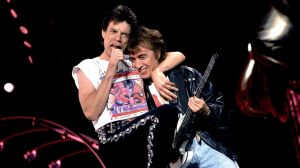
British musicians Mick Jagger (left) and Bill Wyman of the Rolling Stones performs on stage during the band's 'Steel Wheels' tour, late 1989. (Photo by Paul Natkin/Getty Images) -
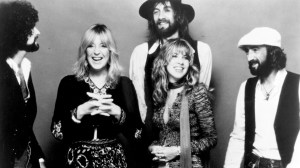
CIRCA 1977: (L-R) Lindsey Buckingham, Christine McVie, Mick Fleetwood, Stevie Nicks and John McVie of the rock group 'Fleetwood Mac' pose for a portrait in circa 1977. (Photo by Michael Ochs Archives/Getty Images) -
ATURDAY NIGHT LIVE — Episode 19 — Pictured: Singer Ric Ocasek of musical guest The Cars performs on May 12, 1984 — Photo by: NBC/NBCU Photo Bank -
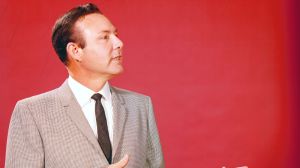
UNSPECIFIED – CIRCA 1970: Photo of Jim Reeves Photo by Michael Ochs Archives/Getty Images