
Neil Young has made a point personally and professionally to do exactly what he wants to do and nothing he doesn’t, and his decision to leave Buffalo Springfield was no less headstrong. Although the “Godfather of Grunge” quit and returned to the California folk-rock band multiple times, one of his most notable and damaging departures preceded Buffalo Springfield’s performance on The Tonight Show with Johnny Carson.
Indeed, most musicians in the 1960s would have considered landing a spot on Johnny Carson’s show to be their “big break.” However, Neil Young is not like most musicians.
Videos by American Songwriter
Neil Young Left Buffalo Springfield Before TV Performance
Buffalo Springfield ushered in a new wave of folk-rock psychedelia with their 1966 smash hit, “For What It’s Worth.” The band was comprised of Neil Young, Bruce Palmer, Dewey Martin, Stephen Stills, and Richie Furay. From the mid-to-late 1960s, these five musicians were at the top of the California music scene. But in 1968, just before Buffalo Springfield was to perform on The Tonight Show with Johnny Carson, Young left the band.
“I didn’t want to do The Johnny Carson Show,” Young later explained. “I thought it was belittling to what Buffalo Springfield was doing. That audience wouldn’t have understood us. We’d have been just a f***in’ curiosity to them.”
Bandmate Stills explained Young’s abrupt departure as a consequence of the band falling “prey to the whole entourage system. Everybody had to have his own entourage, and it got stupid. We forgot the initial brotherhood.”
Young’s explanation shared similar sentiments to Stills, though the “Heart of Gold” singer’s reasoning was far more personal. “I just couldn’t handle it towards the end,” Young said. “It wasn’t me scheming on a solo career. It wasn’t anything but my nerves. Everything started to go too f***ing fast. It was going crazy, joining and quitting, joining and quitting again. I began to feel like I didn’t have to answer or obey anyone. I needed more space. That was the big problem.”
The Canadian Songwriter Had No Qualms With Quitting
After Buffalo Springfield disbanded, Neil Young and Stephen Stills were free to pursue music however they pleased. So were David Crosby, who had recently left the Byrds, and Graham Nash, who had left the Hollies. This ragtag bunch of freelance musicians joined forces to create the supergroup Crosby, Stills, Nash, and Young, but not even an eponymous folk monolith like CSNY could keep Young from his usual quitting routine.
Young’s relationship with CSNY was as hot and cold as his connection to Buffalo Springfield. Even when Young performed with only one or two musicians at a time, like when he embarked on a national tour with Stills, the “Old Man” singer was liable to leave at the drop of a hat. (On that tour, Young quit while the musicians were en route to another gig, delivering his breakup message via telegram.)
While Young’s habit of quitting bands whenever the whim struck him garnered him a tempestuous reputation, the Canadian singer-songwriter defended his stance during a 2021 appearance on the Howard Stern Show. “I [want] to focus on what the songs were about and the look on people’s faces who came to see us and how we connected to them. To me, that was the Holy Grail. It was all that mattered to me. Once we started drifting away from that, I was gone. I didn’t think about it from the standpoint of anybody else; I can’t do what I do if I don’t act like I believe.”
Photo by Jeff Hochberg/Getty Images
More Features
-
CIRCA 1959: Country singer Kitty Wells poses for a portrait holding an acoustic guitar in circa 1959. (Photo by Michael Ochs Archives/Getty Images) -
1978 AMERICAN MUSIC AWARDS – Broadcast Coverage – Airdate: January 16, 1978. (Photo by ABC Photo Archives/Disney General Entertainment Content via Getty Images) STEVIE WONDER, WINNER FAVORITE SOUL/R&B MALE ARTIST -
CIRCA 1973: Singer/songwriter Dan Fogelberg poses for a portrait in circa 1973. (Photo by Michael Ochs Archives/Getty Images) -
American country music singer and guitarist Loretta Lynn smiles as she looks at an unidentified person off-camera who holds a microphone, late 1970s. (Photo by Hope Powell/Hulton Archive/Getty Images) -
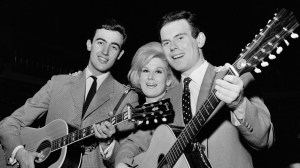
The Springfields: Tom Springfield, Dusty Springfield, and Mike Hurst -
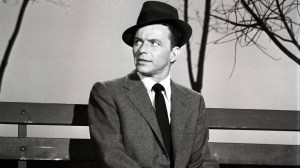
THE FRANK SINATRA SHOW – Airdate: November 8, 1957. (Photo by ABC Photo Archives/Disney General Entertainment Content via Getty Images) FRANK SINATRA -
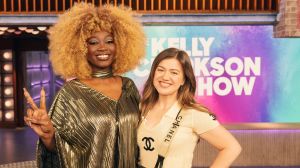
THE KELLY CLARKSON SHOW — Episode A5137 — Pictured: (l-r) Alexia Jayy, Kelly Clarkson — (Photo by: Weiss Eubanks/NBCUniversal via Getty Images) -
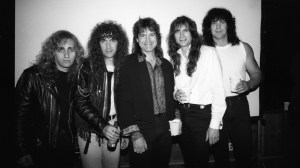
CHANHASSEN, MN – MAY 31: Rock band Alias poses for a portrait at Paisley Park Studios in Chanhassen, Minnesota on May 31, 1990. (Photo by Jim Steinfeldt/Michael Ochs Archives/Getty Images)