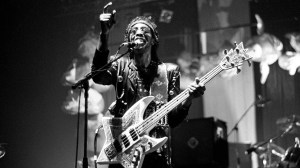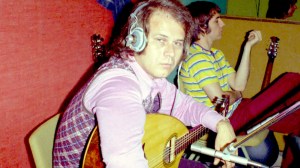
As the creative functions of artificial intelligence continue to expand and evolve, we’re finding more and more ways to reconnect with long-lost musicians—and as of November 2024, that includes the ability to have Grateful Dead founder and guitarist Jerry Garcia read books, articles, poetry, and PDFs to you.
AI technology in the creative world is nothing new. Artists use artificial intelligence to create album covers, incorporate dead musicians into live performances, create musical collaborations that never happened, and more. As a musical artist myself, all of these developments have given me an uneasy feeling about the impending doom, er, future, of art consumption.
Videos by American Songwriter
But something about imagining Jerry Garcia’s disembodied voice reading the latest, hottest audiobook to someone via their smartphone just made the pit in my stomach grow ten times its usual size.
Jerry Garcia Can Now Read To You via AI
Nearly three decades after Grateful Dead founder and guitar icon Jerry Garcia died, his estate partnered with Eleven Labs to recreate the late musician’s voice using artificial intelligence. Through Eleven Labs’ ElevenReader app, users can have an AI-generated Garcia read them anything from audiobooks to PDFs to articles to poetry in up to 32 different languages.
“By bringing voices like Jerry Garcia to our platform, we’re not just enhancing our app—we’re creating new ways for people to experience content,” Dustin Blank of ElevenLabs told Billboard, per Variety. “This project has been a labor of love. We couldn’t be happier with how Jerry’s voice has been recreated. It’s a beautiful thing to bring his sound to life again for both longtime fans and a new generation of listeners.”
Garcia’s voice is one of many that AI has “brought back from the dead.” From Judy Garland to Sir Laurence Olivier to Tupac to Michael Jackson, the tech side of the art industry has been looking for ways to bring artists from the past into the present using various AI-generated techniques. But if you’ll forgive the Jurassic Park reference, is this another one of those instances where “scientists were so preoccupied with whether or not they could, they didn’t stop to think if they should?”
Maybe We Should Let Dead Artists…Stay Dead?
There’s no denying the scientific feat of bringing dead artists, musicians, and other public figures back from the grave via artificial intelligence. Just imagine telling someone from 1985 that this would one day be a common practice. They’d likely look at you like you were bonkers, and could you blame them? It’s an impressive accomplishment. But from an artist’s perspective, I wonder if it’s one we should continue pursuing after realizing we could.
Beyond the potential safety concerns of increasingly convincing—but still fake—AI content, there is something…sacrilege…about bringing these public figures back from the dead. Jerry Garcia pre-recording a collection of books before his 1995 death and his estate releasing them decades later is one thing. Having him read you a PDF of, let’s say, a microwave owner’s manual just seems gratuitous and unnecessary. If listening to Jerry Garcia’s voice is something you feel like doing, why not do it in the way that he originally intended—through his music? Why must we pull his sonic likeness from the ether so he can read you the Harry Potter series, too?
As more and more aging artists realize that their legacy is at risk of becoming immortalized through AI, some are outright requesting that their likeness isn’t used after they’re gone. Garcia, of course, never got that same privilege. Maybe we should be giving him (and other artists who died before AI became a reality) the benefit of the doubt that they might not be okay with it, either?
Photo by Clayton Call/Redferns
More Features
-
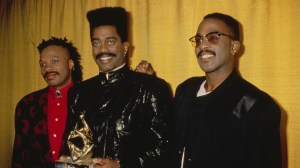
American funk band Cameo (American singer Charlie Singleton, American singer and musician Larry Blackmon, and American singer and musician Tomi Jenkins) in the press room of the 1987 Soul Train Music Awards, held at the Santa Monica Civic Auditorium in Santa Monica, California, 23rd March 1987. Cameo won the awards for 'Album of the Year (Group, Duo, or Band)' for 'Word Up!' and 'Best Single (Group, Duo, or Band)' for 'Word Up'. (Photo by Vinnie Zuffante/Getty Images) -
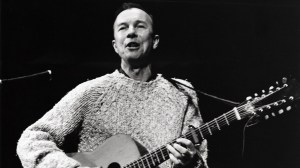
UNITED KINGDOM – JANUARY 01: Photo of Pete SEEGER; Pete Seeger performing on stage at a Paul Robeson benefit concert (Photo by Brian Shuel/Redferns) -
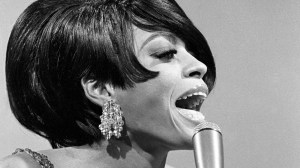
UNSPECIFIED – CIRCA 1970: Photo of Diana Ross Photo by Michael Ochs Archives/Getty Images -

The British singer Kate Bush poses for a photo shoot. Great Britain, 1980 (Photo by Angelo DeligioMondadori via Getty Images) -
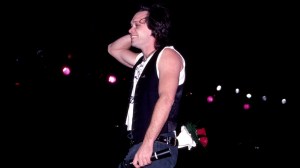
American Rock musician John Cougar (born John Mellencamp) performs onstage at Byrne Arena (later known as Meadowlands Arena), East Rutherford, New Jersey, October 7, 1982. It was the first concert of the 'American Fool' tour, in support of headliners Heart. (Photo by Gary Gershoff/Getty Images) -
Photo via NBC/Getty Images