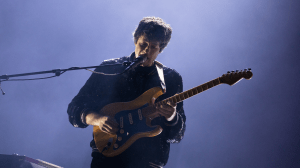
Written by Susan Riley
More than 100,000 items from the Bob Dylan Archive now officially have a home at the Bob Dylan Center in Tulsa, Oklahoma, where a VIP grand opening kicked off Thursday (May 5) with a series of events.
Videos by American Songwriter
Donors, partners, members, and the media are the first to tour the three-story, 29,000-square-foot facility designed by Olson Kundig next to the Woody Guthrie Center at 116 E. Reconciliation Way, before opening to the public on May 10.
What’s inside? It might be easier to say what could not be found inside the tower of Dylan. The collection from his prolific career could well stretch to the heavens like Babel. It is no less a musicologist’s dream, an artist’s inspiration to create, and a fan’s playground.
Items include Dylan’s hand-written lyrics and manuscripts, notebooks scribbled with his musings, phrases and drawings, sheet music, recordings and concert footage, documentaries, videos, photos, his visual art and sculptures, articles, correspondence, memorabilia, musical instruments, his clothing, typewriters and even the contents of his wallet, which included Johnny Cash’s phone number in Tennessee.
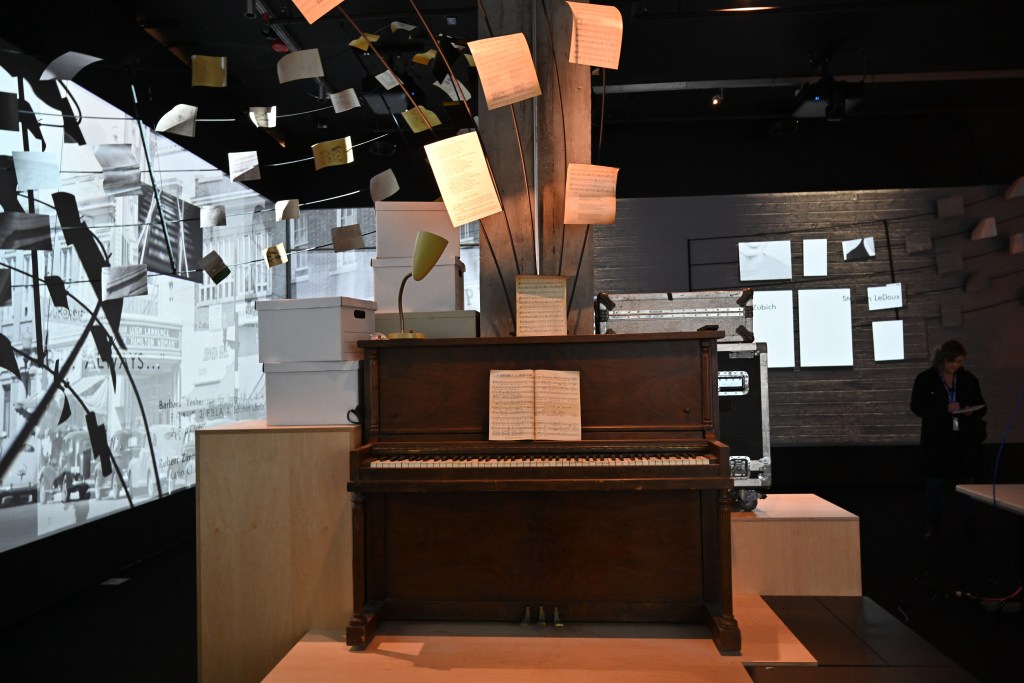
A self-guided, self-paced audio tour provides the soundtrack to a thoughtful curation of mixed media telling the story of how Robert Zimmerman, a restless boy from Hibbing, Minnesota, became Bob Dylan. Visitors can dive deep into Dylan’s life as an evolutionary artist influenced at the start by his fateful discovery of Woody Guthrie and his journey to meet him on the East Coast where he was able to show the ailing folk legend that he knew all his songs.
A photo of the coffee house Dylan played at the University of Minnesota in April 1961 is followed by a story later that year in the New York Times that captures the quick rise of folk music’s “bright new face.” There are photos of Dylan living in Greenwich Village, hanging out with folk singers and beat poets, recording his first album at Columbia Records at just 20 years old, and a letter Dylan wrote for Broadside magazine on his bewilderment at becoming famous, where he concludes:
“everybody plays in my world
ain’t nobody first second third or fourth
everybody shoots at the same time
an ringers don’t count
an everybody wins
an nobody loses
cause everybody lives an breathes”
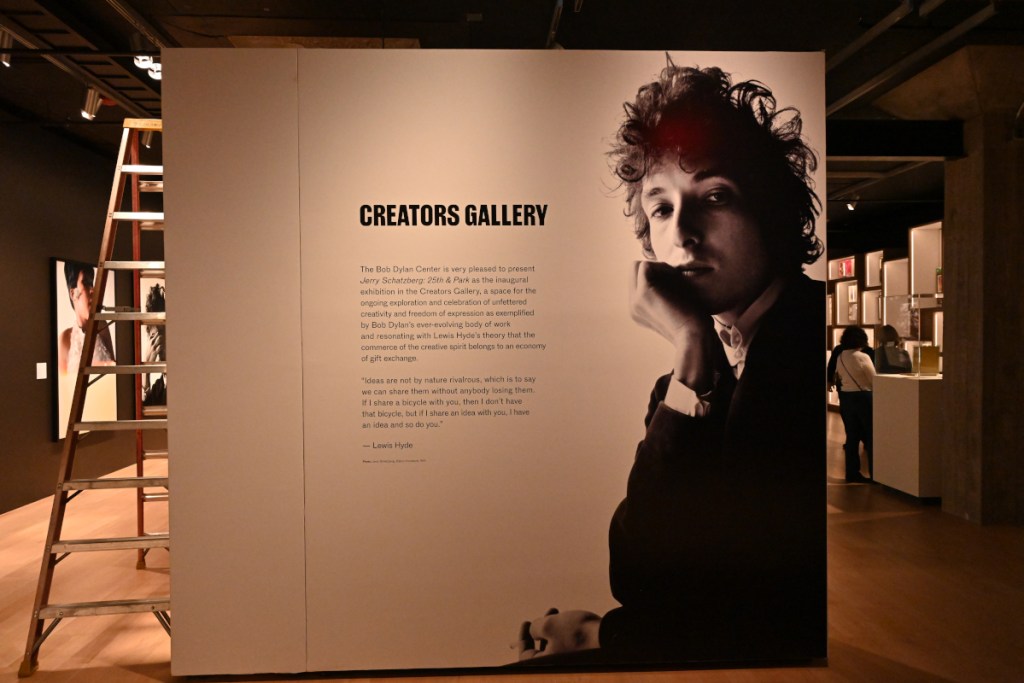
Other milestones of his career are highlighted throughout, such as the moment an unwavering Dylan went electric despite criticism from the folk community. A British music magazine quotes the man of few words heavily during a performance at Albert Hall as he dressed down an English audience and vowed never to perform in England again in response to criticism that his songs were “drug songs.”
There are all the many stories behind the tours, albums and songs including the circus atmosphere of the Rolling Thunder concert tour in 1975 where Dylan, in white makeup, first performed “Tangled Up in Blue,” and songs like “Hurricane” about the wrongful conviction of boxer Rubin Carter. One can also see the many revisions he made to his songs in his own handwriting like “Brownsville Girl,” which is co-wrote with playwright Sam Shepard.
Also chronicled is the quieter yet creative period in Woodstock where he raised a family and stopped touring for a time, the concert in Bangladesh in 1971, his gospel period from 1978-83, Live Aid and Farm Aid, the Traveling Wilburys, tours with the Grateful Dead, Tom Petty and Patti Smith, a rare MTV unplugged appearance, the Presidential Medal of Freedom in 2012 and the Nobel Prize for Literature in 2016.
A 55-seat screening room features unreleased works, including a previously unknown film soundtrack, as well as revered performances of “Ballad of Hollis Brown,” “Blowin’ in the Wind,” and other stage-filmed productions where you can watch Dylan and Joan Baez harmonizing cheek-to-cheek. Nearby, a touchscreen wall of album covers allows visitors to pull up songs and information from Dylan’s mass catalog.
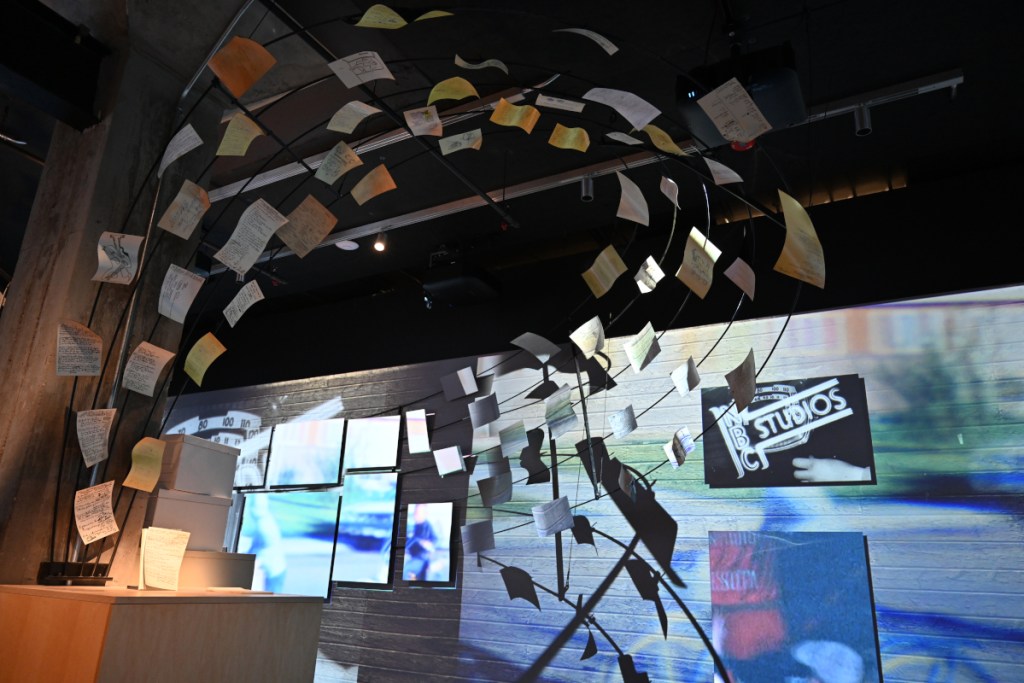
The Church Studio exhibit, sponsored by the recording studio Leon Russell put on the map in Tulsa, recreates a control room where visitors can listen to conversations from five real recording sessions as band members worked with Dylan on arrangements for his lyrics, chords, and melodies. The “Like a Rolling Stone” track highlights Al Kooper, who improvised an organ riff for the song. Though it was not technically perfect, Dylan insisted on turning it up. Kooper, who was a guitarist, said that was the day he became an organ player; the riff became the song’s signature sound and a copied style.
“I Want You,” “Knockin’ on Heaven’s Door,” “Most of the Time,” and “Mississippi” are the other tracks. Musicians describe what it was like to work with him and the arduous journey it sometimes took to bring a song to album. It was said that Dylan’s instrument of choice was actually the band.
Dylan, who will turn 81 later this month, was not present for the grand opening, but did perform at the Tulsa Theater last month as part of his Rough and Rowdy Ways Worldwide Tour. The grand opening includes nightly performances from three of his fellow artists, Mavis Staples, Patti Smith, and Elvis Costello, and after-hours concerts each night.
Dylan sold his archives to the charitable George Kaiser Family Foundation of Tulsa which is part of the American Song Archives and now operates both the Woody Guthrie Center and the Bob Dylan Center. While some were perplexed by the safekeeping site of these treasures in Tulsa, Dylan has indicated he is happy with it and gospel legend Mavis Staples, who started the party right with a performance at the historic Cain’s Ballroom in his honor Thursday night, seemed so as well.
“I’ve been over to the Dylan Center, Bob Dylan Center. Oh my God, oh man, I had the best time today,” she said between songs. “I put on Bobby doing ‘Tangled in Blue,’ then I came out of there, I took a ride over to the church, The Church Studio. I had a good time, it made me want to move to Tulsa.”
Dylan Featured photo by Gus Stewart/Redferns via Getty Images
More Features
-
Tommy Shaw of Styx at the International Ampitheater in Chicago Illinois , November 24, 1979 . (Photo by Paul Natkin/Getty Images) -
Janis Joplin, who released one of the best songs of 1971 -
American Country musician Randy Travis plays guitar as he performs onstage at an unspecified nightclub, Dallas, Texas, December 13, 1986. (Photo by Paul Natkin/Getty Images) -
Benson Boone Photo by Shayden Schoonover -
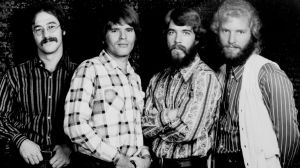
UNSPECIFIED – CIRCA 1970: Photo of Creedence Clearwater Revival Photo by Michael Ochs Archives/Getty Images -
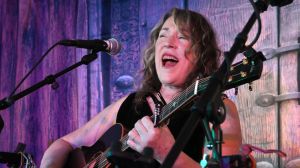
NEW ORLEANS, LOUISIANA – Beth Nielsen Chapman performs in Cantina Navarro at the 2026 Folk Alliance International in the Sheraton Hotel on January 24, 2026, in New Orleans, Louisiana. (Photo by R. Diamond/Getty Images) -
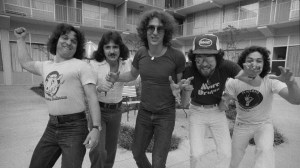
American rock group Blue Oyster Cult, USA, 30th July 1976. Left to right: bassist Joe Bouchard, guitarist Donald 'Buck Dharma' Roeser, keyboard and guitar player Allen Lanier, singer Eric Bloom and drummer Albert Bouchard. (Photo By Michael Putland/Getty Images