
Long before she would perform “We Shall Overcome” in front of 250,000 people at the historic March on Washington in August 1963, Joan Baez was laying the groundwork for her career as a political and social activist as a student at Palo Alto High School. Baez was a junior in high school in 1958, a time when “civil defense and disaster preparedness drills” were practiced to teach students and their families how to stay safe during potential air raids. Most students would begrudgingly go along with the process without asking questions. But Joan Baez wasn’t like most students.
The night before the drill, Baez looked through her father’s physics books, which she used to confirm that no one would actually have time to prepare if the U.S.S.R. launched missiles at the West Coast. So, when the time came for students to “evacuate” the following day, Baez stayed in her seat. Her teacher sent her to the principal’s office, where Baez identified herself as a “conscientious objector” and read quietly until the end of the normal school day at 3 pm. The Palo Alto Times wrote a story about Baez’s one-woman protest the next day—the first of many in which she would participate.
Videos by American Songwriter
“I don’t think half of them knew what it was about, even though the teachers explained it,” Baez said of the drill. “The students just looked at the drill as a chance to get out of school early. I don’t see any sense in having an air raid drill. I don’t think it’s a method of defense. Our only defense is peace.”
Joan Baez Had Officially Held Her First (Of Many) Non-Violent Protests
Joan Baez might carry the title of the de facto Queen of Folk Music. But first and foremost, she has committed herself to pursuing social and political justice more than fame and celebrity. She rose to stardom in the 1960s not only for her inimitable singing and adherence to the folk music tradition but also for her activist work. It was in this socio-political arena where Baez and Bob Dylan began working together, although Dylan would continue down a more music-oriented path in the years to come (much to Baez’s chagrin).
According to Baez, she knew the kind of person she wanted to be—and for which values she wanted to fight—as a young girl. “I had a social awareness by the time I was ten,” Baez told Dan Rather. “We were living in the Middle East, and my family, my parents, would have gatherings over there of my father’s students who could come and spend silent time and then talk about what was going on in the world. But I heard discussions of violence, non-violence, by the time I was ten. By the time I was 13, I think I had pretty much made my mind up that there was only one way to be and that was really to reject violence on as many levels as possible.”
Baez said that when she arranged her first sit-in at Palo Alto High School, “[The principal] didn’t know what on earth I was doing. But it was sort of an education for all of us to discuss it, the secretaries and the vice principal. I was sure of myself.” Baez has continued to educate and advocate through music, art, and political action ever since.
Photo by Paul Liebhardt/Corbis via Getty Images
More Features
-
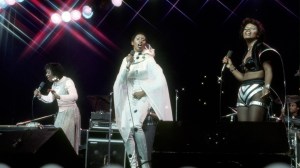
LOS ANGELES – CIRCA 1974: Singer Patti Labelle performs onstage with her group LaBelle in circa 1974 in Los Angeles, California. Also in the group were former Bluebelles, Sarah Dash and Nona Hendryx. (Photo by Michael Ochs Archives/Getty Images) -
Photo by Rick Diamond/WireImage for BMI Nashville -
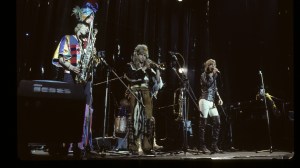
IN CONCERT – From London – Shoot Date: June 13, 1974. (Photo by ABC Photo Archives/ABC via Getty Images) BLUE SWEDE -
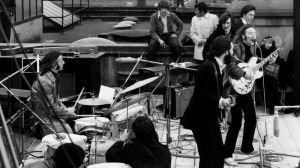
30th January 1969: British rock group the Beatles performing their last live public concert on the rooftop of the Apple Organization building for director Michael Lindsey-Hogg's film documentary, 'Let It Be,' on Savile Row, London, England. Drummer Ringo Starr sits behind his kit. Singer/songwriters Paul McCartney and John Lennon perform at their microphones, and guitarist George Harrison (1943 – 2001) stands behind them. Lennon's wife Yoko Ono sits at right. (Photo by Express/Express/Getty Images) -
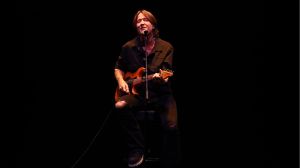
MELBOURNE, AUSTRALIA – Keith Urban performs during "The Songs Of John Farnham, The Celebration Concert" at Rod Laver Arena on September 20, 2026 in Melbourne, Australia. (Photo by Graham Denholm/Getty Images) -
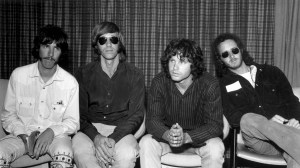
3rd September 1968: American psychedelic rock band, The Doors during a press conference at Heathrow Airport, London (left to right); drummer John Densmore, keyboard player Ray Mansarek, vocalist Jim Morrison (1943 – 1971) and guitarist Robby Krieger. (Photo by Central Press/Getty Images) -
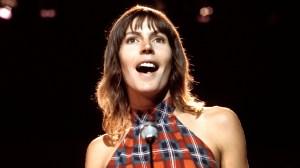
Australian-American singer, songwriter, author, actress, and activist Helen Reddy (1941 – 2020), 1975. (Photo by Tony Russell/Redferns) -
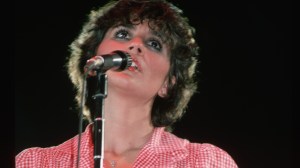
Original Caption) : 1980-Pop singer Linda Ronstadt is shown singing on stage, holding the microphone stand. She wears a gingham shirt with a tie front and askirt with flowers on it in this waist-up portrait. (Photo by Lynn Goldsmith/Corbis/VCG via Getty Images)