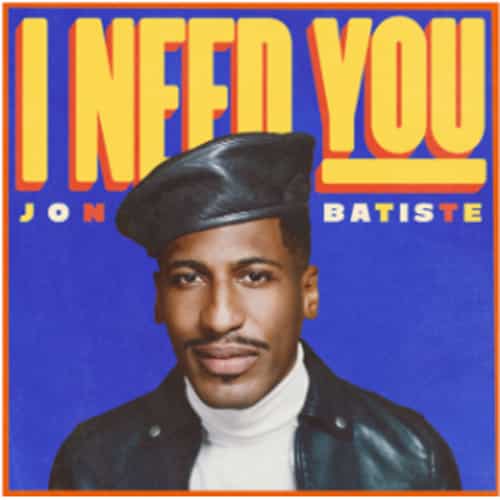
You may recognize Jon Batiste from the popular program, The Late Show with Stephen Colbert. Batiste, is of course, the band leader for the TV show. Or you may recognize Batiste (and his animated hands) from his work on the new Pixar movie, Soul, for which he both scored and composed songs. Batiste, who was born and raised in New Orleans, made his professional bones in New York City beginning at the age of seventeen. On March 19th, though, Batiste will release his latest LP, We Are, featuring the current single, “I Need You,” out now.
American Songwriter caught up with Batiste to talk about discovering music in the Crescent City, the story behind his new album and Soul and what he loves most about making music.
Videos by American Songwriter
American Songwriter: When did you first find music? When did music enter your world in a significant way as a young person?
Jon Batiste: Oh, well, I was one of those kids who grew up in the environment where you have music for everything. In Louisiana and then New Orleans in particular, there’s music as a part of the fabric of everyday life. There’s a unifying power to music as a part of the fabric of everyday life. You’ve got music for when people are born, for when someone passes away. Music for dances, music on Sunday, music for certain foods and certain types of social engagements. So, I was just always around it.
AS: As you got older, how did you begin to invest in it more?
JB: I realized I had a talent for it and I started to really study and I had a lot of really great mentors. And then I moved to New York when I was 17-years-old and I started my band. What ended up happening was I would play these street performances. We would play in venues, but we would also do a lot of street performances and really curated performances where we would take over a loft or some public space or we’d rent out a warehouse. We would set up different stations throughout the warehouse or loft and we would have a small audience of a couple hundred people. And we would invite, just by word of mouth, friends of ours to come and perform. That’s really when I first started to find my voice in terms of investing in a sound and a philosophy of music.
AS: May I ask what that philosophy is?
JB: At the time and still today, I call it ‘social music.’ It’s the idea of creating love, joy and community wherever you are through musical exchanges and that the blueprint of these kinds of exchanges are found in the centuries of history in humankind before music was commodified. Primarily, within the last couple hundred years, even just the last one-hundred-and-fifty years, to be exact, music morphed into a form of commodified entertainment. But for many thousands of years before that, music was a part of everyday life as ritual music, sacred music and all things in between. I think that the 2.0 version of all of that music is ‘social music.’ How does that get reflected in a contemporary environment? That is kind of my whole belief in a nutshell.
AS: What was it like for you coming up in New Orleans and what about that city do you carry with you today?
JB: Well, being a kid from New Orleans and having traveled all across the world and seeing a lot of different cultures and being a musician, you get to be sort of a cultural anthropologist, you just jump in. I find that New Orleans is unique in all world cultures because New Orleans has this thing about it that has maintained its authenticity since the founding of the American experiment. This feel of cultures coming together and that resulting in all these different blends of architecture and food and dances and music and cultural traditions, whether it’s Mardi Gras, whether it’s this aspect of musical family, which is a big part of my upbringing, coming from one of the most prominent musical families of the city. New Orleans is something that I think is still slept on. People think it’s just a party town a lot of the time. But really, it’s the soul of America. It’s the manifestation of what America aims to be, this true melting pot. It doesn’t have to look like it looks in New Orleans with that blend of cultures, but the ideal of what New Orleans and America represents is something I take with me in everything that I do.
AS: When you got the job on The Late Show with Stephen Colbert, how did that impact your confidence or your creativity?
JB: I think about music in the context of life experiences. I’m a very associative thinker in terms of my creative process. I like to multitask when I’m creating a body of work. I like to constantly be stimulated to the point where I feel almost over-stimulated. And then I like to let those different influences melt into each other. Being on The Late Show has definitely given me such a constant stimulus of world events, topical news and things that we cover all the time. Seeing so many different people, meeting so many different people and being a part of this kind of epicenter, of this late night institution, and on top of that, developing and growing as an artist in my own right. In fact, I set up a recording studio at The Late Show in my dressing room, which is where I basically—during this time of the last year and a half—did The Late Show while also finishing my album in my dressing room and scoring Pixar’s Soul.
That’s just to give you a picture of the type of multitasking that’s a big part of my process. The Late Show has really been at the center of that, being the constant—it’s like a day job for someone.
AS: You have a new solo album, We Are, coming soon. What was the genesis of the record, what were some of your favorite discoveries?
JB: I think that over the years of me being in New York, I still consider myself a young artist. I’m thirty-three, but when I moved I was seventeen. Between seventeen and thirty-three, you learn a lot, you evolve a lot. There’s transmutation that happened to me as an artist, where I took all of these different styles of music and life experiences of being on the road and seeing different people who I’ve admired, and getting a chance to work with them, and doing all different types of projects. I never imaged that I would be in television when I was on the road touring. And I never imagined that I’d be scoring an animated film or that I’d be writing a musical when I started the TV show.
It’s been a really rich experience and this album is the statement of who I’ve become as an artist and also a statement of my view on who we are as America, with the Black American experience at the center of it because of my cultural lineage and heritage. In general, we are. Who are we? We are. We are the ones who actually are in charge of setting up the next generation and this is a very key time for that. Decisions are being made right now and we are at a point where can undergo a great unlearning or we can undergo the same mistakes that we’ve seen in history. So, that’s what We Are really is about.

AS: How about the album’s newest single, “I Need You,” which is out now? You rap on a portion of it, if that’s the proper way to phrase it?
JB: Well, generally I don’t believe in categories of music, because I think that ultimately I’m drawing from life experiences. It’s really true of this album in a way that none of my other albums, up until this point, have keyed in on. And you’ll hear it on this song in particular, and on all the other songs on the record. There’s all different kinds of vocal delivery and different forms of lyric writing and different forms of orchestration and composition. That’s something that I think—it really comes from that moment of processing everything that’s around me and not even thinking about it in terms of genre or category. This song, amongst the eight or nine songs that were the blueprint for the album, were birthed in a six-day intense dressing room recording session.
From the time of that six-day dressing room session, up until the summer of 2020, when I wrapped the album, that eight months was really just coloring in the record with different musicians and different people who I wanted to collaborate with. I wrote a few more songs in that process, but the bulk of the stuff, including “I Need You,” was written in that six-day span. So, I guess, I wasn’t thinking about it. When you’re in a feverish moment of creation, where you’re writing nine or ten songs that end up making an album in a six-day span, it’s not formulaic in that way. It’s just what’s coming out based on all the other things that you’re doing at the time and what’s filtering into the recording process.
AS: As an artist, you seem to embody something outside of commercial music, a sense of authenticity or integrity. Is that something you think about or is it only when people, like me, bring it up to you?
JB: I think that all the things that have been set up to commercialize art and creativity end up being damaging to the artist and, subsequently, to the audience. The artist and the audience have this responsibility to the craft and to be authentic to each other. So, I find that it’s a great complement to hear that because I think that between the audience and the artist, when there’s an honest exchange, then there’s meaningful transformation that occurs. So, it’s one of those things that people are trying to bottle up but I don’t think it’s possible. I strive to maintain a pureness because I do believe that that’s the strongest, most transformational musical exchange that I can have with an audience. That’s what ‘social music’ is really all about. And that’s what making music at its root, for me, is all about. All that stuff is transformational in that it can’t be commodified —you can’t put lightening in a bottle.
And even when it happens, it’s hard to maintain. When some artist has this kind of golden age and they’re at the top of the industry, you always find that there’s a crash or something because it’s just not made to be sustained. It’s made to syphon all of the magic, as much as possible, and it’s insatiable. And then it comes along with all this other stuff that’s not actually productive or about the craft at all. So, I really do think about this a lot and have found that the balance is almost impossible for you to maintain, at the level of purity that I strive for, if you’re too entrenched in the commercial aspects of things. So, you really have to have your line set in your mind and never cross those lines.
AS: I imagine that must be difficult, to be popular, sought after and visible and remain authentic.
JB: Yes. But one of the things that makes you popular is your authenticity [Laughs]. So, it’s a funny paradox.
AS: As you mentioned, you worked closely on Pixar’s Soul. What was that like for you to be so intimately involved?
JB: I felt like it was a really important challenge to rise to the occasion of making a jazz-based, a jazz—not even score, but the performances and score—making those be as true to the magic and discovery of jazz music, and that’s a sacred lineage. Pixar is such a global company that I wanted to make sure that it was as true to that as possible. And they animated my hands— it ended up being, we figured out collectively, the best way for me to have my essence be in the film in some way. So, through the main character, I’m kind of omnipresent in the film in a way that allows for the authenticity of all those performances to be there. That was a real pleasure for me and them to work together on that. I didn’t know if they were going to be down for that, to be honest. It worked out to where they were committed to it, to every aspect of it being as true to the essence of that lineage as possible.
AS: What was 2020 like for you and how are you looking ahead to 2021 now?
JB: If you think about the closeness of a community being severed because of all of the different prescriptive media and politics, that’s something that I’m not sure how we’re going to overcome. You just look at this political season, and you drive around your neighborhood, and if you live in a fairly split sort of community—some people with signs for this candidate and other people with signs for that candidate—the reverberation of how that severs communities is a really interesting thing to think about. So, the first thing I think about is how do we repair that? How do we create trends that are opposite of that sort of community decay? What is the opposite of that? And what are ways that people can do that across the country?
Then I think from a larger perspective of the country and of the last year and of the world, just completely zooming out. I think about natural resources. And music, to me, is a natural resource. It’s something that requires us to invest in the mind. The most precious resources are the human mind and the human soul. If we invest in and educate in the arts and educate in all these different ways of expression through the arts, I think that will pay dividends in different ways. I also think about the climate—the ways that we’re not actually putting the work in to save our planet. It really is something that is much, much more important than the things that we’re fighting over.
Ultimately, I think about that. It’s almost like if we fix the community and the aspects and ways we’re divided in that sense of life, it will reverberate all the way up to saving the planet. Because we’ll be focused on other things, other than what sign you have in your yard or what your thoughts are on this or that political issue or this amendment. It actually is mind-boggling.
AS: What do you love most about music?
JB: That it tells the truth! Besides things of divine nature, the closest that we have in terms of touch and sound and everything that’s on this realm, is music. That’s because it really can’t lie. At it’s purest form, it can’t lie. You can try to manipulate or sell a lie around it, but the expression of being what an artist gives to the people can’t be fabricated in any way.
More Features
-
LONDON, UNITED KINGDOM – JUNE 01: Willie Nelson performs on stage at the Hammersmith Odeon in London, England in June 1982. (Photo by David Redfern/Redferns) -
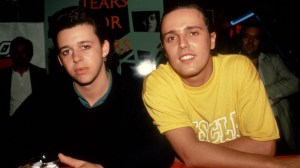
NEW YORK, NY – CIRCA 1985: Roland Orzabal and Curt Smith of Tears For Fears circa 1985 in New York City. (Photo by Robin Platzer/IMAGES/Getty Images) -
UNITED KINGDOM – APRIL 19: ROYAL FESTIVAL HALL Photo of Vashti BUNYAN (Photo by James Emmett/Redferns) -
CIRCA 1975: Country musician Waylon Jennings performs onstage in circa 1975. (Photo by Michael Ochs Archives/Getty Images) -
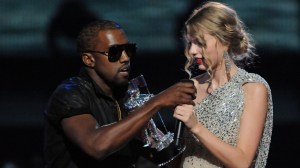
Taylor Swift and Kanye West at the 2009 VMAs -
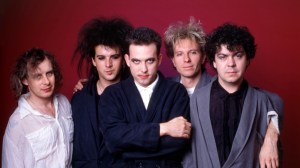
CLARKSTON – JULY 14: Guitarist Porl Thompson, bass player Simon Gallup, musician, songwriter and lead singer Robert Smith, drummer Boris Williams and keyboard player Laurence 'Lol' Tolhurst, all members of the English rock band The Cure, pose for a portrait backstage at the Pine Knob Music Theatre on July 14, 1986, in Clarkston, Michigan. (Photo by Ross Marino/Getty Images)