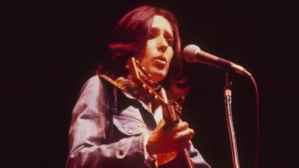

Lewis Watson first picked up a guitar on his sixteenth birthday. Shortly after, he began playing local gigs around England; a resident of Oxford, he would walk out to a different pub every night, attracting gigs with his taciturn guitar lines and palpably sensitive voice.
Now, five years later, he has gained substantial steam as a singer-songwriter, with audiences whispering of his enormous potential as an acoustic guitarist and weaver of words. At the age of nineteen, he was signed to Warner Brother Records, and has since released five EPs, and this june he put out his debut album, The Morning.
With a penchant for poetry, for the rhyme schemes and subject matter of Rudyard Kipling stanzas, and a keen wisdom that stretches beyond that of a typical twenty-one year old, Watson has a cultivated emotive voice. In his young career, he has managed to hit the iTunes Top 10 for all of his EPs, with his debut EP out-selling names such as Adele, Madonna, and Ed Sheeran.
Unexpected artists first sparked Watson’s creativity; Listening to City and Colour, the acoustic side project of Dallas Green from heavy Canadian band Alexisonfire, helped Watson to find his own voice as a singer-songwriter. Though he certainly gains inspiration from the classics, he grew up exposed to a range of Eighties pop sounds, citing Bon Jovi as a household name, rather than the Dylan or Nick Drake.
“People who connect to music — when they hear a song they will relate it to a memory,” Watson says. “I think that really helps the song resonate with somebody, and I don’t have that experience with classic acoustic songwriters. So I can find influence there, but it’s not as strong as with City And Colour, because whenever I hear their songs I distinctly remember where I was when I heard it first and scrambling to my guitar to try to learn it as soon as possible.”
In some ways Lewis Watson is a confessional writer. With a remarkable sense of empathy, he crafts his songs with uninhibited emotion. “Songwriting to me has always been a bit therapeutic,” he says. “I don’t really like talking about how I’m feeling — I do everything that I can to avoid conflict – and I think that songwriting for me is just a way to make it a bit ambiguous.” His vulnerability and humor extends far enough to have named his last EP It’s Got Four Sad Songs On It BTW, a brilliant showcase of sincerity strung together by a forlorn voice and a moody guitar. In fact, it took a large dose of stepping outside the box to craft “Into The Wild,” a fast, upbeat song that has become Watson’s biggest hit. “People who have heard my music before probably realize I’m just a really sad guy,” he laughs, showcasing the duplicity of his self-deprecating charm.
A humble sense of humor helped Watson gain his phenomenal social media following, counting 70,000 twitter followers, 100,000 Facebook likes, and over 5 million YouTube hits. “I started off at the right time, really early on in YouTube’s history when there weren’t many people doing covers,” Watson says. “I think that helped people find my music.” He doesn’t hold back on sharing his ideas or feelings on these platforms, which he points to as a reason for these gigantic statistical successes. Bashful yet confident, the earnestness in Watson’s personality shines through, and people connect to his honesty and charisma over social media.
His debut album features a collection of songs written over three years’ time. With five producers working on it, they abandoned the idea of building an in-studio album within one compressed chunk of time. “It was over two years which was quite nice, because it gave me the luxury of hindsight. I could look back at recordings from a year ago and say that’s not how I want it now.” Though there was an enormous amount of pressure in this unorthodox approach to make three years of material sound cohesive, the album exemplifies the younger singer’s maturity in making music. He doesn’t force himself to write songs that aren’t born out of the organic drive to translate an experience into word and melody.
Watson realizes the wisdom in setting down the pen and paper to experience life, and to then use writing as a catharsis to translate these moments. “Songwriting to me has always been a bit therapeutic,” Watson notes. “I need to be in a certain mood and there’s no telling when it’s going to come up.”
More Features
-

Singer Annabella Lwin of the band Bow Wow Wow backstage at The Channel 1982 in Boston, Massachusetts. (Photo by BC Kagan/Getty Images) -
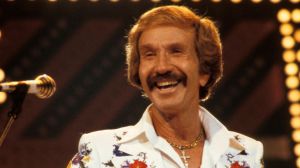
UNSPECIFIED – JANUARY 01: Photo of Marty ROBBINS (Photo by David Redfern/Redferns) -
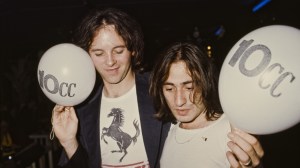
English musicians Eric Stewart (left) and Lol Creme of rock band 10cc holding promotional balloons in New York, October 1975. (Photo by Richard E. Aaron/Redferns/Getty Images) -
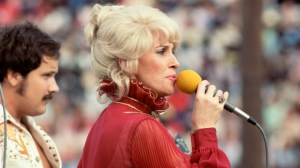
(Original Caption) Famed Country Western singer Tammy Wynette performs at the Huntsville, Texas, State Prison Rodeo. -

THE TONIGHT SHOW WITH JAY LENO — Episode 1599 — Pictured: (l-r) Emily Robison, Natalie Maines, and Martie Maguire of musical guest "Dixie Chicks" performs on May 05, 1999 — (Photo by: NBCU Photo Bank/NBCUniversal via Getty Images via Getty Images) -

AUSTIN, TEXAS = SiriusXM's Town Hall With Don Henley Hosted By Bob Seger At Austin City Limits Live At The Moody Theater In Austin, TX (Photo by Getty Images) -

ME.Reel Big Fish.Video.091598.AS––The Band "Reel Big Fish" is filming a performance video "The Set Up (You Need this)" at the Galaxy in Costa Mesa. Vocalist/Guitarist Aaron Barrett, center wearing the hawaiian shirt. (Shooting Star Productions)Mandatory Credit: Al Schaben/The LA Times