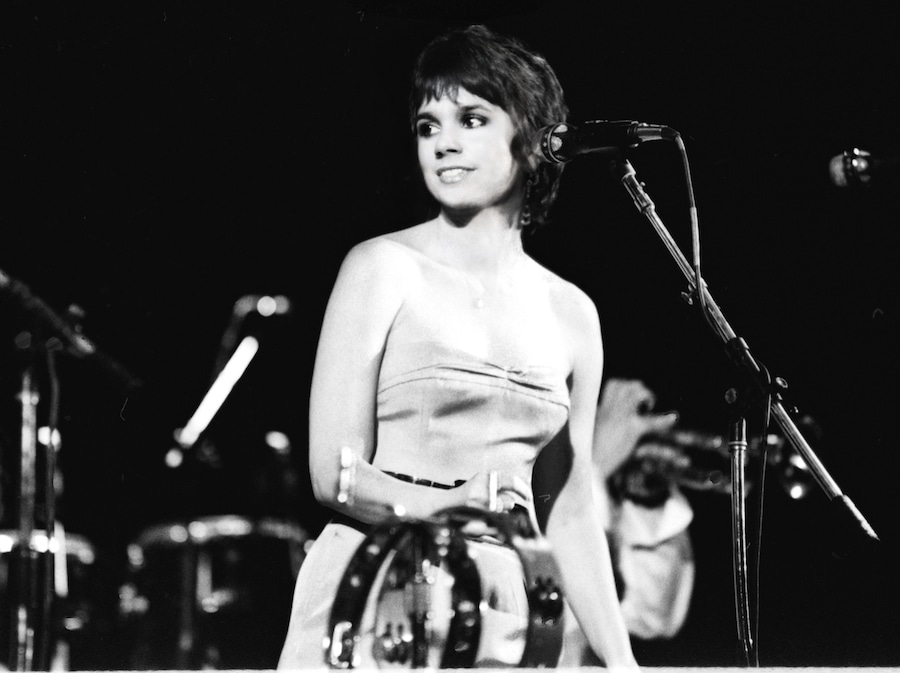
The slim 200 pages of text in Linda Ronstadt’s 2014 autobiography is an overview of the iconic singer’s eclectic and wildly successful four-decade musical career; an arc spanning 1967’s Stone Pony’s hit “Different Drum” to 2006’s swansong Adieu False Heart. She’s back in the spotlight with a recently unearthed 1980 live album. The celebrated American singer’s stunning voice — arguably the finest of her generation — has been tragically silenced by Parkinson’s disease.
Its effects limit the Rock and Roll Hall of Fame inductee’s speaking time, but our short conversation provided fascinating career insights and articulate, well-informed opinions about everything from incarceration to music in schools.
Videos by American Songwriter
Tell me about your input into the live album. Did you choose the songs? Why only pick 12 out of the 20 you sang at that show?
I edited some out. I think we were limited to a certain number of tracks because of the publishing. The record company deals with that. I love singing but I don’t like listening back except in the studio where I could change things. When I hear something that’s frozen [in time], it makes me nervous. I vaguely listened to it, then ran into the closet. Unfortunately, it was recorded for television so it was very compressed.
Is the video available?
I hope I buried it 20 feet under [laughs]. I always thought that video and television were so unfair to music, and it wound up dominating the art form.
I enjoyed your autobiography Simple Dreams, but there were things missing. What was the story behind your vocal on the Phillip Glass piece [“Freezing” from Songs From Liquid Days]?
His songs were somewhat arbitrary, but he set a mood. I enjoyed singing it but it was very hard to sing. I don’t read music and his stuff is very complex. I loved what the Roches did with him.
That song “The Blacksmith” you did for Elektra’s 40th anniversary album, Rubaiyat?
I learned that from Kathy and Carole. They were two girl singers that sang folk music like Joan Baez. They were very good harmony singers and guitar players. I memorized that record and I loved that particular song. I always heard it a cappela with two parts. I meant to put the second part on myself but I ran out of time. You’re the first person I’ve ever talked to who has heard it.
How about the Frank Zappa commercial for Remington electric razors? [In 1968, Ronstadt sang backup for the spot, which was never used.]
I was stranded in New York and running out of money and my manager [Herb Cohen] also managed Frank Zappa. Frank had been hired to write a jingle for Remington electric shavers. He wrote me a chromatic scale to sing, which is pretty hard to sing, but I did it. But it was so bizarre that the company never used it.
How about the Concert Behind Prison Walls [a 1974 television show, now on DVD] you did with Johnny Cash?
I remember it barely. It was a pretty upsetting experience. It made me pay attention to criminal justice reform. We were in there [the Tennessee prison] for almost a week.
Was that a positive experience?
Well, no. America has Gulags. They treat prisoners like they’re inhuman. They cage human beings in worse situations than animals. There’s no excuse for it. It doesn’t reform anybody. It’s just a monster machine.
In 2012, you testified in front of Congress about music and art in the education system.
It was like spitting in the wind. I went with Wynton Marsalis. We were trying to tell them how important it is for art to be taught in schools because if you don’t, there’s a whole part of your brain that doesn’t get developed. Art is every place. It’s in concentration camps, it’s in schools and churches and exercise rooms. It’s everywhere you go. It’s an essential experience. Children are growing up in this country totally tone deaf. They can’t match pitch anymore. We’re losing a part of our brain that is not being developed properly. Chinese children sing with perfect pitch because they have a tonal language. Americans don’t have a tonal language and if you only listen passively and you don’t participate, there’s a certain amount you don’t learn.
Did anything result from that testimony?
I doubt it. If they can’t get gun control or immigration reform done, they’re not going to pay attention to raising taxes so you can have music in schools. We’re going to have to spend more money on education and include the arts. When I was a little girl, every classroom had a piano and someone was trained to play music.
You’ve done so many classic duets. Are there any that you turned down that you later wish you had done?
Yeah, Placido Domingo. I had a newborn child and we had a hard time sorting schedules out so I passed on it. I wish I had done that, he’s such a great singer. I love dueting. I love singing with Emmylou. I can do stuff with her and Dolly I couldn’t do on my own. Also JD Souther, who I used to live with. I also wish I could have sung with Merle Haggard.