Lydia Loveless
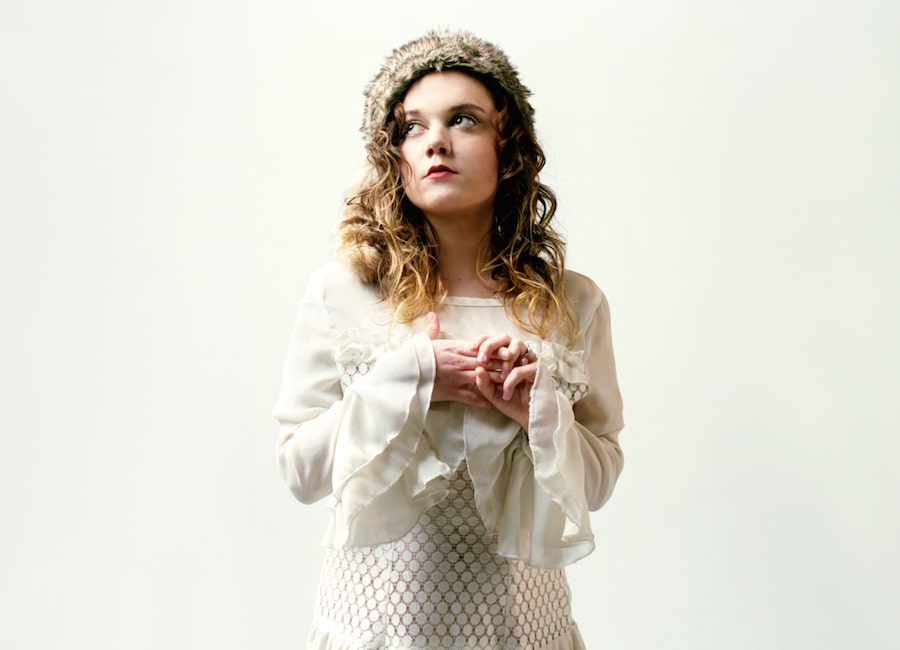
For her highly anticipated fourth album Real, Lydia Loveless decided to focus more on involving her band with the arrangements and in-studio production. “My band are all really great musicians who pour their heart and soul into this music, so it’s cool to involve them more and have something else to focus on other than yourself,” says Loveless.
After the success of her 2014 breakthrough record Something Else, Loveless found herself spending most of the last several years on tour, where she wrote a good portion of the album. “Sitting in a van all day, if I don’t at least write a poem or something, I should have no business calling myself a songwriter,” she says.
You can hear that sense of heightened collaboration on highlights like the New-Wave strutting “Heaven,” which Loveless describes as “if the Smiths and Prince had a baby,” and “European,” a stomping rocker with lush arrangements and layered guitars. Though Real is the most rock and pop sounding record Loveless has ever released, she still feels quite at home in the extended community of Americana. To her, the word simply means “average American Joe” music. With her new collection of songs full of sloppy regrets, sweaty desires and heartfelt declarations, Loveless’ latest album, her finest to date, is sure to fit right in.

Kaia Kater
Earlier this year, Canadian singer-songwriter Kaia Kater released her second album, Nine Pin, a moving collection of originals that feature the traditional Appalachian sounds and stylings that Kater has mastered and modernized after spending several years studying and performing mountain music in West Virginia. But with an adventurous sonic palette that includes muted trumpets, electric guitar, and Moog synthesizer basslines, Kater has made one of the most daring, inventive traditional records in recent years at a time when Appalachian music is experiencing a revival. As Chris Bartos, Kater’s producer, put it when he first heard the songs, “This won’t be a strict old-time record.”
Growing up in Toronto, Kater was exposed to a wide range of music from her mother, who ran the Winnipeg and Ottawa Folk Festivals, and her father, who introduced Kater to rap and reggae music at an early age. “I’d be just as likely to listen to Beres Hammond as I would Joni Mitchell,” she says. Nowdays, Kater draws on everything from jazz to R&B to hip-hop to old-time mountain music to fellow Canadian singer-songwriter Amelia Curran to the neo-traditionalist folk of Gillian Welch for inspiration.
Though she feels that “roots genres are a little overburdened” by arbitrary sonic distinctions and boundaries, Kater is grateful Americana provides a home for music with styles as flexible and hard to define as her own. “I grew up around a lot of old-time music,” she says, “and every player I meet has a different idea of what fits and what doesn’t.”
Sammy Brue
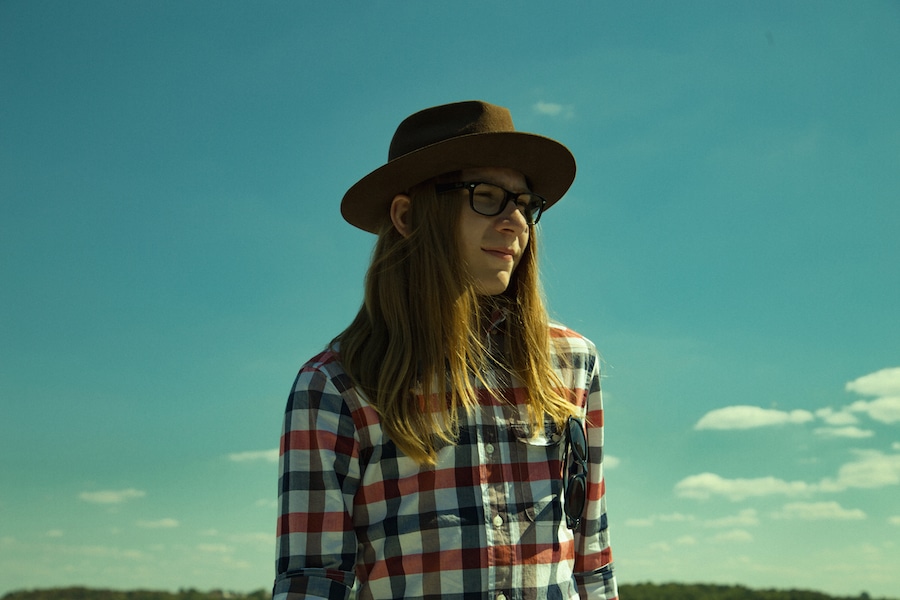
Fifteen-year-old Sammy Brue may be one of the youngest acts performing at AmericanaFest, but with several EPs and a brand new deal with roots juggernaut New West Records under his belt, he has quite the resume for a newcomer who was not yet born when Oh Brother, Where Art Thou? was released. The first time Brue played AmericanaFest, he was 13 years old and drove 25 hours to play a 15-minute set that ended up being one of the most important gigs of his career.
Brue recently moved with his parents to the Nashville area from Utah. This coming year, he’ll be fully focused on prepping his debut LP, which he’s currently in the midst of writing. “I have a huge range of songs, some are super fast blues-picking songs and some are just songs with really good hooks,” he says.
One of Brue’s best early songs is “East Nashville,” a post-gentrification modern spin on the long history of romantic musical depictions of Music City. The song features the impressive blues finger- picking that Brue picked up from his hero and mentor Justin Townes Earle, who has given Brue some choice advice on making it in the music business. “He really doesn’t want me to do drugs,” says Brue.

Luke Bell
Luke Bell grew up in Wyoming and spent several years moving around from Austin to New Orleans before winding up in Nashville. His debut album, Luke Bell, was written over the course of a couple of years and was greeted with a great deal of critical acclaim when it was released this past June. Though it’s full of rousing honky-tonk and barroom country ballads, Bell says he grew up primarily listening to ’90s rock, from Nirvana to Sublime to punk acts like Against Me!
But Bell’s debut record often sounds like an entry-level sampler course in country and western music history, from the New Orleans blues of “Glory And The Grace” to the ’50s country in “The Great Pretender” to the shuffling railroad boogie of “All Blue.” Meanwhile, ballads like “The Bullfighter” and “Loretta” show that Bell is just as moving when he slows things down.
Bell is looking forward to his first-ever AmericanaFest, where he’ll be showcasing material from his new record. “I don’t know if that’s what I’m doing or not,” Bell, who describes his music primarily as “honky-tonk,” says of Americana, “But I’ve been heavily influenced by Americana. I think of that whole genre as this reincarnation of country music from the ’70s to the ’80s and on to the ’90s.”
More Features
-
AMSTERDAM, NETHERLANDS – JULY 18: Eddie Vedder of Pearl Jam performs live on stage at Paradiso on July 18, 1993 in Amsterdam, Netherlands. -
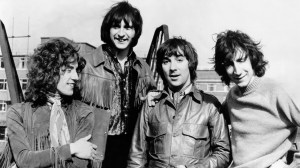
CIRCA 1975: Roger Daltrey, John Entwistle, Keith Moon and Pete Townshend of the rock and roll band "The Who" pose for a portrait in circa 1975. (Photo by Michael Ochs Archives/Getty Images) -
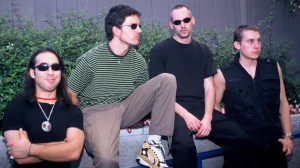
MOUNTAIN VIEW, CA – JUNE 13: Third Eye Blind backstage at Live 105's BFD 1997 at Shoreline Amphitheatre on June 13, 1997 in Mountain View California. (Photo by Tim Mosenfelder/Getty Images) -
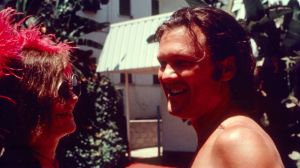
Janis Joplin and Kris Kristofferson at Landmark Hotel Los Angeles Summer 1970. (Photo by John Byrne Cooke Estate/Getty Images) -
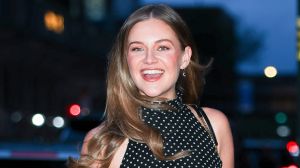
NEW YORK, NEW YORK – JULY 28: Kelsea Ballerini seen in West Village on July 28, 2026 in New York City. (Photo by Aeon/GC Images) -
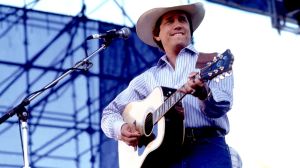
George Strait (Photo by Paul Natkin/WireImage) -
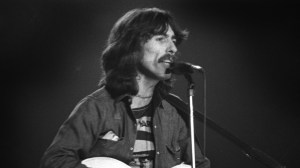
George Harrison took the No. 1 position from Paul McCartney today in 1973