Have you ever wondered if there is a formula to the art of song creation?
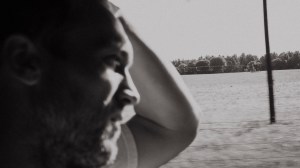
Singer/songwriters Matthew Ryan and Neilson Hubbard of Strays Don’t Sleep sat down over Zoom to discuss that concept and what it takes to write a perfect song that will outlast time.
Videos by American Songwriter
In an interview they conducted amongst themselves, the two artists, each with their own successful solo careers, talk about everything from composition to lyrics and how the two should juxtapose to create a meaningful effect on the listener.
Matthew and Neilson eloquently walk through how songwriting can be compared to other art forms, like photography, and the manner in which everyone who views art will relate to it in a different light. Additionally, the songwriters discern the importance of bringing the audience in so closely that it can almost be disorienting, pinpointing influences like Tom Waits, Kris Kristofferson and Bob Dylan.
Here are the highlights of their conversation:
Matthew: What is a perfect song to you? Is there one that immediately comes to mind?
Neilson: It’s always a tough one because there are so many amazing songs and there’s so many that affect each of us differently. It’s so hard to know that there is a perfect song out there, but I know one song for me that always gets me is the Tom Waits song, “Take It with Me.”
Matthew: Yeah.
Neilson: You ask what is a perfect song? I think to me, because of my sensibilities and what I like in music, art, photography, film, everything, it’s like space and composition are always at the forefront. And that song has that to me in terms of it’s so open, it’s got this beautiful piano driving it, it’s got this gruff voice and there’s this great juxtaposition between the lyric. And the sentiment.
Matthew: Yeah, the sentiment, you feel like he has this great way of looking back and reflecting. There’s always a tinge of regret and longing and cost. A beautiful song about, at least the way I’m interpreting it, of two people and love that’s lasted, it’s been around, it’s like aging, it’s moving on. I just love how he can bring that sense of beauty, in that piece, but yet you still feel the sense that that cost a lot to get to that place. Nobody’s sitting there without scars, you know what I mean?
Neilson: Yeah. I think he’s the master of that. I’ve always loved that about him more than anyone.
I think that’s because of that bittersweet thing and the piano and the way he sings out of me. He’s got a million of those songs but when I hear it and it goes to the bridge and it’s like he’s singing about far, far away, and you feel like you’re thinking about that in your own.
Matthew: Now, forgive me cause I always, for whatever reason mix up “Picture in A Frame” and “Take It with Me.” “Take It with Me,” is the one that opens when his phone’s off the hook? Is that right?
Neilson: Yeah. I think the thing that blows me away the most is his intimacy in songwriting. He brings you so close, that you’re almost disoriented, which a lot of great writers do. There’s this sense of mystery, because there’s enough real life imagery in it, but you don’t always know exactly.
Matthew: There’s a little surrealism.
Neilson: You can’t just spell it out, there’s a craftsmanship, but I love that last verse when he’s talking about how he’s this bird flying over the town, and he just keeps going smaller and smaller. And in that town, there’s a house and in the house, there’s a woman, inside the woman there’s a heart that I love, you know what I mean? That’s just one of the greatest lines, I think in terms of beautiful emotion and someone who’s reflecting on their life and the life with this person.
Matthew: Yeah. Have you always been a Waits fan? What’s been your experience?
Neilson: I didn’t grow up on Waits. I wasn’t listening to him when I was a kid, but as my friend Clay Jones and I were making my first solo record, we were listening to the Bone Machine.
Matthew: Yeah. That’s another one.
Neilson: It’s almost like he grew up in a church. It’s like, he’s emulating the woman that played piano in the church.
Matthew: I hear a lot of Ray Charles in him.
Neilson: Right. Somehow that’s what he was forced to do, but yeah, Ray Charles, that’s gospel and so, yeah, he’s like a perfect blend. I’m a sucker for that sentiment, you know?
Matthew: Well, it’s like a really beautiful marriage. Almost like an Irish folk tragedy mixed with a lot of early American romance and hope. I think that’s part of what’s special about American music from its conception, it has so many strings to other cultures and other experiences. It’s funny, I think as Americans, we kind of take that for granted the strangeness of our music because it’s actually everyone’s music.
Neilson: Right.
Matthew: You know what I mean? It’s fascinating. Waits is a good example of that because of Captain Beefheart, he kind of gets shoved into that corner. But it’s also very clear, from the very beginning that there’s a tremendous range of influence that he welcomed.
Neilson: You’re right. He pulls from so many things. I always talk about that, with the city of New Orleans, I feel like he would be perfectly right there in the middle of it. But I always call that the most American city in the weirdest way because everything went there and created a new thing out of all these other things. It’s not as disjointed as New York, where you have everything in the world and it’s great. It’s a little more disjointed like it created something in New Orleans. Outside of them, I’m from Mississippi and close to there. I love that about him. He seems like somebody stirred him in a pot for a long time.
Matthew: There’s something about cities that have a tension between the past and the future, you know? Because the past is so rich, with all sorts of stories and New Orleans is no doubt one of those cities.
Neilson: Oh yeah.
Matthew: You know? I guess I could only hope that American culture at large would have that tension. It’s a beautiful song. I knew that when we started talking about this I pretty much knew where you would go. But it’s nice to explore the mechanics of what is such a simple and enduring piece of art that doesn’t seem ambitious at all. It just seems like a Polaroid.
Neilson: Yeah, no, that’s a great way to put it. It’s photography. I kind of always looked at songwriting like photos, you know? It seems natural in that sense because you hang a photo on your wall. Like I was saying earlier there’s this closeness to it, but you don’t get enough of the pieces, you don’t see all of it. It’s up to the person viewing that photograph or listening that’s like you have to participate in it. I think that’s what great songs always do to me. It’s like sometimes you don’t understand a lie, but somehow you feel like it’s about you or connected to you somehow.
All the great ones do that stuff, whether it’s Kristofferson or Dylan, even Cohen. Waits is kind of the crazy version of all that.
Matthew: No, he is. So happy, over the last 20 years or so I think, and probably partially due to Mule Variations because it wasn’t so, I love Bone Machine, but like you can understand that would turn some people off.
Neilson: Oh yeah.
Matthew: I don’t know, there’s something about as people age, they get a certain calm about them, that maybe is more welcoming, not that Bone Machine, isn’t great. It is!
Neilson: I’ll turn it around on you because I agree that there is probably no perfect song because everyone’s going to have a different opinion of that, but tell me about what you think it is.
Matthew: I think a lot of us who really genuinely love music can agree though. I think “Always on My Mind” by Willie Nelson is a perfect song. I think “Stand by Me” by Ben E. King is a perfect song. And these are songs that are perfect in various specific ways. I’ve thought a lot about it as we decided what we would talk about, and it informs the music that we make together.
It is what we are hoping to accomplish, cause it’s the measure of what we do.
Neilson: Right.
Matthew: I wanted to mention both of those songs.
Neilson: They’re both amazing.
Matthew: “It’s A Wonderful World” by Louis Armstrong. Probably for anybody who is familiar with where I’m coming from, they could assume I would choose a Leonard Cohen song. He has resonated for me in ways that have really sprawled. When I was a much younger person, I was about 17 when he really hit me. “Hey, That’s No Way to Say Goodbye,” just a really simple, beautiful progression on a classical guitar. But the words and the melody, I think Cohen a bit like Waits at times, people don’t fully grasp how beautiful those melodies are because of the instrument delivering them.
Neilson: Right.
Matthew: But “Hey, That’s No Way to Say Goodbye” is in my top five and it’s because it talks about falling in love for the first time. The funny thing is the human experience is essentially scripted.
Neilson: Right.
Matthew: Where it’s beautiful is that each of us gets to navigate these experiences. “Hey, That’s No Way to Say Goodbye” is essentially about the end of a relationship. The title certainly implies that, but they’re apparently lying-in bed and he’s describing her sleeping.
Then he does this beautiful thing and it’s very quick. He doesn’t waste a lot of time on it. Where he talks about “In cities and forests, they felt just like me and you.” There was something about being a kid and hearing that and having just fallen in love for the first time.
Where it widened the screen for me in a way. It didn’t make me less romantic or less hurt when it ended, but it kind of prepared me for it. Cohen can have a really kind of gentle brutality in a lot of his work. It’s one of the songs that doesn’t have that he knows the importance of love arriving and love leaving.
Neilson: Yeah. Oh man. No, that’s beautiful. When you were talking about that, this is kind of a hard question to try to land because I think about a lot of different songs in my life.
Neilson: I’m trying to figure out how to land this question cause you’re kind of saying it a little bit. You’re talking about how much the personal experience for you is a part of why that song is great, I think about certain songs in my past, do I love that song because of what I felt that time? Or did I feel that way because of that song? It’s like, I can’t tell, I get so blurred, it’s now become a representation of that time period.
Matthew: I think that’s important. As you were, as you were talking I kind of had a suspicion where you were headed. I think it’s important for all of us to understand that a perfect song doesn’t have to be a popular song and a popular song doesn’t have to be a perfect song.
It’s amazing. Everybody knows “Always on My Mind.” I don’t think I know a single person that if you ask them, do you know that song, “Always On My Mind,” by Willie Nelson? Maybe I get a, “Who? What?” but what’s amazing is it’s an incredibly similar arrangement to, “Hey, That’s No Way to Say Goodbye.”
I don’t think that “Stand by Me,” it’s essentially the chorus over and over again, once they kind of set the table kind of emotionally for that song. But the arrangements of, “Hey, That’s No Way to Say Goodbye” and “Always on My Mind” are essentially the verse chorus, verse chorus, verse chorus, and thank you enjoy the rest of your day.
Neilson: Yeah, but I guess I would say that a perfect song for each of us is, it’s beautiful when it’s shared, it’s beautiful when it’s private.
Matthew: But structurally, I’m only thinking about this as we’re talking, there seems to be almost there’s that classic four lines, chorus, four lines, chorus. Great sense of economy and both of them go into great detail about what went wrong. That’s part of, I think what you were saying, is that we get to fill in those details and then maybe that is part of what makes it perfect.
Neilson: Yeah.
Matthew: It’s a generous thing not to treat people like they’re numbskulls.
Matthew: I feel like that’s the thing about those master songs is that you allow the participation.
Neilson: Absolutely.
Matthew: So, the ownership of it, I think that is why people sing songs and it’s like, oh, I feel, related to it. I feel like someone understands what I felt and that’s what the great ones always seem to be able to do.
Neilson: How beautiful that so much of that was done before big data.
Matthew: Yeah. Nice. It’s actually, like we’re able to tap into the human experience or something.
Neilson: Just like living and this feels true to me.
Matthew: Yeah. It still feels good.
Neilson: Do you find that magical in a sense that some of those songs, like the ones you’re talking about, I think about another classic, “The First Time Ever I Saw Your Face,” there was a moment where it didn’t exist and then they went into the studio, push record and that’s what happened?
Matthew: This is a pivot a little bit from what you’re saying, because that’s a great example of the “First time Ever,” the Roberta flack version. Isn’t it amazing how sacred the music sounds as well?
Neilson: Oh, it’s unbelievable. Yeah.
Matthew: It’s so true and I mean that in a non-religious sense.
That clearly the language and the melody evoke a kind of sacredness. It’s true of every song we’ve mentioned. I’d never thought about that, but that’s, again, it’s almost like the song is dictating even while it’s being captured.
Neilson: Yeah, because I think of all those kinds of songs and it’s as if they could have never not existed. So, there is a spirituality to it in a sense, it’s this idea that how could “Stand by Me” have not been here? So, like you said, it’s effortless in a sense, it’s like, it’s a perfection that like, how could the world not have that?
Matthew: You know, like there was a moment, where everybody drove to the studio and just played it. And then went home, and here we are, you know, in the modern experience, and these songs are still here. I just find that part so fascinating, that it can affect so many lives to where they feel that it’s part of their story. It’s beautiful.
Neilson: And that’s, that’s nuts. I mean, that’s the whole magic of music and art in general, that’s part of what makes it beautiful, the ability to, you know, to participate, I guess in all these ways.
Matthew: A lot has happened with American ambition and American media, but the idea that beautiful things were recorded and shared and kind of created a central nervous system of experience, that’s pretty amazing… And still is. Well, that’s it, it’s been fun!
Neilson: Awesome. Thanks man. No, man. I enjoyed it.
More Interviews
-

Photo by Stephen Dillon