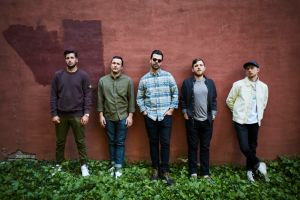
Mike Errico wears many hats. A former editor at Blender Magazine, the talented singer-songwriter also runs a podcast, works as a music supervisor, and writes fiction. His music has been heard on The Voice, and appears in the new film That’s What She Said. We asked the New York pop-rocker about his approach to songwriting, music criticism (“many music journalists seem like they’re providing color commentary in a sport they’ve never played”), and his new album, Wander Away.
Tell us a bit about being a music journalist and a musician.
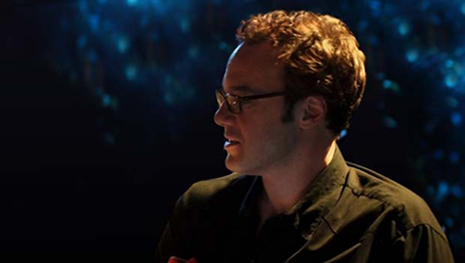
Actually, that’s only two things I do. I’ve always been a multi-tasker, and I find that everything stays fresh that way. I write for TV, I music supervise, I write short stories – actually, Michael Emerson, who played Ben Linus from Lost, came on stage the other night and read a short story of mine while my string trio improvised a Hitchcock-style soundscape. I’m lucky to get opportunities that stretch me, and I take them on, even if they’re only tangentially music-based.
How did you transition from one to the other?
I didn’t – I did them simultaneously. I had picked up part-time copy editing work at Maxim magazine between tours, and used to come in to the office with my guitars, and one day they asked if I wanted to run Blender’s Web site. It was the first “real” job I’d ever had, and I turned it down three times because I didn’t want it to interfere. Turns out, it funded my album All In, and I also grew the traffic on their site, so everybody won. I just didn’t sleep a lot.
Does being a musician make you a better music journalist?
It’s a double edge. On one hand, I know what musicians are going through – many music journalists seem like they’re providing color commentary in a sport they’ve never played. But on the other hand, I don’t think it’s my place to cut artists down or to pontificate on something so subjective. I’m only interested in using the power for good, which some might say is only half the game. But I’m the type who’d give something 10 stars, or just not talk about it at all.
Who was your favorite artist to interview?
David Lee Roth was pretty awesome, but we killed a bottle of Jack together during the interview, so it’s not really fair.
Your career is thriving. How much of it is your hands-on approach, or do you have a management team helping you?
Fans and friends help me. They book shows and help sell merch. Their word of mouth is my marketing team. Other than that, it’s hustle.
Do you have any business advice for artists?
When I was a kid, a jazz singer lived up the street from me. He used to take a couple of us out for ice cream in his black ‘50s Thunderbird convertible. He gave me three pieces of advice: 1) Save your money; 2) Never believe your publicity; and 3) Leave the party early.
What’s a song on your new album you really want people to hear, and why?
Of all the songs, I think “Count to Ten” best sums up the mood of the record. It’s lush, and warm, and strikes a balance between the literal and the figurative, as if it has a foot in both worlds. It also conjures a lot of visual images, and would serve a film very well. My mother is a visual artist – she did the cover art – and I try to capture some of that impulse in what I do.
What’s a lyric you’re particularly proud of on the album?
“Everybody Knows” is strong, in that it finds a new way to convey a universal message. I get a lot of positive response to that lyric, which is gratifying.
Are there any words you love, or hate?
I’ve always loved the words on “1000 Miles.” It’s an older song, but it just continues getting deeper over time. I don’t hate any of the words on this record — I worked hard to get them to a good place.
How do you typically write songs? Words first, or melody?
I used to be a words-first guy. I loved Ani DiFranco, and Dylan of course, and I saw music as the Trojan horse I got to pack words into. Eventually – and partially because of my writing in other forms – I realized that I wanted to do more with language than I could fit in a song. So I freed my writing from pop song structure, which opened up melodic ideas I wouldn’t have pursued before.
Do you find yourself revising a lot, or do you like to write automatically?
I’ll do whatever it takes, to be honest. Some songs are pieced together. Others become strong places for a co-writer to come in and give a fresh perspective. Some just write themselves. I never know what’s coming next. I just try to let it happen.
Who’s an underrated songwriter, in your opinion?
I don’t know, but whoever it is, I’d like to write with them and elevate both of our ratings.
What’s a song you wish you’d written?
I try to cover songs I wish I’d written. I did a guitar arrangement of Tom Waits’ “Johnsburg, Illinois” on Wander Away. But I also cover AC/DC’s “You Shook Me All Night Long” as a 6/8 blues. So, it’s a toss-up.
More Writer Of The Week
-

Photo by Jesse Spencer -

Photo credit: Sean Brackbill