
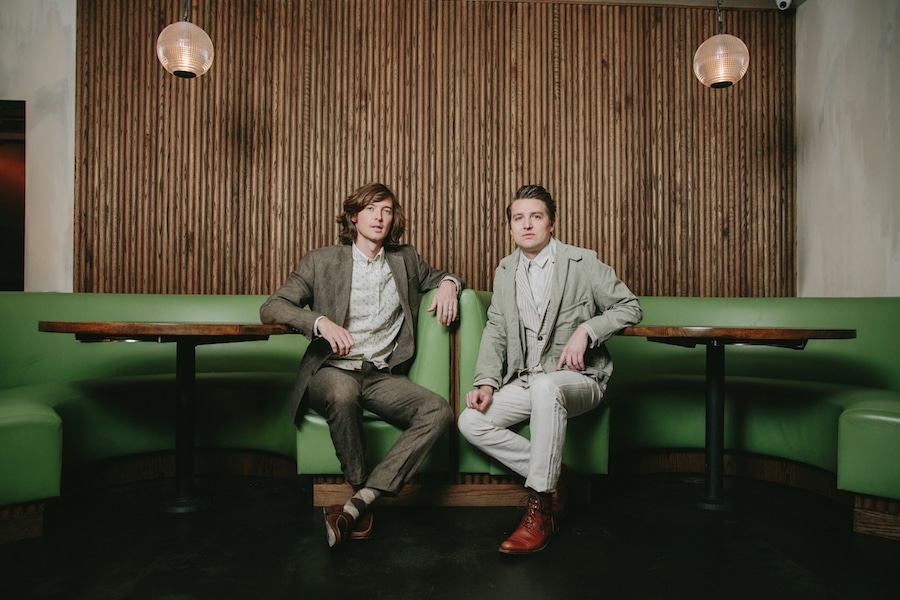
Over the course of three albums and numerous tours, the Milk Carton Kids have presented a stable sound and image: two young men alone on stage in baggy gray suits, white shirts and ties, each with an acoustic guitar around his neck, creating every sound with their own voices and instruments. The between-song banter was improvised and witty, but the songs themselves were carefully prepared gems of vocal and guitar harmony, depicting heartbreak and longing in telling detail. Joey Ryan was the taller one with the low tenor and glasses; Kenneth Pattengale was the shorter one with the high tenor and no glasses.
But that strategy of two men taking on the whole world by themselves changes with the Milk Carton Kids’ new album, All The Things I Did And All The Things That I Didn’t Do, and the duo’s upcoming tour. The recording in Nashville was produced by Joe Henry with such session pros as the Nashville Bluegrass Band’s bassist Dennis Crouch, T-Bone Burnett’s go-to drummer Jay Bellerose, Wilco keyboardist Pat Sansone and various horn and string players. And those musicians’ parts will be played by a different full band for the summer tour.
The songs themselves have darkened and deepened — not just in the lyrics but in the music as well. The songs now seem to imply that heartbreak and longing are neither private affairs nor temporary phases that one passes through in life but rather persistent features of life itself, both private and public.
“The period between our last album and this one,” Ryan concedes, “was marked by a slew of certainties defied, norms violated, truths betrayed, hearts broken. Examining the reality we find ourselves in now, compared to where we once thought we might end up, is apparently part of getting older — and writing songs.”
Both Milk Carton Kids dismiss the suggestion that these changes are the result of Pattengale’s surgery in early 2017 and/or the end of his long-term romantic relationship. Both were sobering events, it’s true, but the true impetus for change, they insist, was their tour at the end of 2016.
“The more significant change came after that tour,” Pattengale claims. “We were doing the same songs and telling the same jokes. We were having fun, and there was no external pressure on us to come up with new songs and new arrangements. It’s easy to let that approach have its way with you. When the dust settled after the surgery and it seemed like time to get back to work, it was obvious that we weren’t lit up by hunkering down to do the same duo thing. Figuring out what that meant to us had a more significant imprint on this record than the cancer.”
“Meanwhile, I was comfortable hanging out in California,” Ryan interjects. “I actually have a pretty easy time following inertia wherever it leads.”
“As a byproduct of having no personality,” his partner clarifies.
“Some people call it commitment,” Ryan quickly retorts, “though some people call it laziness. But even I was ready to write some new songs, some different songs. We’d been doing the two-guitar thing for six years. We knew what it would sound like and the kind of songs that would fit that. So the liberating thing from a songwriting perspective was being able to write songs that didn’t have to work with just two guitars.”
Interviewing the Milk Carton Kids is not unlike watching them on stage: the impromptu banter between answers or songs can be as fascinating as the alleged purpose of the event. Their repartee draws comparisons to the Smothers Brothers as often as their close harmonies draw comparisons to the Everly Brothers, though the spoken comedy is often camouflage for more serious concerns.
On the new album, the comparisons are more likely to be to late-period Simon & Garfunkel, not only for the chamber-folk arrangements but also for ambitious lyrics about the disillusionment that often comes with adulthood. “Joey has two kids now and a few more years under his belt,” Pattengale points out, “as do I.” The new album has songs about both romantic disappointment (“Blindness”) and political disappointment (“Mourning In America”), but the frustrations involved seem very similar.
“It has surprised me how much these different types of disappointment have in common,” Ryan says. “‘Unwinnable War’ is meant to deal with exactly this overlap, actually. It began as a song about conflicts in a marriage, but I realized as it was coming together how much of the language was applicable to societal splits as well, and so we played with the ambiguity there.”
“Mourning In America” begins with Sansone’s elegiac piano intro, which unfolds into chamber-music strings. Ryan describes how, on 2016’s election night, he “fell asleep with the TV on, finally feeling like I belong, woke up to a funeral song.” That cemetery music swells with violin, cello and pedal steel on the chorus as Ryan adds, “It’s raining in Ohio,” where the votes went in an unexpected direction. “Shows what I know,” adds the singer.
Three tracks later, a similar mood of lament haunts “One More for the Road,” which begins as a farewell to a lover but ends up bidding goodbye to all the lost pleasures of youth, from a harvest moon to “our long lost rock and roll.” The four stanzas are sung in harmonies so close that it’s impossible to tell the backing vocal from the lead. After three-and-a-half minutes of singing, there’s four-and-a-half minutes of Pattengale’s guitar improvisation over Levon Henry’s clarinet and Russ Pahl’s steel guitar. It’s as if the Milk Carton Kids wanted this reluctant leave-taking to last as long as possible.
Recording the songs with an ensemble was a major adjustment, but writing the songs for all those extra players was just as big a change. No longer did they have to imagine that the two of them could handle every musical part; now they could write keyboard parts, bass parts, string parts.
“For example,” Ryan explains, “a chord progression like the one in ‘Mourning In America’ wouldn’t have been written if I weren’t imagining it being played on the piano. In the past, knowing that everything would eventually have to come down to just two guitars would have stopped that song in its tracks. I would have either not finished it, or just never considered it something appropriate for our band. But knowing that our limitations had been lifted, we just tracked down the songs without some of that immediate filtering that had become, for me, a hindrance.”
As much as they work on fine-tuning their songs, the Milk Carton Kids don’t rehearse their on-stage repartee at all. They don’t write it out; they don’t discuss it, and they change it all the time. They didn’t even plan for it to become as big a part of their show as it has. It just happened.
“I have a compulsion to talk to the audience,” Ryan confesses, “and Kenneth laid down the ground rules early on: ‘You’re not allowed to say the name of the song and you’re not allowed to say what the song is about.’ So I would just ramble about whatever was on my mind. One night at Jammin’ Java outside Washington, D.C., I was doing that, and people started laughing. After that I started paying attention to what people think is funny and digging further into that. It rounds out the emotional experience of listening to us. We don’t have too many funny songs or even joyful songs, so it fills in those holes.”
More Features
-
(L-R) Joe Walsh, Timothy B. Schmit, Glenn Frey, Don Henley and Don Felder of the rock band "Eagles" performing onstage in 1980. (Photo by Michael Ochs Archives/Getty Images) -
LOS ANGELES – CIRCA 1974: Singer Patti Labelle performs onstage with her group LaBelle in circa 1974 in Los Angeles, California. Also in the group were former Bluebelles, Sarah Dash and Nona Hendryx. (Photo by Michael Ochs Archives/Getty Images) -
Photo by Rick Diamond/WireImage for BMI Nashville -
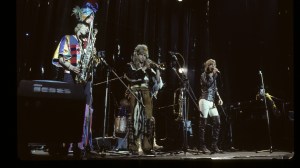
IN CONCERT – From London – Shoot Date: June 13, 1974. (Photo by ABC Photo Archives/ABC via Getty Images) BLUE SWEDE -
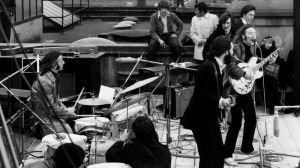
30th January 1969: British rock group the Beatles performing their last live public concert on the rooftop of the Apple Organization building for director Michael Lindsey-Hogg's film documentary, 'Let It Be,' on Savile Row, London, England. Drummer Ringo Starr sits behind his kit. Singer/songwriters Paul McCartney and John Lennon perform at their microphones, and guitarist George Harrison (1943 – 2001) stands behind them. Lennon's wife Yoko Ono sits at right. (Photo by Express/Express/Getty Images) -
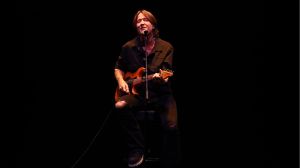
MELBOURNE, AUSTRALIA – Keith Urban performs during "The Songs Of John Farnham, The Celebration Concert" at Rod Laver Arena on September 20, 2026 in Melbourne, Australia. (Photo by Graham Denholm/Getty Images) -
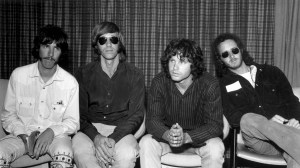
3rd September 1968: American psychedelic rock band, The Doors during a press conference at Heathrow Airport, London (left to right); drummer John Densmore, keyboard player Ray Mansarek, vocalist Jim Morrison (1943 – 1971) and guitarist Robby Krieger. (Photo by Central Press/Getty Images) -
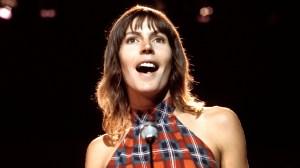
Australian-American singer, songwriter, author, actress, and activist Helen Reddy (1941 – 2020), 1975. (Photo by Tony Russell/Redferns)