You know this world is just one big trouble spot
Because some have plenty and some have not
You know I used to be trouble
But I finally saw the light
Now I don’t worry ’bout a thing
‘Cause I know nothing’s gonna be alright
From “I Don’t Worry About A Thing”
By Mose Allison
Videos by American Songwriter
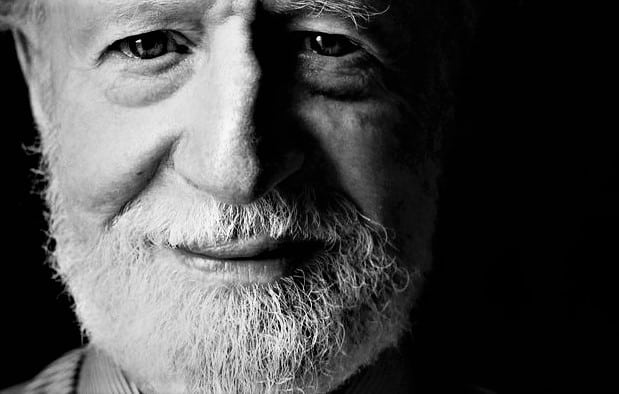
Mose Allison was in Hollywood again. The coolest man in the world. The man with the free zydeco groove. Whether performing or off-stage in life, Mose seemed to glide through life.
He had a way of laughing at life in his songs, in the soulful levity of his inspired classical-tinged piano solos, in his sly vocals, and in his ingenious use of language. Always he’d play with words to bring us some truth wrapped with whimsy, knowing oppostions are effective.
Such as “I Don’t Worry About A Thing,” which sounds like an upbeat anthem from its title, but Mose built these like well-constructed jokes.
“And I don’t worry about a thing/Cause I know nothing’s gonna be alright.”
Or in his classic song, “Getting There,” with its refrain: “I’m not downhearted/I am not downhearted/but I’m getting there.”
It’s a form that Dylan echoed with less humor in “Not Dark Yet,” in its refrain: “It’s not dark yet/But it’s getting there.”
Sure, Dylan scholars might quarrel with that, simply because there is no source at all, just a pretty strong hunch. Bob borrowed from poet Henry Timrod and Junichi Saga’s Confessions of a Yakuzsa. Why wouldn’t Bob turn to Mose?
Stealing from Mose, according to Chrissie Hynde, was a rock tradition.
“You know all the songs by The Kinks and all those bands?” she asked. “You know they’re all lifted from Mose Allison. You know that, don’t you?”
I didn’t. But Mose borrowed too. His vocal style was a melange of idols Nat “King” Cole, Big Bill Broonzy, Roosevelt Sykes, Louis Jordan, and the Timpani Five. His piano playing, although colored by jazz and blues, also sings of Scriabin, Bach, and Hindemith.
“Now Bach is the one I listen to more than anything else,” he said. “It’s amazing all the things he did in a diatonic scale. His harmonic mode was limited compared to what people can use now, but he was able to get an awful lot of variation within that one mode.”
He didn’t care, it seemed, about his music being borrowed. But he did recognize an imbalance, a preponderance of musicians being “over-rewarded,” as he said, for their accomplishments.
“And those people,” he said with a sly Mose smile, “accumulate a psychic debt.”
How about people, I asked, who are under-rewarded?
“Well, if you’re under-rewarded,” he said, “then you have a psychic surplus.”
I asked how you collect on that.
He laughed and said, “Well, you have to assume that you are collecting.”
Then he added, “I feel I’m adequately rewarded for what I’ve done. I’ve seen a lot of talent disappear without getting anywhere.”
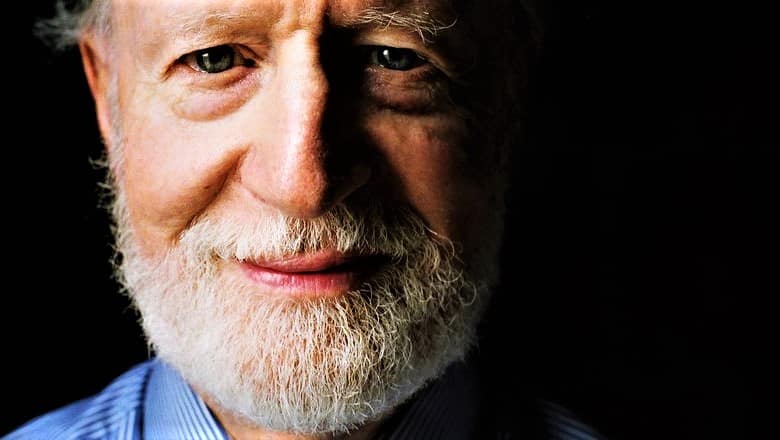
It’s a wistful, reality-based humor, wed to bluesy tunes and what Ben Sidran called Mose’s “freeform Zydeco groove.” And it isn’t forced, one of the keys to his greatness: his songs ring true. The Mose you meet in person is no different from the Mose you meet in songs – funny, cynical, wise and warm. And with the hope of a realist.
Mose agreed last time we spoke. “Everything should point toward a reality as far as I’m concerned,” he said. “And reality as opposed to appearance.”
Born on the cosmic date of 11-11 in 1927 in Tippo, Mississippi, he started writing songs and playing piano as a kid and never stopped.
“I start out with words, with the idea, the line,” he said. “Then after I get a line or two, I try to find what melodic line those lines would be suited to. As soon as I find the form I can finish the song in my head.”
Although he’s a master of the keyboard, he finds that songs with simple chord changes are more effective.
“I went through the era when all the jazz players were learning show tunes,” he said, “and everyone was trying to see what complicated chord progression they could play on. So when I was getting ready to do my vocals and my thing, I wasn’t compelled to write complicated tunes. My songs were meant to have that rhythmic impetus that would lay down a good foundation for jazz improvisation.”
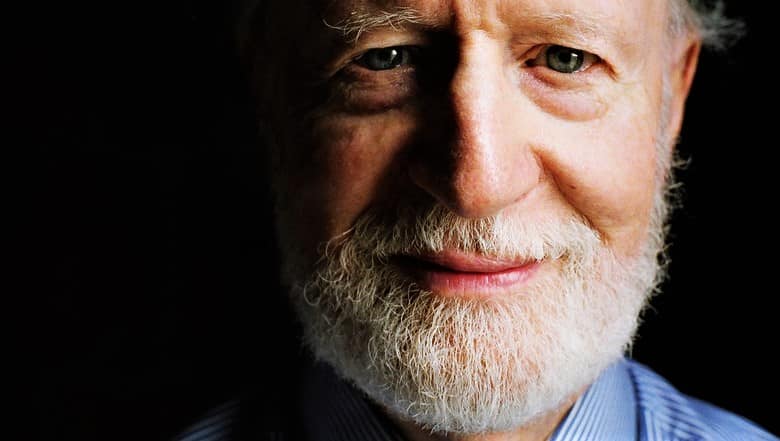
He’s not a songwriter who feels you have to tape the process so as not to lose anything. “If it’s worth remembering,” he said, “I’ll remember it. If something keeps coming back, if I keep thinking of that phrase, if I see manifestations of it at different times and different places, then I feel it’s worth making a song out of.”
He’s defied the notion that great songwriters are rarely great instrumentalists. Though he jokes it might have hurt him, he never wanted to divorce the jazz pianist who loves to solo from the guy who writes and sings songs.
“The singer-songwriter Mose Allison might have been a lot better off,” he joked, “if he fired the piano player Mose Allison.”
But those two have been working closely for so long, he’s wise not to break up the team. Nobody could do these songs like that guy. And nobody could write these kinds of songs better. He aspired to songs he loved, like “Seventh Son” by Willie Dixon, which he’d been playing since the start. His other signature standard was his bluesy, minor-key take on “You Are My Sunshine,” by Lousiana governor Jimmie Davis. Both of those, to Mose, were about as perfect to him as songs can get. To Mose they shone like stars towards which he sailed always.
“You always want to write the perfect song,” he said. “But no one will ever write the perfect song, I guess,” he said. “I would just like to write one that has all the elements of what I’m trying to do. And I’m working on it. I’m always working on it.”
More Articles
-

Pink Floyd concert at Wembley Stadium, 1988 (Photo by Nils Jorgensen/Shutterstock)