
The greatest thing you’ll ever learn
Is just to love and be loved in return.
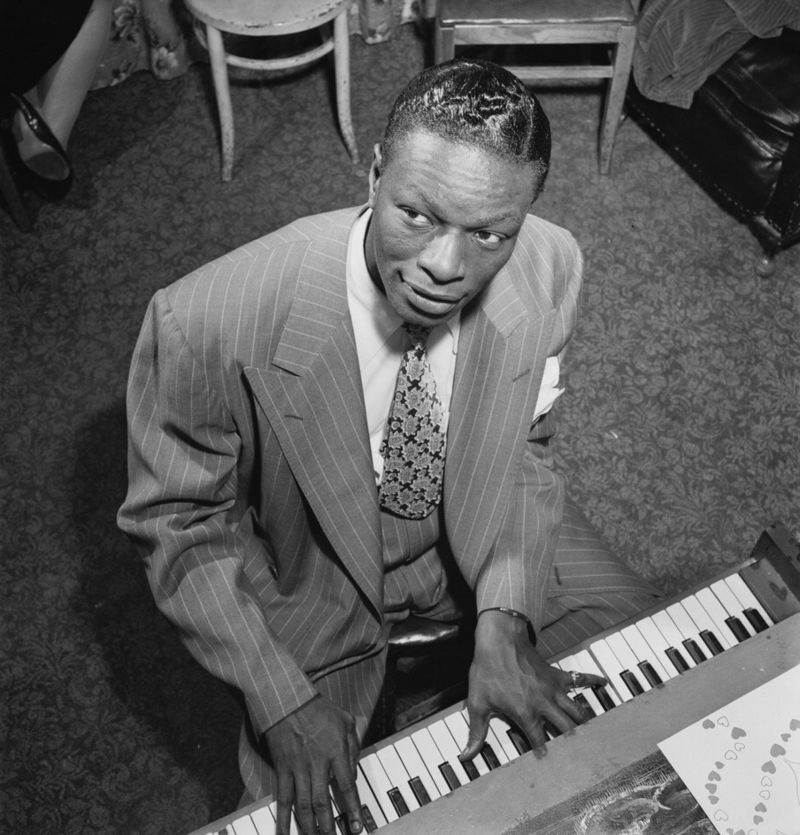
Largely because of those 15 words, an itinerant piano player named eden ahbez (he spelled it all lower case) ended up with his name on a hit record, simply for addressing the basic human desire of needing to give and receive love in his song “Nature Boy.” With this two-verse composition, which has the above hook repeated at the end of the song, he showed that a lyric doesn’t have to contain dozens of lines or make grandiose declarations to resonate with listeners. Sometimes just a basic universal statement says more than all the poetry or verbiage in the world. That was the story with “Nature Boy,” which was a number-one single for eight weeks in 1948 for jazz/pop legend Nat “King” Cole.
Videos by American Songwriter


ahbez, who was known to many as simply “ahbe” (again, all lower case), was an unshaven and un-coiffed forerunner of a segment of American society that would later be called “hippies,” and was best-known in the L.A. area as the guy who camped out under the Hollywood sign. He was an accomplished musician who apparently believed he had a decent song on his hands when he managed to get the sheet music for “Nature Boy” to Cole, and Cole went for it. With his velvet voice, Cole had broken away from his role as a great jazz pianist to the point where he wasn’t even known by his given name anymore, but was simply called “King Cole,” which was the name of the artist on the label of the 10-inch single of “Nature Boy.”
Joe Romersa is a Grammy-winning Los Angeles engineer and musician who has worked with John Prine, Carlene Carter and others, and was involved in ahbez’s career many decades after Cole cut the song. Romersa said that ahbez tracked several of his own versions of “Nature Boy” in Romersa’s studio, and continued to record even into his 80s before his death in 1995. “He was excited to hear Jose Feliciano and George Benson were doing covers of it,” Romersa recalled, “but he complained that he wasn’t getting the royalties he was owed.”
Romersa said that, even though ahbez still had other material he wanted to develop, “Nature Boy” was never far from his mind. “We recorded at least five versions during my time with him. Then he’d say something like, ‘That was the past, and I don’t want anything to do with it. I’m working on something new and wonderful the world’s never heard before!’ But he talked about making a change in the last line of the lyric … he told me that ‘to love and be loved in return’ was too much like a ‘deal’ and there’s no ‘deal’ in love. So he wanted the last line to be ‘is to love and be loved, just to love and be loved’.”
ahbez wasn’t the first writer to make such a statement of love or some variation of it, and obviously wouldn’t be the last. But Sarah Vaughan had an a cappella hit with the song on the heels of Cole’s version, and as other singers heard “Nature Boy” the list of people who recorded this unassuming classic grew. In the past 70 years it has been cut by Frank Sinatra, Alex Chilton, David Bowie, Tony Bennett with Lady Gaga, and dozens of other artists.
Are you a songwriter? Enter the American Songwriter Lyric Contest!
More Behind The Song
-
Faith Hill during Pearl Harbor Premiere & After Party at USS John C. Stennis in Honolulu, Hawaii, United States. (Photo by SGranitz/WireImage) -
Portrait of The B-52's, Fred Schneider, Keith Strickland, Cindy Wilson, Kate Pierson, Ancienne Belgique (AB), Brussel, Belgium, 23 September 1989. (Photo by Gie Knaeps/Getty Images) -
ohn Travolta (Photo by Ron Galella/Ron Galella Collection via Getty Images) -
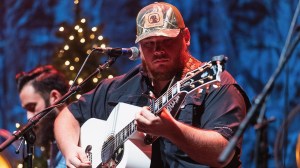
KENT, WA – DECEMBER 06: Country music singer and songwriter Luke Combs performs on stage during The Hometown Holiday show hosted by 100.7 The Wolf at ShoWare Center on December 6, 2018 in Kent, Washington. (Photo by Mat Hayward/Getty Images) -
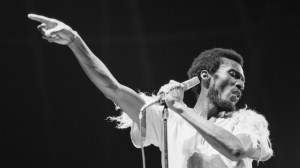
Jamaican singer Jimmy Cliff performs on stage at Porte de Pantin, in Paris. (Photo by John van Hasselt/Sygma via Getty Images) -
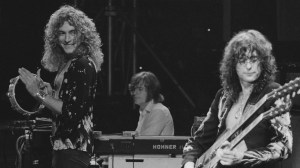
Left to right: Robert Plant, John Paul Jones and Jimmy Page, of British heavy rock group Led Zeppelin, performing at Earl's Court, London, May 1975. The band were initially booked to play three nights at the venue, from 23rd to 25th May, but due to public demand, two more concerts were later added, for 17th and 18th May. Total ticket sales were 85,000. (Photo by Michael Putland/Getty Images) -
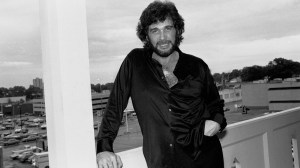
Portrait of country singer Eddie Rabbitt in Memphis, Tennessee, May 31, 1981. (Photo by Paul Natkin/Getty Images) -
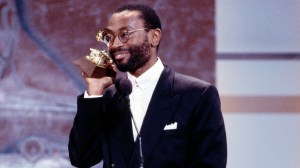
LOS ANGELES – FEBRUARY 22: 31st Annual Grammy Awards. Broadcast February 22, 1989. Shrine Auditorium, Los Angeles, California. Pictured accepting award is Bobby McFerrin. His song "Don't Worry, Be Happy" won Record of the Year, Song of the Year, and Best Pop Vocal Performance, Male. Also Best Jazz Vocal Performance, Male. (Photo by CBS via Getty Images)