
Computational musicologists at Queen Mary University of London have conducted a study of modern melodies and found them lacking a certain complexity present in older music. The study was published on July 4 in Scientific Reports and isolated three “melodic revolutions,” according to the report. These revolutions—taking place in 1975, 1996, and 2000—led to the progressive simplification of melodies when the group studied a song’s rhythm and pitch.
Beginning in 1950, the group studied the top five songs on the Billboard chart at the time, all the way to 2023. Studying the rhythm and pitch of each batch of songs, the researchers found that the melodic complexity steadily declined as the years went by. “Conservatively, [rhythm and pitch] decreased by 30 percent,” said Madeline Hamilton, the grad student who led the study, according to a report from The New York Times.
Videos by American Songwriter
While the decrease in melodic complexity is not a new phenomenon, the study showed that there has been an increase in notes played per second in modern songs. The researchers attributed this to technological advancements in music.
“Today, with the accessibility of digital music production software and libraries of millions of samples and loops, anyone with a laptop and an internet connection can create any sound they can imagine,” the study states. However, Hamilton urged caution when comparing the value of these songs.
“It’s not that music is getting less complex,” said Hamilton. “The melody is getting less complex, but maybe the chords are getting more complex, or maybe the production.”
What Does This Mean for the Future of Music?
While there is no more inherent value in a complex song versus a simple song, what does this trend mean for the future of music? As stated above, there are many moving parts that go into studies like this. While one part of a song may become simplified, other parts may become more complex, or vice versa.
There doesn’t seem to be any fear that melodies will become so simple that they cease to be melodies at all, if that’s what you’re worried about. Melody is basically what is pleasing to hear in a song, the “heart and soul” of a piece, according to composer Oscar Osicki of the Inside the Score YouTube channel.
That heart and soul is what gets songs stuck in our heads, has us humming the same bars of “Please Please Please” over and over again. Music is as varied as the people who make it, and there are plenty of complex melodies in the world if you look beyond the Billboard Hot 100. For the sake of the study, though, it’s easy to see where pop music has become more and more simplified.
Can pop artists dig themselves out from under this trend? What about country singers? Is there the possibility for future complexity in these genres, which have been dominated by simplicity for so long? Or have we as listeners simply begun to reject complexity and embrace the next new earworm?
Featured Images by Rischgitz/Getty Images; Emma McIntyre
More Latest Music News & Stories
-

HOLLYWOOD, CALIFORNIA – OCTOBER 14: In this image released on October 14, Garth Brooks performs onstage at the 2020 Billboard Music Awards, broadcast on October 14, 2020 at the Dolby Theatre in Los Angeles, CA. (Photo by Kevin Mazur/BBMA2020/Getty Images for dcp) -

Photo by Jason Kempin/Getty Images -

SALINA, KANSAS – AUGUST 06: (L – R) Elwood Francis, Frank Beard and Billy Gibbons of ZZ Top perform at Stiefel Theatre on August 06, 2025 in Salina, Kansas. (Photo by Gary Miller/Getty Images) -
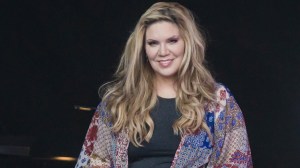
BERLIN, GERMANY – JULY 20: American singer Alison Krauss performs live on stage during a concert at the Zitadelle Spandau on July 20, 2022 in Berlin, Germany. (Photo by Frank Hoensch/Redferns) -

CMA FEST PRESENTED BY SOFI – Hosted by multi-award-winning country star Riley Green and Emmy Award-winning anchor and host from ABC's "Good Morning America" Lara Spencer, "CMA Fest presented by SoFi" is a three-hour concert event, filmed during the 53rd CMA Fest in downtown Nashville. This special airs Thursday, June 25, at 8/7c on ABC and streams the next day on Hulu. (Disney/Connie Chornuk) ELLA LANGLEY (Photo by Connie Chornuk/Disney via Getty Images) -

UNITED KINGDOM: American singer, songwriter and actress Dolly Parton, performs with a guitar, 1976. (Photo by David Redfern/Redferns) -

NASHVILLE, TENNESSEE – NOVEMBER 09: Alan Jackson performs onstage at The 56th Annual CMA Awards at Bridgestone Arena on November 09, 2022 in Nashville, Tennessee. (Photo by Terry Wyatt/WireImage) -

American singer-songwriter Dolly Parton wearing a denim jacket, 1979. (Photo by UPI/Bettmann Archive/Getty Images)