
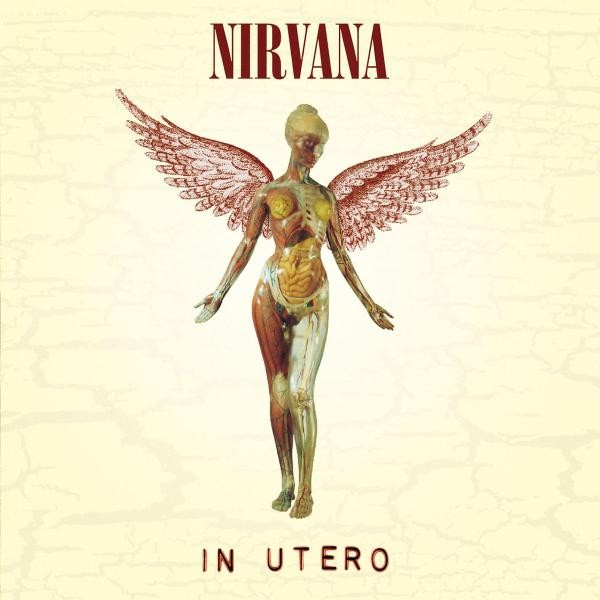
Nirvana
In Utero: 20th Anniversary Edition
(Universal)
Rating: 5 out of 5 stars
After Nevermind, Nirvana obviously wasn’t an indie band anymore. That famously gave them an identity crisis, but it also gave them an outlet to introduce a mainstream audience to the alternative music that had been bubbling just under the surface. Twenty years later, that alternative rock movement has been fully absorbed into the pop culture at large, to the point where a song like “Home” by Phillip Phillips might get labeled as “indie-folk,” even though it’s by a guy who won American Idol. I’m guessing Kurt Cobain would be uncomfortable with critics tracing this distillation back to his band. I say that because Cobain made In Utero.
While Bleach was borne out of the murky grunge of the Seattle scene – a blend of Black Sabbath’s heft, Black Flag’s aggression and post-punk’s artsier tendencies – Nevermind had a slick veneer that was afforded by a major-label budget in a time when “selling out” was still a blasphemous offense (Fast-forward again to nowadays, and landing a song in a commercial is one of the only ways an indie-rock band stays afloat aside from non-stop touring). At times, In Utero almost sounds like the band’s attempt to cull a portion of their audience, an effort to weed out the more casual alt-rock listeners. Where instrumental breaks on Nevermind seemed almost like parodies of guitar solos – or at least solos with a side-glancing, knowing wink – they’re almost completely subverted on In Utero. On the discordant, guitar-mangling breaks on songs like “Scentless Apprentice” and “Milk It,” Cobain doesn’t so much solo as he challenges you to finish the song. Even opening track “Serve The Servants” kicks things off with an atonal chord. A lot of unlikely records became hits because of Nevermind‘s success, not least of which was In Utero.
Part of what made Nirvana’s final studio album so monumental was everything that made Nevermind a classic – an abrasive retooling of the pop songwriting handbook. That sense of songcraft set them apart from their grunge peers. But while Nevermind navigated distant poles between abrasiveness and melody, the pendulum swung wider on In Utero, from the plaintive vulnerability on “All Apologies” to the demons exorcized on “Tourette’s.” And “Scentless Apprentice” might have the most recognizable drum sound ever recorded this side of Led Zeppelin’s “When the Levee Breaks.”
Less than seven months after the album’s release, Cobain was gone, and any cheekiness that might have been found in a line like “Teenage angst has paid off well / Now I’m bored and old” left with him. It wasn’t a cheery album by any means beforehand, but not many records have had the way their perceived shifted by later events quite as drastically. It could have been worse: Cobain originally wanted to call the album I Hate Myself and Want to Die (the would-be title track didn’t make the cut and ended up on the Beavis and Butthead compilation instead). It’s still a depressing record, and from a selfish music fan point of view, In Utero is all the more depressing because of how it hinted at new ground the band could have broken.
Twenty years later, In Utero is getting the deluxe reissue treatment, including a remastered playlist, alternative mixes and B-sides like the aforementioned “I Hate Myself and Want to Die” and the Foo Fighters-foreshadowing “Marigold,” with Dave Grohl on vocals. In the lead-up to In Utero‘s release, there was a lot of chatter between various camps – the band, the label, producer Steve Albini – about the final mixes. Rumors swirled that the label thought the album unlistenable, while the band wanted Albini to remix certain songs. Albini refused, and the band went elsewhere. The second disc here offers an updated mix overseen by Albini that unearths nuances and embellishments that were either absent or buried before (spoiler alert: Albini loves midrange). There are also demo versions of the songs in early form, most of them instrumental, plus a skronky instrumental demo dubbed “Forgotten Tune” and the self-explanatory “Jam.” The three-disc “Super Deluxe” version includes the band’s set from MTV’s Live and Loud, plus a DVD of rehearsal footage, concert videos and a director’s cut of the “Heart-Shaped Box” video.
More Album Reviews
-

Photo via cover of ‘Butter Miracle, The Complete Sweets!’ by Counting Crows -

Photo by Will Von Bolton -

Will Heath/NBC via Getty Images