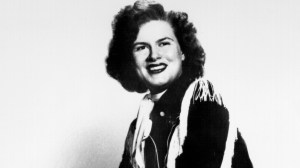
On this day (August 23) in 1952, Kitty Wells went to No. 1 on the country chart with “It Wasn’t God Who Made Honky Tonk Angels.” This made Wells the first solo woman to reach the top of the chart. It also solidified her place as the first woman to become a country star. More importantly, she showed the world that it was possible for a woman to stand in the spotlight.
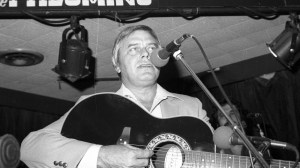
“It Wasn’t God Who Made Honky Tonk Angels” was written as an answer to “The Wild Side of Life.” Hank Thompson’s rendition of the single spent 15 weeks at No. 1. The song is from the perspective of a man who is left heartbroken and more than a little bitter after his lover left him to spend time in bars. In the chorus, he sings, I didn’t know God made honky tonk angels. / I might have known you’d never make a wife. / You gave up the only one that ever loved you / And went back to the wild side of life.
Videos by American Songwriter
J.D. “Jay” Miller heard the song and wrote “It Wasn’t God Who Made Honky Tonk Angels.” The song is from the perspective of a woman who hears “Wild Side of Life” on a jukebox in a bar. The lyrics blame unfaithful men for driving women away. The chorus is a direct rebuttal. It wasn’t God who made honky tonk angels / As you said in the words of your song. / Too many times married men think they’re still single / That has caused many a good girl to go wrong.
Kitty Wells Makes Country Music History
Kitty Wells released “It Wasn’t God Who Made Honky Tonk Angels” on June 23, 1952. By then, Hank Thompson was already enjoying a long run at the top of the chart with “Wild Side of Life.” Fittingly, Wells replaced Thompson at No. 1.
At the time, Billboard ran three charts for country singles. The Best-Selling Retail Folk (Country & Western) ranked songs based on sales. The Most-Played Juke Box (Country & Western) chart tracked juke box plays. The Country & Western Records Most Played by Folk Disk Jockeys chart tracked airplay.
Wells topped the best-sellers chart for six consecutive weeks and the juke box chart for five. The song didn’t reach the top of the other chart, though. Most radio stations refused to play the song that called out unfaithful men because it was too “suggestive.” She was also banned from performing it on the Grand Ole Opry’s “Prince Albert” segment. Across the pond, the BBC banned it from the airwaves as well.
The bans didn’t stop Kitty Wells from becoming an inspiration for generations of women in country music.
Featured Image by Michael Ochs Archives/Getty Images
-
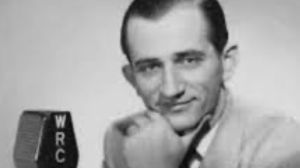
Connie B. Gay (August 22, 1914 – December 3, 1989), founding president of the Country Music Association (Photo courtesy of Facebook) -
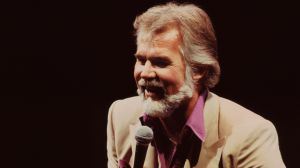
LONG BEACH, CALIFORNIA – MAY 09 : Kenny Rogers performs in concert, May 9, 1986 at Long Beach Arena in Long Beach, California. (Photo by Getty Images/Bob Riha, Jr.) -
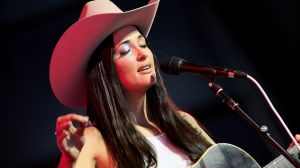
INDIO, CALIFORNIA – Kacey Musgraves performs at the Mojave Tent during the 2026 Coachella Valley Music and Arts Festival at Empire Polo Club on April 18, 2026 in Indio, California. (Photo by Arturo Holmes/Getty Images for Coachella) -
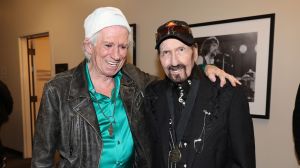
NASHVILLE, TENNESSEE – (L-R)Keith Richards and James Burton attend theClass of 2024 Medallion Ceremony at Country Music Hall of Fame and Museum on October 20, 2024 in Nashville, Tennessee. (Photo by Terry Wyatt/Getty Images for Country Music Hall of Fame and Museum) -
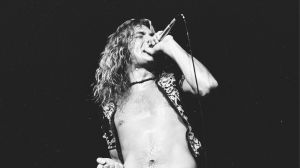
(MANDATORY CREDIT Koh Hasebe/Shinko Music/Getty Images) Robert Plant of Led Zeppelin performing on stage at Nippon Budokan, Tokyo, Japan, 23rd September 1971. (Photo by Koh Hasebe/Shinko Music/Getty Images)