A good singer-songwriter tells a story. But a great singer-songwriter makes you believe that what they’re saying comes from true experience. Johnny Cash excelled at this sort of musical embodiment. From his gruff, deep voice to the dark clothing, Cash seemed to have some sort of murky past hiding behind his signature half-scowl. But even more influential to this troubled persona were the many prison songs Cash sang, including one he released on this day in 1955.
On December 15, Cash released his future hit single, “Folsom Prison Blues”, on Sun Records out of Memphis, Tennessee. The record’s B-side was “So Doggone Lonesome”, and both singles appear on Johnny Cash with His Hot and Blue Guitar. “Folsom Prison” became a signature song for Cash. And its iconic opening riff has been played by countless guitars in countless honky tonks ever since. The song is as catchy as it is disturbing—a defining trait in much of Cash’s music.
Videos by American Songwriter
Indeed, Cash’s voice carries the weight of someone living out the rest of his days inside a Folsom Prison cell. But for as biographical as Cash made that song feel, he later said he took ample “poetic license,” particularly for one part of the song that doesn’t make much legal sense.
Johnny Cash Had a Four-Word Response to “Folsom Prison Blues” Anomalies
If you can get past the world-weary lyrics about how the narrator “shot a man in Reno just to watch him die,” you might find there are more than a few geographical and legal inaccuracies in Johnny Cash’s signature song, “Folsom Prison Blues”. As outlined by Roger Schluter of the Belleville News-Democrat, the fact that the narrator killed someone in Nevada would imply the murderer would be headed for a Nevada state prison, not Folsom Prison in California. Moreover, how could he hear the train “rollin’ on down to San Antone” from his cell? San Antonio is 2,000 miles away.
California photographer Jim Marshall, who often photographed Cash (and was the man behind the camera for Cash’s infamous middle finger shot), once asked the country icon about the inconsistencies in his song. Cash replied with a simple, four-word answer: “That’s called poetic license.” Hard to argue with a case that airtight. Besides, the song’s success suggests that not many listeners were getting hung up on the logistics of state-specific legal codes and train routes.
Still, that success took time. Cash’s 1955 version of “Folsom Prison Blues” was overshadowed by his hit single, “I Walk the Line”. “Folsom Prison” took off in 1968 as a live version of the track on the album, At Folsom Prison. The song peaked at No. 1 on the Billboard Hot Country Songs chart and No. 32 on the Hot 100. It also garnered Cash a Grammy Award for Best Country Vocal Performance. The song remains an integral part of Cash’s legacy to this day.
Photo by Michael Ochs Archives/Getty Images
-
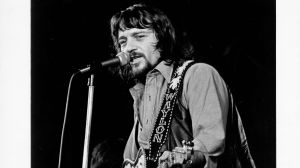
CIRCA 1975: Country musician Waylon Jennings performs onstage in circa 1975. (Photo by Michael Ochs Archives/Getty Images) -

Taylor Swift and Kanye West at the 2009 VMAs -
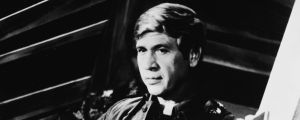
American country musician Buck Owens plays guitar in a promotion portrait for his 'All American Show,' mid 1960s. (Photo by Archive Photos/Hulton Archive/Getty Images) -
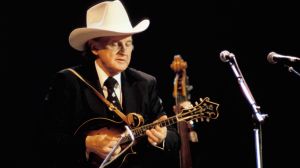
UNSPECIFIED – JANUARY 01: Photo of Bill MONROE (Photo by David Redfern/Redferns) -
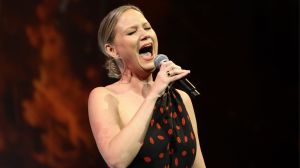
NEW YORK, NEW YORK – OCTOBER 28: Jennifer Nettles performs during the PAC NYC ICONS OF CULTURE Gala at Perelman Performing Arts Center on October 28, 2025 in New York City. (Photo by Dimitrios Kambouris/Getty Images for Perelman Performing Arts Center (PAC NYC)) -
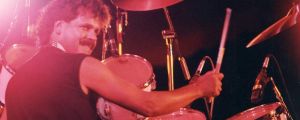
Kenny Buttrey, April 1, 1945 – Sept. 12, 2004 (Photo courtesy of Facebook)