Variety show hosts often have to put their personal preferences aside and abide by the demands of their viewership, which is how Elvis Presley was able to make television history with his record-breaking debut on the Ed Sullivan Show, despite Sullivan admitting that Presley wasn’t his “cup of tea.”
Nevertheless, Sullivan knew having Presley would do wonders for his ratings, so he struck a deal with the star’s manager, the infamous “Colonel” Tom Parker, for a three-appearance run. The budding King of Rock ‘n’ Roll appeared on the show for the first time on September 9, 1956.
Videos by American Songwriter
Interestingly, Sullivan wasn’t even there (but it had nothing to do with whether or not he was an Elvis fan).
Elvis Presley Makes Television History With Record-Breaking Debut
In the mid-1950s, CBS’ Ed Sullivan Show was in direct competition with NBC’s Steve Allen Show for weekly ratings. The week that Elvis Presley appeared on NBC’s variety show, performing “Hound Dog” to a basset hound, the Steve Allen Show blew Ed Sullivan out of the water. And as the old adage goes, if you can’t beat ‘em, join ‘em, which is what ultimately led Sullivan to acquiesce to Presley’s manager, Colonel Tom Parker. Sullivan hired Presley for three appearances, the first of which aired on September 9, 1956.
If Sullivan had any lingering doubts about booking Presley, his show ratings for that week likely put an end to his worrying. A whopping 60 million people tuned in to Presley’s Ed Sullivan episode, which equated to around 82 percent of the national television audience. Presley’s appearance on the variety program was one of the most-watched moments in television history. The show’s success was so massive that NBC didn’t even offer an alternative offering. Instead of a Steve Allen episode to compete, the network aired a film.
Presley’s setlist ranged from ballads to rockers, including “Love Me Tender”, “Don’t Be Cruel”, “Hound Dog”, and “Ready Teddy”. His subsequent appearances on the Ed Sullivan Show would be in late October and early January of the following year, the latter of which became infamous for the show’s decision to censor Presley’s gyrating by only filming him from the waist up. Still, the screams and shrieks from the women in the audience let the viewers at home run wild with their imagination, knowing Presley was up to something, even if the cameras weren’t showing what it was.
The Show Host Wasn’t Even There for the Historic Moment
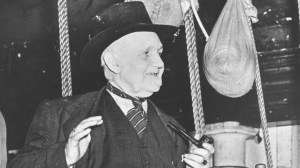
Fascinatingly, one of the best nights of the Ed Sullivan Show happened without Ed Sullivan there. The month before Elvis Presley’s historical debut on the television program, Sullivan had been in a nearly fatal automobile accident. He was still recovering from his injuries when Presley was scheduled to make his first appearance, so British actor Charles Laughton took his place. (Although Sullivan did admit that Presley wasn’t his first pick due to his suggestive performance style, his absence had nothing to do with the night’s star.)
Sullivan paid Presley an unheard-of sum of $50,000 for his three performances, which is equivalent to over half a million dollars today. Following the wildly successful appearances on the variety show, Colonel Tom Parker told Sullivan that Presley’s rate would be increasing to $300,000 for all future engagements. Additionally, Presley would only perform if he got two guest spots and an hour-long performance, as opposed to a handful of songs. The fee effectively priced out the variety show, and the King of Rock ‘n’ Roll’s last appearance on Ed Sullivan was the last of his three performances on January 6, 1957.
From there, Presley didn’t need to fight for new fans by selling his wares on television. He had ascended his throne as rock ‘n’ roll royalty, which meant television networks were knocking on his door, not the other way around.
Photo by CBS Photo Archive/Getty Images
-
HOUSTON, TEXAS – Toni Braxton performs during the New Edition Way Tour at Toyota Center on April 04, 2026 in Houston, Texas. (Photo by Eugenia R. Washington/Getty Images) -
The Rolling Stones at Desert Trip -
Photo by Lester Cohen/Getty Images -
UNITED KINGDOM – NOVEMBER 16: WEMBLEY ARENA Photo of RADIOHEAD and Thom YORKE, Thom Yorke performing live onstage (Photo by Patrick Ford/Redferns) -

Photo by The Sydney Morning Herald/Fairfax Media via Getty Images