Before they took over the rock ‘n’ roll mainstream (and before they landed their first Top 20 hit, thanks to John Lennon), The Rolling Stones went to Curly Clayton Sound Studios in North London to cut a demo record that they could start shopping to different labels. The band pooled their money to pay for the session, which, by most accounts, took place on October 27, 1962.
Without original material of their own, the burgeoning band leaned into their blues roots. The band cut three covers: Willie Dixon’s “You Can’t Judge a Book by the Cover”, St. Louis Jimmy’s “Soon Forgotten”, and Jimmy Reed’s “Close Together”. Although the acetate record inevitably became much more valuable in the decades that followed, it initially attracted little interest from local labels.
Videos by American Songwriter
Rolling Stones bassist Bill Wyman remembers this session as taking place on October 26. However, he wouldn’t make his Stones debut until December 14 of that same year, so it’s likely that the passing of time has faded memories a bit.
The Rolling Stones Cut Their First Demo Under a Slightly Different Name
The band that cut their first acetate demo at Curly Clayton Sound Studios looked almost like The Rolling Stones we know today—but not quite. For one, the band was still performing under the name “The Rollin’ Stones”, which matched the Muddy Waters LP after which they named themselves more exactly. They would later drop the apostrophe and stick with a full “rolling.” The lineup was slightly different, too. As mentioned, Bill Wyman wouldn’t join the band until later that winter.
The rest of the crew featured Brian Jones, Mick Jagger, Keith Richards, Ian Stewart on piano, and Tony Chapman on drums. Charlie Watts joined shortly after Wyman, which would complete the lineup that would go on to become one of the most famous rock bands of the time.
The year after The Rollin’ Stones cut that first, rather unsuccessful, demo, they began touring their native U.K. and increasing their draw around the country. They released their first single, a cover of Chuck Berry’s “Come On”, in June of that year. “I Wanna Be Your Man”, which John Lennon penned and gave to The Stones, would come out in November. From there, the band’s star continued to rise, turning that old acetate that no record label wanted at the time into a prized piece of rock ‘n’ roll history.
Photo by King Collection/Avalon/Getty Images
-
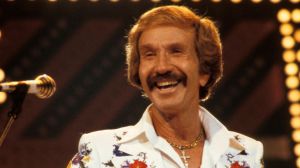
UNSPECIFIED – JANUARY 01: Photo of Marty ROBBINS (Photo by David Redfern/Redferns) -

AUSTIN, TEXAS = SiriusXM's Town Hall With Don Henley Hosted By Bob Seger At Austin City Limits Live At The Moody Theater In Austin, TX (Photo by Getty Images) -
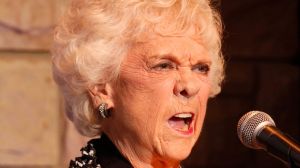
NASHVILLE, TN – Jean Shephard attends the 2011 Country Music Hall of Fame Medallion Ceremony induction at Country Music Hall of Fame and Museum on May 22, 2011 in Nashville, Tennessee. (Photo by Ed Rode/Getty Images) -
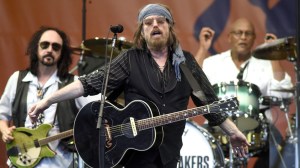
Tom Petty and the Heartbreakers -
UNITED STATES – CIRCA 1968: Photo of Shel Silverstein (Photo by Alice Ochs/Michael Ochs Archives/Getty Images) -
Linda McCartney and her husband, Paul McCartney, on their wedding day. -
AMERSHAM, ENGLAND – Singer and actor Mike Berry performs at Craig Douglas Benefit Concert on December 11, 2010 in Amersham, England. (Photo by Nat Jag/WireImage)