On November 28, 1963, The Rolling Stones released Let It Bleed, their eighth studio album, which, though a chart-topping record chock-full of hits, marked a particularly low point in the band’s history. In its highest moments, Let It Bleed gave us seminal Stones cuts like “Gimme Shelter” and “You Can’t Always Get What You Want”, two songs that continue to be integral parts of the British rock band’s musical legacy decades later.
But just as the album title might suggest, the band was slowly bleeding out, at least emotionally. Tensions between founding member Brian Jones and the rest of the band were nearing a fever pitch, especially as Jones’ substance abuse worsened and his beef with Keith Richards over his affair with Jones’ then-girlfriend, Anita Pallenberg, festered.
Videos by American Songwriter
By the time the band was recording Let It Bleed, Jones had mentally checked out. Sometimes, he was too sick to record. Other times, he was recovering from a motorcycle accident. Then, of course, there was the option that Jones was too high or too disinterested to contribute to the recording process.
In midsummer 1969, Rolling Stone reported that Jones had left the band and that Mick Taylor was replacing him. None of the drama bubbling behind the scenes made it into this announcement, with Jones saying the split was amicable. Mick Jagger added, “He wasn’t enjoying himself, and it got to the stage where we had to sit down and talk about it. So, we did and decided the best thing was for him to leave.”
Tragedy Followed Shortly After The Rolling Stones’ Original ‘Let It Bleed’ Release
The Rolling Stones originally scheduled the release of their eighth studio album, Let It Bleed, in July 1969. Numerous technical delays—and, undoubtedly, the interpersonal turmoil plaguing the group at the time—eventually pushed the release date back to November 28 in the States and early December in the band’s native U.K. But before The Stones could see their hard work come to fruition in their home country, tragedy struck. In the early hours of July 3, 1969, Jones was found at the bottom of his swimming pool.
Emergency responders pronounced Jones dead on the scene. He was 27 years old. The coroner’s report would later deem his cause of death to be “by misadventure,” noting that he had alcohol in his blood at the time of his passing.
Jones’ death, paired with the album’s violent undercurrents, cast a morbid pall over Let It Bleed. The late founding member of The Rolling Stones only appeared on auxiliary instruments on two tracks on the album, “Midnight Rambler” and “You Got the Silver”. But according to bassist Bill Wyman, Jones’ influence over the album was impossible to deny, even if he wasn’t physically present on the recordings.
“Brian was the inventor and inspiration of The Rolling Stones,” Wyman wrote in Stone Alone. “The band would not have existed without him. To understand the origins of The Rolling Stones, it’s essential to trace the wayward life of this man. If ever a man genuinely lived the rock ‘n’ roll life and naturally characterized The Stones in every way—long before the five of us assumed a style—it was Brian Jones. I loved the guy. He pushed every friendship to the limit and way beyond, but he had a great heart and was crucial to our existence.”
Photo by King Collection/Avalon/Getty Images
-
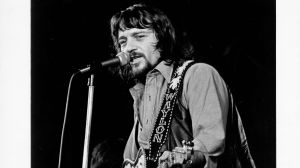
CIRCA 1975: Country musician Waylon Jennings performs onstage in circa 1975. (Photo by Michael Ochs Archives/Getty Images) -

Taylor Swift and Kanye West at the 2009 VMAs -

American country musician Buck Owens plays guitar in a promotion portrait for his 'All American Show,' mid 1960s. (Photo by Archive Photos/Hulton Archive/Getty Images) -

UNSPECIFIED – JANUARY 01: Photo of Bill MONROE (Photo by David Redfern/Redferns) -

NEW YORK, NEW YORK – OCTOBER 28: Jennifer Nettles performs during the PAC NYC ICONS OF CULTURE Gala at Perelman Performing Arts Center on October 28, 2025 in New York City. (Photo by Dimitrios Kambouris/Getty Images for Perelman Performing Arts Center (PAC NYC)) -

Kenny Buttrey, April 1, 1945 – Sept. 12, 2004 (Photo courtesy of Facebook)