
On May 21, 1970, Neil Young and his CSNY bandmates recorded what many would simultaneously consider the Canadian songwriter’s peak as a protest artist and the end of true activism in mainstream rock music. The inspiration for Young’s protest song came swiftly in the form of the horrific murder of four students at Kent State University three weeks earlier.
“Ohio” went down in history as one of the defining songs of the year, capturing the confusion, tragedy, and anger associated with the clash between Ohio National Guard members and Vietnam War protestors. But instead of spurring a new wave of protest rock anthems like many anticipated, the opposite turned out to be true. Protest music had lost its footing.
Videos by American Songwriter
Of course, this shift wasn’t Young’s fault. It just so happens that his fiery contribution to the CSNY catalogue bookmarked a major cultural and social shift in the United States, against which rock ‘n’ roll was fairly defenseless.
Neil Young Hit His Peak As A Protest Artist In The Spring Of 1970
Someone unaware of the events that unfolded following the spring of 1970 might have assumed that the tragic killings at Kent State University on May 4, 1970, would be a catalyst for a new wave of protests and anti-establishment social justice movements throughout the rest of the decade. But they would be wrong. Increasingly violent demonstrations, disillusioned leaders, and political shifts of the late 1960s sucked the wind out of these anti-war, anti-authoritarian movements. Centrist politics were becoming en vogue. Radicalism had lost its allure. Moderation was “in.”
Sadly, this led to many blaming the Kent State University students for their own murder. The general consensus seemed to be that if they had not antagonized the troops, perhaps the troops wouldn’t have opened fire. This was a massive change from the general zeitgeist of the mid-1960s, which celebrated artists like Bob Dylan, Sam Cooke, and Buffalo Springfield for their poignant, topical protest songs. In an ironic twist of fate, Neil Young’s 1970 track, “Ohio,” would prove to be one of the last true protest anthems of the time before the gap between musicians and activists widened.
“Neil surprised everyone,” bandmate David Crosby later said, per The Guardian. “It wasn’t like he set out as a project to write a protest song.” And indeed, it was surprising. Young hadn’t written a protest song up to that point. Considering just how viscerally emotional that track is, it’s no wonder the song shocked both Young and his colleagues.
Even The Musician Grappled With Whether To Keep The Song Alive
Following the release of Crosby, Stills, Nash & Young’s moving track, “Ohio” in June 1970, public opinion of anti-war protestors and counterculture extremists rapidly declined. Americans had lost the illusion that musicians could effectively save them from corrupt leaders and violent overseas conflict with the power of art and love. It was hard to believe a rock star fighting the establishment, which offered the musicians fame and wealth beyond the average person’s wildest dreams. Even Neil Young struggled to maintain the weight of his responsibility as a protest artist, infamously misidentifying one of the Kent State survivors as “Allison what’s-her-name” in a cringey radio interview three years later. Eventually, Young stopped singing it altogether.
“For years, I couldn’t sing it,” Young reflected decades later in the mid-2000s. “I felt I was kind of taking advantage of something that happened, and we were trading on somebody’s misfortunes…to give the audience a kind of rush of nostalgia. In this period of time, that doesn’t apply. What it is now, it’s a history. We’re bringing history back. That’s what folk music does.”
Photo by Legon 108/Shutterstock
More Behind The Song
-
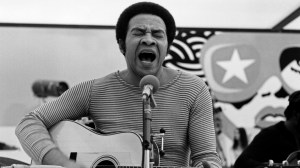
Der amerikanische Sänger und Songschreiber Bill Withers, Deutschland 1970er Jahre. (Photo by Schweigmann/United Archives via Getty Images) -
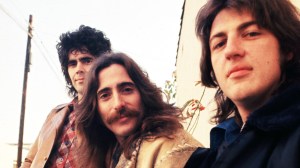
Three Dog Night 1971 Danny Hutton, Chuck Negron and Cory Wells (Photo by Chris Walter/WireImage) *** Local Caption ** -
American Country musician Randy Travis plays guitar as he performs onstage at an unspecified nightclub, Dallas, Texas, December 13, 1986. (Photo by Paul Natkin/Getty Images) -
IN CONCERT – Shoot Date: January 15, 1974. (Photo by ABC Photo Archives/Disney General Entertainment Content via Getty Images) BARRY WHITE -
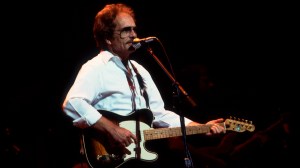
Singer and musician Merle Haggard performs at the Poplar Creek Music Theater, Hoffman Estates, Illinois, August 16, 1983. (Photo by Paul Natkin/Getty Images) -
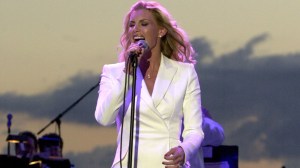
Faith Hill during Pearl Harbor Premiere & After Party at USS John C. Stennis in Honolulu, Hawaii, United States. (Photo by SGranitz/WireImage) -
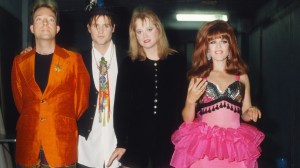
Portrait of The B-52's, Fred Schneider, Keith Strickland, Cindy Wilson, Kate Pierson, Ancienne Belgique (AB), Brussel, Belgium, 23 September 1989. (Photo by Gie Knaeps/Getty Images) -
ohn Travolta (Photo by Ron Galella/Ron Galella Collection via Getty Images)