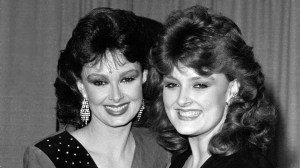
On this day (October 16) in 1972, Creedence Clearwater Revival announced that they were disbanding. The announcement came after their final studio album, Mardi Gras, underperformed commercially and was drubbed by critics. By that time, they had only been on the national stage for four years and had released seven albums and multiple timeless singles.
CCR released their self-titled debut album in 1968. However, John Fogerty, Cosmo Clifford, and Stu Cook had been playing together for nearly a decade before they entered the studio. Their first band, The Blue Velvets, formed in 1959. Later, Tom Fogerty, John’s older brother, joined the band. They signed a record deal with Fantasy in 1964 and became The Golliwogs. Then, Saul Zaentz purchased the label in 1967. They took the name Creedence Clearwater Revival early the next year.
Videos by American Songwriter
When they released a cover of “Suzie Q” in June 1968, listeners were hearing a brand-new band that was almost 10 years in the making. The single shot to No. 11, and their debut LP hit No. 52 on the Billboard 200. A year later, they began releasing classics. First came “Proud Mary,” backed with “Born on the Bayou.” They followed that with “Bad Moon Rising,” “Lodi,” “Green River,” “Down on the Corner,” and “Fortunate Son.” Before long, they were one of the most popular rock bands in the United States.
Tensions Within Creedence Clearwater Revival
John Fogerty wrote and sang lead vocals on all of Creedence Clearwater Revival’s classics. As a result, he became the band’s leader, for better or worse.
Tommy Fogerty wanted more creative input, but his younger brother didn’t want to share control. So, in 1971, after the band released Pendulum, he left. His departure was the beginning of the end for the band.
John Fogerty jumped to the other end of the creative control spectrum before the band began working on Mardi Gras. After the last date of the tour supporting Pendulum, he told his bandmates that things were going to change.
“John told us–this was in the limousine after the last gig of a tour before we’re having a break–that we could each do a third of the songs on the next album,” Stu Cook recalled. That wasn’t all, though. “He would not be singing on our songs because his voice was ‘a unique instrument.’ he didn’t even play guitar on them,” he explained.
Neither Cook nor Doug “Cosmo” Clifford were excited about the new arrangement. “Tom may have wanted to contribute songs, but Doug and I never wanted to,” Cook revealed. That didn’t matter, though. Fogerty told them if they didn’t agree to the arrangement, he would quit the band.
The Nail in CCR’s Coffin
Mardi Gras dropped in April 1972. It was their first studio album to miss the top 10 since their debut. The album produced two singles, “Sweet Hitch-Hiker” and “Someday Never Comes.” Fogerty penned both songs, but only “Hitch-Hiker” broke the top 10.
In a review for Rolling Stone, critic Jon Landau called it “relative to a group’s established level of performance, the worst album I have ever heard from a major rock band.” Landau was not alone in his opinion. The LP received mostly negative reviews.
In early October 1972, John Fogerty visited Stu Cook at his home to tell him he was quitting the band. “At this point, so am I. I’ve had enough,” Cook replied. Not long after that exchange, the band went public with their breakup.
Featured Image by Chris Walter/WireImage
-

NASHVILLE, TN – Dean Miller accepts the Poet's Award on behalf of his father Roger Miller at the 6th Annual ACM Honors at Ryman Auditorium on September 24, 2012 in Nashville, Tennessee. (Photo by Frederick Breedon IV/Getty Images for ACM) -
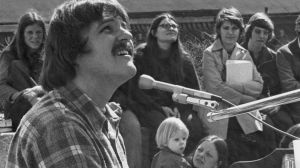
Photo by Michael Ochs Archives/Getty Images -

LOS ANGELES – CIRCA 1975: Country singer Dolly Parton performs onstage wearing a yellow dress in circa 1975 in Los Angeles, California. (Photo by Michael Ochs Archives/Getty Images) -
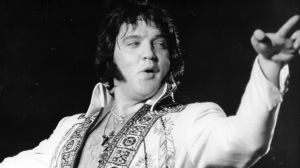
UNSPECIFIED – CIRCA 1977: Elvis Presley in concert circa 1977. (Photo by R.D/Images Press/Getty Images) -
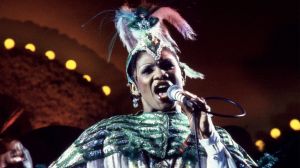
LONDON, ENGLAND – Jamaican-British singer Marcia Barrett, of the German vocal group Boney M., sings during a concert in London, England, December 1, 1978. (Photo by Soxphotos/Getty Images)