On November 5, 1988, wintertime was creeping ever closer to the United States, and, consequently, The Beach Boys were enjoying a No. 1 hit on the Billboard Hot 100 with one of the most divisive tracks in their entire catalogue. Critical response was largely underwhelming following the song’s July release, which would foreshadow the song’s placement on countless “worst song ever” lists in the years to come. Nevertheless, the song was as catchy as it was saccharine sweet. People were listening and singing along even if they didn’t want to.
Indeed, it’s hard to resist the urge to chime in with “Aruba, Jamaica, oooh, I wanna take you to Bermuda, Bahama, come on, pretty Mama” at the beginning of The Beach Boys’ track, “Kokomo”. Mike Love and Carl Wilson’s mellow vocals matched the breezy, tropical attitude of the song originally written by 1960s icons John Phillips (of The Mamas and the Papas fame) and Scott McKenzie (who scored a hit in 1967 with “San Francisco (Be Sure to Wear Flowers in Your Hair)”). For as cheesy as it sounded, the song was undeniably a hit.
Videos by American Songwriter
The song also serves as an interesting milestone in the history of The Beach Boys and pop culture in general. “Kokomo” might sound like a carefree, toes-in-the-sand song. But it was born out of some shockingly grim circumstances that rocked the entire West Coast and The Beach Boys’ producer, Terry Melcher, to their cores.
The Grim Past of The Beach Boys’ No. 1 Hit, “Kokomo”
Perhaps the most notable feature of The Beach Boys’ No. 1 hit from 1988, “Kokomo”, is the absence of Brian Wilson. Despite being a founding member and one of the most potent creative forces in the group, Wilson’s deteriorating mental health and a controversial and ostracizing relationship with psychiatrist Eugene Landy meant that he wasn’t on this late-era Beach Boys staple. In hindsight, that might have been something to be grateful for, as “Kokomo” received intense backlash for its sugary sweet pop production and wistful island dreaming. When Wilson first heard it on the radio, he didn’t even recognize it as a song by his own band.
Another fascinating aspect of this controversial late 80s hit is its association with Charles Manson. The musician-turned-cult leader famously spent time with The Beach Boys in the 1960s. Manson even auditioned for producer Terry Melcher, but Melcher ultimately turned him down. Around this same time, Melcher moved out of his rental home at 10050 Cielo Drive, after which film director Roman Polanski and his wife, Sharon Tate, moved in. On August 9, 1969, this Beverly Hills home was the site of the grisly Manson murders, which took the lives of an eight-month-pregnant Tate, Abigail Folger, Jay Sebring, Wojciech Frykowski, and Steven Parent. Having just moved out and being the man who rejected Manson, the massacre horrified Melcher.
Melcher was so shaken that he stepped away from the industry for a while until the 1980s, when he was tasked with finding a song for a Tom Cruise flick, Cocktail. Since he was already close with The Beach Boys, calling them in to record a version of Scott McKenzie and John Phillips’ “Kokomo” seemed like an obvious choice. But before the group released their final version, Mike Love did a bit of lyrical tweaking.
The Original Version of the Song Was Much Sadder
When The Beach Boys first began working on “Kokomo”, the lyrics were largely in the past tense. This small but significant change shifted the track to be more melancholic than tropical, which wasn’t exactly Mike Love’s wheelhouse. Love wanted to offer his audience an island escape, not a reminder of where they weren’t. To do so, he switched the lyrics to be present tense, imbuing a sense of hope and excitement for an upcoming beach vacation into the mellow track. He also added the chorus, which is unsurprisingly the most recognizable part of the song.
Speaking of the multi-generational appeal of the song, Love once said, “‘Pretty mama’ could be a child literally thinking his mama is pretty, or it could be this senior citizen saying, ‘Let’s get in the RV and go down to Florida,’ or the young guy who’s checking out the chick. No matter what age a person in the audience is, they’ll sing along with that chorus. It’s probably the biggest singalong we have, and we have some big ones.”
Photo by ABC Photo Archives/Disney General Entertainment Content via Getty Images
-
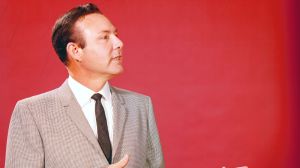
UNSPECIFIED – CIRCA 1970: Photo of Jim Reeves Photo by Michael Ochs Archives/Getty Images -

NASHVILLE, TN – Singer/Songwriter Whitey Shafer performs during the All-Star Whitey Shafer Benefit, Hosted By Moe Bandy at The Nashville Palace on March 18, 2015 in Nashville, Tennessee. (Photo by Rick Diamond/Getty Images for Webster PR) -
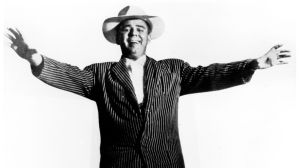
American singer, songwriter and disc jockey The Big Bopper, circa 1955. (Photo by Michael Ochs Archives/Getty Images) -
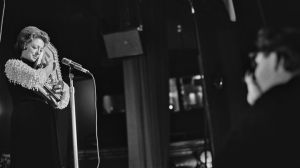
American singer and musician Maybelle Carter (1909-1978) of The Carter Family, playing the autoharp as the band perform live at Columbia Recording Studios, possibly during the recording of 'An Historic Reunion' at Columbia Recording Studios in Nashville, Tennessee, June 1966. Maybelle and her daughters had also performed as The Carter Sisters and Mother Maybelle. (Photo by Don Paulsen/Michael Ochs Archives/Getty Images)