Not many people can sit down with a new instrument and write a passable song on it, let alone a song that earns multiple Grammy Awards and a Hall of Fame induction. Fortunately for R.E.M., guitarist Peter Buck is among the lucky few who can. Indeed, while some people need months and months of lessons to master a new instrument, it only took Buck a few weeks with his new mandolin and one evening at home with a tape recorder to write “Losing My Religion”, which R.E.M. released as a single from Out of Time on February 19, 1991.
As he explained in Johnny Black’s biography, Reveal: The Story of R.E.M, “I really don’t like television. But occasionally, if I’m writing, it’s really nice to have something going on in the room. So, I’ll turn on the Nature Channel or a baseball game with the sound off, and I’ll play and watch it. I’d bought the mandolin just a couple of weeks prior, so it was still new to me. I had this little tape recorder running, and I was taping while I was playing the mandolin.”
Videos by American Songwriter
For the most part, Buck said, the tape was musical gibberish—passing phrases and licks that Buck was using to familiarize himself with the mandolin fretboard in comparison to the guitar. But in the middle of all that bluegrass-y cacophony, Buck came up with the chord progression for “Losing My Religion”.
How Familiar Favorites and Fleetwood Mac Helped Inform “Losing My Religion”
The mandolin might have felt unfamiliar to Peter Buck, but the chords he was playing were old favorites. Speaking to Guitar School (via SongFacts) in 1991, Buck explained that the opening riff and chorus came first. From there, he gravitated to a natural minor progression. “The verses are the kinds of things R.E.M. uses a lot. Going from one minor to another, kind of like those ‘Drive 8’ chords. You can’t really say anything bad about E minor, A minor, D, and G. I mean, they’re just good chords.”
To add more midrange between Buck’s mandolin and Mike Mills’ bass, the band brought in touring guitarist Peter Holsapple to play acoustic guitar. The bright steel strings fleshed out the instrumental backing, which, Buck has proudly attested, was done live in the studio. “Every bit of mandolin on the record was recorded live. I did no overdubbing. If you listen closely, on one of the verses, there’s a place where I muffled it, and I thought, ‘Well, I can’t go back and punch it up because it’s supposed to be a live track. That’s the whole idea.’”
Interestingly, Fleetwood Mac also played a small role in the final version of R.E.M.’s Grammy Award-winning track, “Losing My Religion”. According to Mills, he was struggling to come up with an appropriate bassline that kept the midtempo song moving while maintaining its distinct, alt-rock moodiness. “I went to my default setting, which is, ‘What would John McVie [Fleetwood Mac bassist] do?’ Because I really respect his bass playing. That’s what I was thinking when I came up with that line,” per Johnny Black’s biography.
“It just had a really magical feel,” Buck told Guitar School.
Photo by Jane Simon/Getty Images
-

LAS VEGAS – APRIL 18: Joey Martin of the band Joey + Rory performs onstage at the 45th Annual Academy of Country Music Awards All Star Jam at the MGM Grand Hotel/Casino on April 18, 2010 in Las Vegas, Nevada. (Photo by Ethan Miller/ACMA2010/Getty Images for ACMA) -
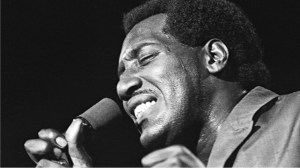
Otis Redding performing at the Monterey Pop Festival, 1967 -

Troy Gentry of Montgomery Gentry -
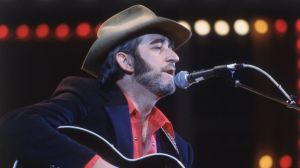
12th April 1982: Laid back American country singer Don Williams performing in the Country Music Festival at Wembley. (Photo by Hulton Archive/Getty Images)