On this day (June 16) in 2001, Tim McGraw topped the Billboard Hot Country Songs chart with “Grown Men Don’t Cry.” It was released as the lead single from his album Set This Circus Down and became the second in a string of five consecutive No. 1 singles for McGraw.
McGraw didn’t write “Grown Men Don’t Cry.” However, the song hit him like a sledgehammer to the heart the first time he heard it. More specifically, the second verse resonated so deeply with him that he knew he had to record it.
Videos by American Songwriter
The second verse tells the story of a man who didn’t get a chance to build a close relationship with his father before he died. The older man worked long hours and was rarely home. McGraw didn’t learn who his biological father was until he was 11 years old. They didn’t form a strong bond until the “Don’t Take the Girl” singer was already an adult, according to People. They had just under 30 years to nurture that bond before Tug McGraw, a former MLB star, died in 2004.
The Stories Behind Tim McGraw’s Sentimental Hit
Tim McGraw didn’t live the stories that inspired “Grown Men Don’t Cry,” but the songwriters, Tom Douglas and Steve Seskin, did, according to Songfacts.
“I had gone to the grocery store one day, had parked my car, and was walking into the store when I saw this woman talking on a pay phone,” Douglas recalled. “She had mascara running down her face, and her little boy was weaving in and out of her legs… she looked like an ice cream cone melting.”
When Douglas came out of the store, he saw that the mother and her child were living in their car. He wondered if there was something he could do for them, but decided to go home without approaching them. “I was haunted by my paralysis and inability to do anything about that. That feeling started this song when I sat down to write with Steve,” he recalled.
The verse that grabbed Tim McGraw’s attention came from Seskin’s life. He and his father went nearly three years without talking. Then, when they finally started to rebuild their relationship, his dad died. “I stood by my father’s grave in Queens, New York, and had the mend fences talk we had never had in real life,” he explained. “So that was the verse that killed me,” he added.
Featured Image by Brett Coomer/Houston Chronicle via Getty Images
-
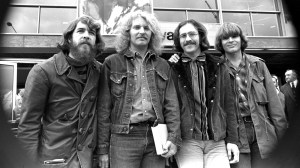
Creedence Clearwater Revival -
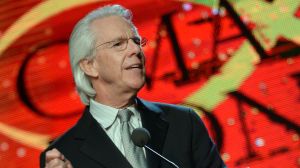
NASHVILLE, TN – Musician Jim Ed Norman speaks onstage during the GMA Honors Celebration and Hall of Fame Induction at the Allen Arena at Lipscomb University on April 29, 2014 in Nashville, Tennessee. (Photo by Rick Diamond/Getty Images for GMA) -
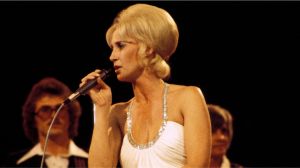
UNITED KINGDOM – WEMBLEY EMPIRE POOL Photo of Tammy WYNETTE, performing live onstage at the Country Music Festival (Photo by Andrew Putler/Redferns) -
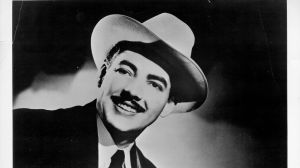
UNSPECIFIED – CIRCA 1970: Photo of Stoney Cooper Photo by Michael Ochs Archives/Getty Images -

Flea performing with Red Hot Chili Peppers