This article originally appeared in the January/February 2011 issue.
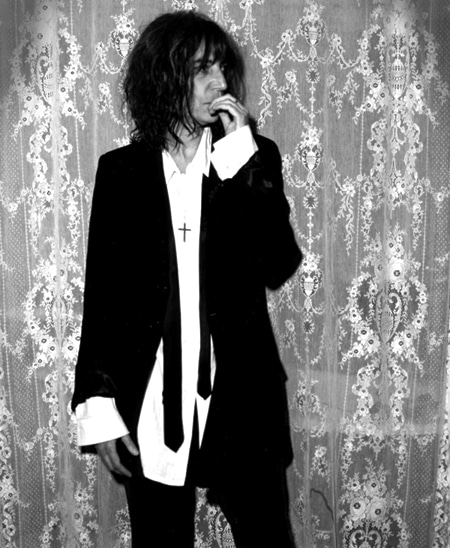
Since she was a kid, she knew she was an artist, and a serious one, willing to go the extra mile. As early as 11, she approached her own art with a remarkable singularity of purpose that has persisted ever since. “When I was a kid, I wanted to write a poem about Simón Bolívar,” says Patti Smith. “I went to the library and read everything I could. I wrote copious notes. I had 40 pages of notes just to write a small poem.” Decades later, the process persists. She spent months reading every book she could find about Ho Chi Minh before spontaneously improvising “Gung Ho.” She relies on her ability to shamanistically channel songs and poems, but never blindly; she deepens her well with information before delving into it.
Of course, she’s more than a songwriter. She’s an artist who recognizes that art needn’t be restricted to any one means of expression. Like her great friend, the late photographer Robert Mapplethorpe, about whom she wrote the beautiful memoir, Just Kids, she’s always been devoted to making art itself – whether a poem, a memoir, a novel, a record, a series of drawings, a play (she wrote Cowboy Mouth with Sam Shepard), or a song. As a child, art for her was both a refuge and a means of escape from the monotony of the everyday world. “I did not want to be trapped,” she says. “I grew up in the ’50s, when the girls wore really bright red lipstick and nail polish, and they smelled like Eau de Paris. Their world just didn’t attract me. I hid in the world of the artist: first the 19th-century artists, then the Beats. And Peter Pan.”
Unlike Mapplethorpe, however, fame was never a goal. When she made her debut album Horses, which remains the most visceral fusion of poetry and rock ever recorded, she never intended to be a rock star, and was happy to return to her job at the bookstore, writing poems and creating drawings. But she also recognized the unchained potential of rock and roll to speak not just to an assorted few at a coffee-house poetry reading, but to 40,000 people or more in an arena, all united by song. Though she certainly never left poetry behind (she’s written 12 volumes of published poetry, and several more books of poetry and memoir that are unpublished), she embraced the electric promise of speaking to the whole world. “Even now, it’s an opportunity to have a universal voice,” she says, “because everybody, all over the world, loves rock and roll. It’s the new universal language. Jimi Hendrix knew that. The Rolling Stones knew that. We knew that. People of the future will know that. What they do with it is up to them.”
How is writing poems different from writing songs?
Poetry is a solitary process. One does not write poetry for the masses. Poetry is a self-involved, lofty pursuit. Songs are for the people. When I’m writing a song, I imagine performing it. I imagine giving it. It’s a different aspect of communication. It’s for the people.
We always write a certain amount of poetry for the masses. When Allen Ginsberg wrote “Howl,” he didn’t write it for himself. He wrote it to speak out. To make a move, to wake people up. I think rock and roll, as our cultural voice, took that energy and made it even more accessible.
When I’m sitting down to write a poem, I’m not thinking of anyone. I’m not thinking about how it will be received. I’m not thinking it will make people happy or it will inspire them. I’m in a whole other world. A world of complete solitude. But when I’m writing a song, I imagine performing it. I imagine giving it. It’s a different aspect of communication. It’s for the people.
I write songs when I’m by myself, like walking along the beach, and a song comes in my head. Or I wake up from a dream, like with “Blakean Year.” I often write songs out of dreams, and take them to my musicians to help me. Sometimes I write melodies that are too complex and I can’t find them on the guitar, because I only know about eight chords. So I take them to Lenny [Kaye] or [bassist] Tony [Shanahan] and they transcribe them into a song.
“Free Money” came to me walking down St. Mark’s at three in the morning. It was pre-dawn, but it was so light in New York City, and it came to me and I sang it to Lenny. He structured it and found the proper chords, and we made a song. It was one of our earliest songs.
Other songs, they just come in my head and I sing them out loud, and the band finds the place, and they adjust it. For myself, the simpler format the better. “Gandhi” is nine minutes on one chord. It’s an improvisation. “Radio Baghdad” was completely improvised. I didn’t know the lyrics, but I knew I wanted to speak out against the invasion of Iraq. Being a mother, I freely entered into the mother consciousness of the mothers of Baghdad who were trying to comfort their children as they were being bombed. So these lyrics that come to me are self-perpetuated.
It’s miraculous that you can spontaneously come up with such amazing work.
It’s easier for me than to sit and write verse-chorus. Writing lyrics, sometimes, is torturous. Because I make them too complicated, and sometimes burden a song with complicated language. But it’s just how I work. So, for me, it’s freedom just to go and focus myself and see where my horse takes me.
Are there times you didn’t get there?
I have never been unsuccessful.
How do you explain that?
It’s a channeling. Burroughs always called it a shamanistic gift. Sometimes I feel I am channeling someone else. Part of it is experience from performing, and understanding that as a performer one has a mission, like Coltrane, to take your solo out to talk to God, or whoever you talk to, but you must return. So it has structure.
That’s one way that I write. Others take quite a bit of labor. Often the simplest song is the hardest to write. “Frederick” was very hard to write. Because in its simplicity, I also wanted it to be perfect.
Yes. And when people hear them, they think they came out perfectly. But to get to that place is a lot of work?
Yes, a lot of work. But I find, in the past decade, I don’t struggle with lyrics as much as I did in the ‘70s. I think that’s partially because, you know, I came out of nowhere. I wasn’t a songwriter. A lot of Horses was based on poems that I had written. For instance, “Jesus died for somebody’s sins but not mine” came from a poem I wrote when I was 20. I had written it perhaps in ’69 and we recorded it in ’75. “Redondo Beach” I wrote in 1971 as a poem. But I struggled.
I always thought when we did Horses I would do a record — and I was really honored to do the record — but then I’d go back to work, working in a book store, writing poems or doing my drawings. It didn’t occur to me that I’d be doing more records. Because I felt like I had said what I had to say. Horses was based on five years of work and performing and thinking about things, and suddenly when we had another record I found it very, very difficult because I wasn’t skilled in writing songs. And Horses was such an organic process. So I was learning as I went along.
But now I understand the songwriting process and it’s not so difficult. I mean, it is difficult but it’s not as difficult as it was. I remember writing the lyrics to the songs on Radio Ethiopia. At that time I had performed so much I felt a loss of language and just got very involved with playing electric guitar and making sonicscapes. I was much happier playing feedback than I was in spewing language. But the language came back.
I had always assumed — wrongly, I see — that your poetry and songwriting were intertwined. That you’d write a poem that would spark a song, and maybe vice-versa.
Well, that can happen. Anything can happen. I have started poems that seemed best-served as a song. But that’s just one of those things that happened totally organically. It would be false to say everything is black and white, it’s either one or the other. It’s just that my process is different. My mindset is different. And I’ve destroyed many poems [laughs]. Just lost the thread on a poem and then went back to them and found that it could be the germ of something else. But the initial process is a different process.
Why is songwriting sometimes torturous?
Because I had so much responsibility to others. If I was writing lyrics to someone’s music, I had responsibility to that musician. I had to project beyond myself and beyond my world out into the greater world. Allen Ginsberg told me, “If you have trouble writing, just write what you mean” [laughs]. And that’s a good lesson when you’re trying to write a song.
As an artist who has expressed yourself in so many ways, how is it to have written songs which reach so many more people who might never read poetry or books?
I think of my work as relatively obscure. When you look at a poet like Jim Morrison, who is able to write very complex lyrics like “The Wasp” but also write “Hello, I Love You,” this to me is a real gift, to be able to have a span like that.
With my own work, when I wrote the lyrics for Horses, I had a particular body of people who I was speaking to, and that was the people like myself, who I felt were disenfranchised. The more maverick person. I wasn’t really addressing the masses. I didn’t even think I had anything of interest to share with the masses. But I felt that I had something to share with people like myself. So my early work was really written to bridge poetry and rock and roll, and to communicate, as I said, with the disenfranchised person. And I think in that way it was successful. But in the ’80s, when I stopped performing and I got married and had a family, I became more empathetic to social issues and the humanist point of view. And I think my lyrics had changed. I was speaking to a larger body of people. As a mother, you want to speak to everyone. Because everyone is potentially a son or daughter. So my goal shifted. A lot of that came from my husband, Fred “Sonic” Smith, who was very political and very concerned with the human condition. So a song like “People Have The Power” came from Fred. It was Fred’s concept. Even though I wrote the lyrics, he wrote the title, and the concept was his, because he wanted to address all people. So I would say there has definitely been a shift in who I am speaking to, at least in my mind.
That shift seems to have come with the Wave album, with a song like “Dancing Barefoot.”
“Dancing Barefoot” begins the shift. That album, Wave, came from falling in love. And opening up my perspective. Wave addressed the fact that I was here, I did my work, I hopefully contributed. And I found somebody who I loved, and now I was embarking on a new life. So, you’re right, it’s really the album Wave which starts that shift.
It took me a while to understand you have license to have abstraction in a lyric. As a kid, I loved dancing. It’s very funny I should wind up a songwriter and have to write lyrics. Because as a kid I wasn’t so involved with the lyrics, I just loved to dance. Hearing “Gimme Shelter,” I didn’t really break down what the song was about, I just loved to dance to it. Talking about songwriting is complicated ‘cause there’s so many kinds of songs. And so I might seem like I’m contradicting myself, but I’m not. When I wrote “Frederick,” I tried to write a song that everybody loved and everybody danced to. It was consciously written to be a dance song. When I wrote “Radio Baghdad,” that was the last thing on my mind. For me, that has always been such a conflict because I love natural songs. I love that song “Get In The Groove.” [Sings] “Hey, get in the groove.” I mean, what’s that about? It’s such a great little song to dance to. It doesn’t mean to say much of anything.
Which is a great thing about songs, that they hit us on different levels at once — our hearts and minds and bodies.
Yeah. And I think that’s why songwriting, to me, has been such a mystery, and still something that I haven’t completely cracked. How a poet — going back to Jim Morrison — could write such complex lyrics and complex poems and then say, “Hello, I love you, let me jump in your game.”
Your biggest hit ever was one you wrote with Bruce Springsteen, “Because The Night.” How did that come together?
I got a tape of it, everything completely produced, and the chorus was done. He needed words for the verses, which were mumbled. I listened to it. I sat up with it all night writing a song for Fred, who was supposed to call me from Detroit. And I’m the kind of girl who waits for the call. I listened to it over and over, trying to distract myself from waiting for Fred. And that’s why in the lyric it says, “Have I doubt when I’m alone/ love is a ring, a telephone.”
I’ve always wanted to write a song that everyone could love. That’s the one thing that I feel I haven’t achieved. Writing a song that when you hear it, everybody is happy. When we’re in Italy and we break into “Because The Night” and there are 20,000 people singing, it just brings me to tears. So I know that people must experience a certain amount of joy. When it comes down to it, I might write poetry for myself or poetry for the gods of poetry. But I write a song for the people.
More Features
-
Elvis Costello Top of the Pops London 1982 -
NEW YORK – JANUARY 27: Singer/songwriter Van Morrison performs at a Warner Brothers party at Steve Paul's The Scene nightclub on January 27, 1969 in New York, New York. (Photo by PoPsie Randolph/Michael Ochs Archives/Getty Images) -
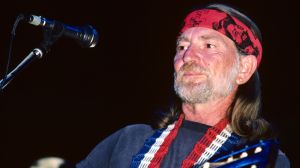
UNITED STATES – SEPTEMBER 10: BRENDAN BYRNE ARENA Photo of Willie NELSON, Willie Nelson performing on stage in East Rutherford (Photo by Ebet Roberts/Redferns) -
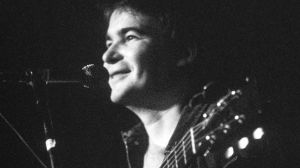
BOULDER, CO – OCTOBER 1972: John Prine performs at The Telagi music club in October 1972 in Boulder, Colorado (Ron Pownall/Getty Images) -
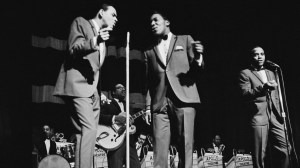
American doo-wop vocal group The Drifters perform at the Apollo Theater in New York City, 1964. (Photo by Don Paulsen/Michael Ochs Archives/Getty Images) -
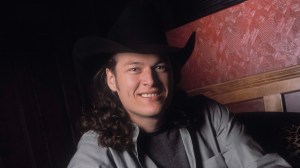
Blake Shelton, who was convinced to move to Nashville by Mae Boren Azton -
Photo by Frank Carroll/NBC via Getty Images