
The bands that enjoy the most success over the longest stretches of time generally possess an innate savviness. They understand when it’s time to double down on what’s worked before. And they also realize when it’s time to pivot.
In 1983, Genesis released a little song that tamped down the musical adventurousness that was once their trademark. It instead kept things simple with the intent of making a direct hit. Which is exactly what it became as the band’s first-ever Top 10 in America.
Videos by American Songwriter
Changing Musical Lanes
Genesis’ transformation from prog rock daredevils to an unstoppable pop music machine was gradual in a sense, considering it took about a decade or so. But there were also certain catalytic events that sped up that process.
Peter Gabriel’s decision to leave the band in 1975 started the changes. It robbed the band of their thematic visionary. That forced them to focus on song-oriented albums, as opposed to story-oriented. When the band was reduced to three members, the strain those long, elaborate song suites put on those remaining in the band started to become more trouble than it was worth.
But perhaps the ultimate tipping point came when Phil Collins, the band’s drummer and lead singer, made his first solo record. Focusing on the struggles Collins was enduring due to his divorce, it proved that he could make an impact as a songwriter of down-to-earth concerns. He brought that experience back with him to the Genesis fold.
Little by little, Genesis started to nudge their way into the pop mainstream. In 1978, the yearning ballad “Follow You Follow Me” gave them their first foothold in the US Top 40. Three years later, the sauntering love-gone-wrong song “Misunderstanding” pushed them into the Top 20.
“All” or Nothing
Still, when they headed into the studio to make the self-titled album they’d release in 1983, Collins as a solo act boasted three American Top 20 singles to his band’s one. Genesis was still devoting a good chunk of their records to more musically ambitious numbers that were never going to be a factor at pop radio.
But at least they’d reached the point where they realized that they shouldn’t turn away a song just because it felt too catchy or pop-oriented. As they noodled about in the studio, Mike Rutherford was playing around on his guitar. Tony Banks had recorded this little bit. When recreating it on his keyboard, he came up with a groovy riff.
That’s how “That’s All” started. From there, Rutherford came up with a bouncy bass line. Collins played drums inspired by Ringo Starr’s style on The Beatles’ classic “Rocky Raccoon”. Like so many other British bands, they idolized the Fab Four in their formative years. All these years down the line, they were bringing that influence to the forefront.
Just the Beginning
Collins took over on lyrics, writing about a relationship that the narrator can’t quite quit even as it exasperates him. The formula was a far cry from what Genesis had utilized when they first emerged on the prog scene. But the punchy track immediately muscled its way onto pop radio playlists.
“That’s All” landed at No. 6 on the US pop charts in 1983. That, coupled with Collins’ growing impact as a solo performer, pushed the band to a higher echelon of popularity. Three years later, their album Invisible Touch would parlay that rise into a stunning five Top 5 singles, including two No. 1s.
(Photo by Larry Busacca/Getty Images)
More Features
-
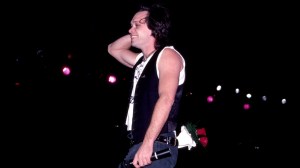
American Rock musician John Cougar (born John Mellencamp) performs onstage at Byrne Arena (later known as Meadowlands Arena), East Rutherford, New Jersey, October 7, 1982. It was the first concert of the 'American Fool' tour, in support of headliners Heart. (Photo by Gary Gershoff/Getty Images) -
Photo via NBC/Getty Images -
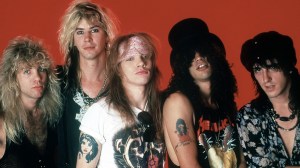
DETROIT, MI – MAY 7: (L-R) Drummer Steven Adler, Duff McKagan, vocals Axl Rose, guitarist Slash and guitarist Izzy Stradlin of the music group Guns N' Roses pose for a portrait on May 7, 1988, at the Detroit State Theater in Detroit, Michigan. (Photo by Ross Marino/Getty Images) -
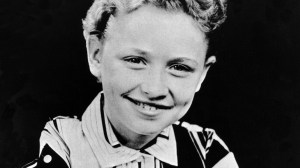
TENNESSEE – CIRCA 1955: Country singer Dolly Parton poses for a portrait in circa 1955 in Tennessee. (Photo by Michael Ochs Archives/Getty Images) -
UNITED KINGDOM – American country music singer Hoyt Axton performs on stage in 1981. (Photo by David Redfern/Redferns) -
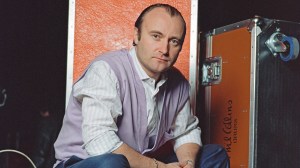
Phil Collins seen here following rehearsals in a London studio for his forthcoming Seriously tour, which begins in Japan. 14th February 1990 (Photo by Steve Woods/Mirrorpix via Getty Images) -
(L-R) Joe Walsh, Timothy B. Schmit, Glenn Frey, Don Henley and Don Felder of the rock band "Eagles" performing onstage in 1980. (Photo by Michael Ochs Archives/Getty Images) -
LOS ANGELES – CIRCA 1974: Singer Patti Labelle performs onstage with her group LaBelle in circa 1974 in Los Angeles, California. Also in the group were former Bluebelles, Sarah Dash and Nona Hendryx. (Photo by Michael Ochs Archives/Getty Images)