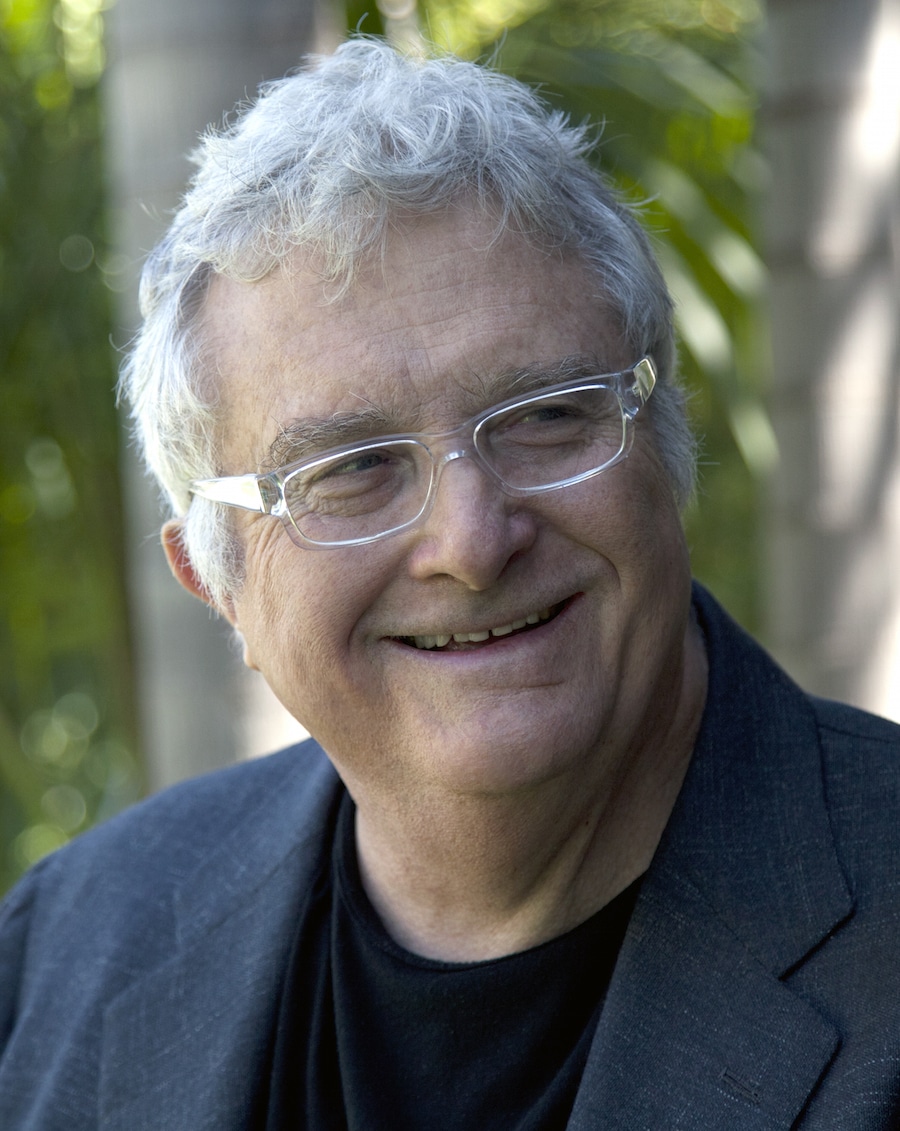
Even in the smaller world of contemporary roots-leaning singer-songwriters, Newman’s influence is as widespread as it’s ever been. Some, like Father John Misty, take directly from Newman’s playbook and embrace alter egos and disreputable first-person narration. Others, like Dawes’ Taylor Goldsmith, Courtney Barnett, Robert Ellis, Houndmouth’s Matt Myers, Lydia Loveless and Blake Mills, all write in a style that’s deeply indebted to Newman’s radically off-kilter template for literary pop narration.
Blake Mills, for one, has described one of his songs, “Cry To Laugh,” as a “standard Randy Newman rip-off.”
“He’s so in his own world, but so many songwriters have learned about narration and irony and satire from him in subtle ways,” says Mills. “I hear traces of his influence everywhere.”
“Maybe it’s just because I’m exposed to people like Randy Newman, but I don’t really understand why the narrator in a song always has to be the hero and emerge victorious. That’s not the way I write, and that’s not the way I listen to music,” says Robert Ellis, whose incisive songwriting often gets compared to Newman’s. Like Newman, Ellis is “not really interested in the sentiment of ‘I love you.’ That’s what I like about Randy’s songs: even if it’s a love song, it’s coming from some fucked up perspective.”
Ellis vividly remembers the time he briefly met his songwriting hero. He was playing nearby Newman on the same night in Brussels and managed to get backstage to meet the songwriter after each of their shows. “I was just like, ‘I’m a really big fan, I love your music,’ all the normal fanboy stuff, and then I told him that I had played ‘Rider In The Rain’ [from Newman’s 1977 album Little Criminals] earlier that night.” Newman looked at Ellis and replied, “Well, I’m glad somebody’s playing it.”
*****
For all that’s made of his lyrics, Randy Newman, born into a family of film composers, still most enjoys the time he spends arranging, conducting, and playing music with professional session musicians. Whether he’s working on a film or his own albums, these days, “the only thing that I love about writing songs are the days I spend with the orchestra, not to have power and wave a stick around in my hand, but to make music with people who are so superior as musicians and as players. It’s a reason to keep going.”
Newman readily admits that he’s struggled to write consistently throughout his career. “Some people say, ‘I don’t know what I’d do if I didn’t write,’ but sometimes I don’t think I need to,” he says. By now, he knows that songwriting is primarily a matter of discipline. “You have to show up every day for it,” he says. His other crucial tip? Seek out external encouragement.
“A real good writer will always be hard on himself, but you can’t let the critic become greater than the creative part in you. I was very lucky to have Lenny Waronker early on, because when I played something for him, he was enthusiastic about it,” Newman says. “You often lose enthusiasm yourself. You write something and then two days later you wonder, ‘What the hell was I doing?’ I do agonize, and take the work with me away from where I’m writing, but what you can’t do is make a work of art of your life.”
For all his self-scrutiny and eternal dissatisfaction, when Newman looks back now on his half-century of songwriting, he can see, with clarity and gratitude, that his eternal neurosis has, in a truly astonishing, inexplicable way, paid off.
“It’s amazing to me that the stuff I did so long ago is still … that people still know it and like it. It really is. I never would have thought that. That’s what happens with songwriters: you do something in a little room by yourself, and then it’s out there in the world, the product of nothing but your own mind.”
More Features
-
MOUNTAIN VIEW, CA – JUNE 13: Third Eye Blind backstage at Live 105's BFD 1997 at Shoreline Amphitheatre on June 13, 1997 in Mountain View California. (Photo by Tim Mosenfelder/Getty Images) -
Janis Joplin and Kris Kristofferson at Landmark Hotel Los Angeles Summer 1970. (Photo by John Byrne Cooke Estate/Getty Images) -
NEW YORK, NEW YORK – JULY 28: Kelsea Ballerini seen in West Village on July 28, 2026 in New York City. (Photo by Aeon/GC Images) -
George Strait (Photo by Paul Natkin/WireImage) -
George Harrison took the No. 1 position from Paul McCartney today in 1973 -
Faith Hill during Pearl Harbor Premiere & After Party at USS John C. Stennis in Honolulu, Hawaii, United States. (Photo by SGranitz/WireImage) -
Photo by Gary Gershoff/Getty Images