Blondie is probably best known for new wave pop hits like “Call Me” and “Heart Of Glass”. With Debbie Harry at the helm, the group dominated the charts in the late 1970s and 1980s. They injected new wave sensibilities and sounds into everything from disco to hip-hop. And that song that touched on hip-hop, “Rapture”, was very ahead of its time.
“Rapture” dropped in 1981 as a single off the band’s fifth album, Autoamerican. Written by Harry and Chris Stein, “Rapture” blended together some very different sound elements, touching on new wave, disco, and hip-hop. This Blondie song also includes what many believe to be an early example of a “rap” section, complete with an extended coda. Of course, rap had already been growing and evolving for a few years by that point. But few pop stars at the top of the 1980s were experimenting with the rap genre’s elements the way Blondie was.
Videos by American Songwriter
The Historical Significance Behind “Rapture” by Blondie
Some would say this section in “Rapture” is more like spoken word poetry than rap. But what is rap music, if not spoken word poetry with a very particular vibe? Harry also namedrops some DJs and legends in early rap, too, from Fab 5 Freddy to Grandmaster Flash. In the surreal, almost campy rap section of “Rapture”, Harry says:
Fab 5 Freddy told me everybody’s fly
DJ spinnin’, I said, “My, my”
Flash is fast, Flash is cool
François c’est pas, flashé no deux
And you don’t stop, sure shot
Go out to the parking lot
And you get in your car and drive real far
And you drive all night, and then you see a light
And it comes right down, and it lands on the ground
And out comes a man from Mars.
“Rapture” would go on to make history. Its music video would be the first rap music video ever aired on MTV and was also part of the network’s first video rotation. The song would also become a pretty noteworthy hit on the charts. “Rapture” peaked at No. 1 on the Billboard Hot 100 chart and No. 5 in the UK. It was also a No. 33 hit on the Hot R&B/Hip-Hop Songs chart and a No. 35 hit on the Mainstream Rock chart. It was one of the biggest crossover jams of the early 1980s, and it still manages to wiggle its way into your brain for hours today.
Photo by Michael Putland/Getty Images
More Features
-
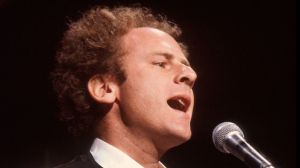
Art Garfunkel performs on TV show, USA, 1975. (Photo by Michael Putland/Getty Images) -
Photo by Luciano Viti/Getty Images -
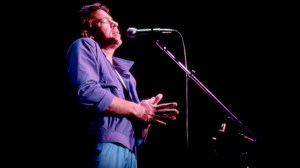
ANN ARBOR, MI – NOVEMBER 22: American singer, songwriter, and guitarist Boz Scaggs performs on November 22, 1980, at the Hill Auditorium in Ann Arbor, Michigan. (Photo by Ross Marino/Getty Images) -
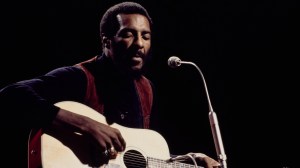
American singer-songwriter and guitarist Richie Havens, wearing a tan-coloured suede waistcoat over a black turtleneck sweater, plays a Guild D-40 acoustic guitar during a television appearance in London, England, circa 1970. (Photo by Tony Russell/Redferns/Getty Images) -
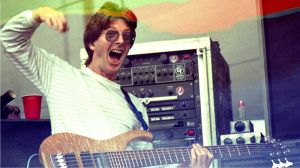
EUGENE, OR – (EDITORS NOTE: Multiple exposure made in camera) Phil Lesh of the Grateful Dead performs at Autzen Stadium on June 23, 1990 in Eugene, Oregon. (Photo by Tim Mosenfelder/Getty Images) -
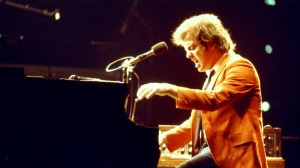
UNITED STATES – JANUARY 01: Billy Joel performs live on stage during his 1980 US tour (Photo by Richard E. Aaron/Redferns)