There’s an artist’s keen ability to influence an audience into feeling a certain way or doing something specific, and then there’s Harry Connick Jr. During a late ‘90s performance of his 1999 track “Come By Me,” the jazz pianist, singer, composer, and actor proved that no matter how many hyphens he adds to his stage name, he’s a musician first and foremost.
Sometimes, the artist is at the whim of the audience. But that night at the Harry Connick Jr. show, those roles were ingeniously reversed.
Videos by American Songwriter
Watch The Performer Notice The Crowd’s Groove Running Away
As anyone who has performed for a crowd can likely attest, there are few things more dangerous than an organized clap or singalong. Massive crowds rarely keep time with metronome precision, and their collective singing voice is off-pitch more than it’s on. But hey, who’s to blame them? They’re not the ones performing. They’re watching people perform. Nevertheless, some of this, er, lack of musicality can seep into what’s happening on stage. Such was the case for Harry Connick Jr. and his band during a Y2K performance of “Come By Me,” the second track off Connick’s 1999 album of the same name.
At some point during the song, the crowd’s clapping lags so far behind that they begin to clap on beats one and three instead of two and four. Emphasizing the second and fourth beat is popular in Western pop, rock, and jazz, as it reinforces the groove’s natural backbeat. Listen to most modern drum arrangements, and you’ll find the snare also falls on beats two and four, making it a natural choice for when to clap. Clapping on one and three can be okay in some situations. But generally speaking, it’s not the “groovier” way to bop along to a song. Connick and his band certainly didn’t think so.
As Connick continues playing piano and singing, you can practically see the cogs turning behind his eyes. Singing with a sly smirk, his eyes darted back and forth between the crowd and his band. Besides his alternating expressions of wry humor and concentration, someone listening to his performance would never know that he was trying to figure out what trick to pull from his musical sleeve.
How Harry Connick Jr. Tricked His Crowd With A Hidden Measure Of 5/4
Determined to move the groove back to a natural two and four emphases, Harry Connick Jr. took a brilliant creative liberty during a piano solo. As the crowd clapped along to beats one and three, Connick slipped in a subtle measure of 5/4, which has five beats instead of four. As the crowd continued their same pattern, Connick’s extra measure of 5/4 meant that the audience clapped on beats one, three, and five. The pianist then started the next measure in 4/4, effectively moving the audience’s claps over to the second beat when they came back in for their next clap after beat five.
Even those without a basic understanding of music theory would be able to feel the change in the groove after Connick expertly manipulated the audience toward the backbeats of two and four. They might assume that the band had changed something about what they were doing, thanks to the backbeat’s way of driving a beat along and making it seem more swinging and lively. But in reality, the only thing that changed was Connick’s added beat, tucked in between a flawless lyrical delivery and followed by his airtight backing band.
Photo by Gie Knaeps/Getty Images
More Features
-
Photo by Gijsbert Hanekroot/Redferns -
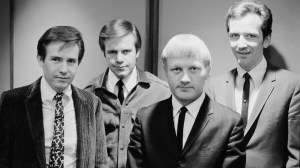
American rock & roll band the Bobby Fuller Four, circa 1966. From left to right, they are singer Bobby Fuller, bass player Randy Fuller, guitarist Jim Reese and drummer Dalton Powell. (Photo by Don Paulsen/Michael Ochs Archives/Getty Images) -
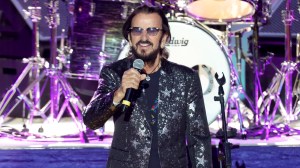
LOS ANGELES, CALIFORNIA – JUNE 14: Ringo Starr performs onstage with his All Starr Band at The Greek Theatre on June 14, 2026 in Los Angeles, California. (Photo by Kevin Winter/Getty Images) -
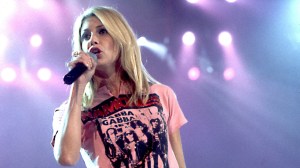
Faith Hill on 11/2/00 in Chicago, Il. (Photo by Paul Natkin/WireImage) -
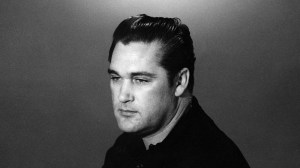
Charlie Rich, who released several hit songs featuring Pete Drake on steel