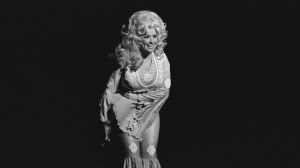
Few musicians are more tightly connected in music history than Joan Baez and Bob Dylan. Once in a relationship, once collaborators, and always important figures in the 1960s folk music movement. The pair also often wrote songs for and about each other. Some were romantic, others were subtle jabs. But on one occasion, Baez used her talents to try to knock some sense into Dylan way back in 1972.
The song in question is “To Bobby”, released in 1972 from Baez’s album Come From The Shadows. The title alone is a reference to Dylan’s 1964 song “To Ramona”. In that track, the narrator implores “Ramona” not to listen to the advice of others and acknowledges that they are firm on very different positions. It’s worth noting that “Ramona” was a nickname Dylan gave Baez, per Baez herself in her autobiography And A Voice To Sing With. It doesn’t take a rocket scientist to figure out that “To Ramona” was written about Baez. Or, at the very least, about her efforts in activism. It seems like Dylan was trying to encourage her to leave politics behind.
Videos by American Songwriter
But it grieves my heart, love
To see you tryin’ to be a part of
A world that just don’t exist
It’s all just a dream, babe
A vacuum, a scheme, babe
That sucks you into feelin’ like this.
But there was a time when Dylan was definitely a protest singer, despite his attempts to say otherwise.
“I’ve never written a political song,” Dylan once noted. “Songs can’t save the world. I’ve gone through all that.”
It’s hard to listen to tracks like “Masters Of War” or “Only A Pawn In Their Game” and not hear a protest song. It seems, possibly, that Dylan gave up on that particular path, opting for more artistic ventures over producing music that called people to action. Baez saw it, and she wrote “To Bobby” as a direct response.
“To Bobby” Was Joan Baez’s Attempt To Get Bob Dylan To Write Protest Songs Again
In “To Bobby”, Baez seems to beg Dylan to see the light while also chastizing him for giving up on the struggle of activism in the 1960s when it was still in its infancy.
I’ll put flowers at your feet and I will sing to you so sweet
And hope my words will carry home to your heart
You left us marching on the road and said how heavy was the load
The years were young, the struggle barely had its start
Do you hear the voices in the night, Bobby?
They’re crying for you
See the children in the morning light, Bobby
They’re dying.
“To Ramona” and “To Bobby” share a similar narrative structure. But Baez is imploring Dylan to go back to saying something that matters, while Dylan is imploring her to give it all up. The subsequent line, “No one could say it like you said it,” hits particularly hard. Could Dylan really have enacted real change with protest music if he had kept going? Who knows? In the end, Baez (and us) are still left wondering.
Photo by Hulton-Deutsch/Hulton-Deutsch Collection/Corbis via Getty Images
More Features
-
Photo by CBS via Getty Images -
Bob Moore played on most of Patsy Cline's recordings for Decca Records -
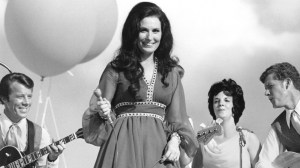
MEMPHIS – OCTOBER 7: Loretta Lynn performs on THE ED SULLIVAN SHOW at the State Fair in Memphis, Tenn. October 7, 1970 (Photo by CBS via Getty Images) -
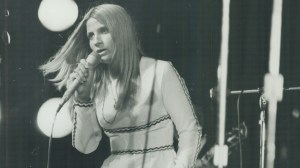
CANADA – SEPTEMBER 03: Country singer Skeeter Davis (Photo by Harold Barkley/Toronto Star via Getty Images) -
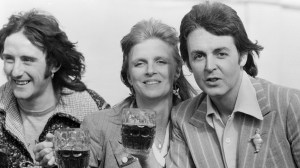
Paul McCartney and his wife Linda of pop group Wings enjoy a pint of ale as they make a film to promote their new single 'With A Little Luck' in London. Left is Denny Laine Middle is Linda McCartney Right is Paul McCartney, picture taken 22nd March 1978. (Photo by Doreen Spooner/Mirrorpix/Getty Images) -
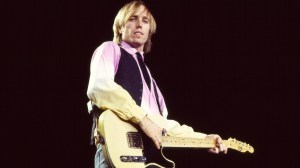
American Rock musician Tom Petty (1950 – 2017) plays guitar as he performs, with his band the Heartbreakers, onstage during the 'Long After Dark' tour at Nassau Coliseum, Uniondale, New York, March 31, 1983. (Photo by Gary Gershoff/Getty Images)