
Fate sometimes intervenes and tells the story it wants, regardless of how humans might wish things to go. For example, Led Zeppelin had no way of knowing that In Through The Out Door, released in 1979, was going to be their last studio album.
Had they known, it’s possible that the band might have done things quite differently. Today, the album stands out as a polarizing one in Zep’s catalog, with some fans bemoaning the lack of the old thunder and others enjoying the nifty songcraft of it all.
Videos by American Songwriter
A Long Hiatus
For a while there, it looked like Led Zeppelin’s last studio album might turn out to be the underwhelming 1976 LP Presence. In 1977, while the band was in the middle of a US tour, Robert Plant discovered that his 5-year-old son Karac died of a stomach virus. The tour immediately ended, and the band went on an indefinite hiatus.
After about a year or so, band manager Peter Grant tried to rally the troops. A brief get-together in an English castle to possibly fire up some new music in 1978 didn’t come to anything. Plant simply couldn’t summon up the enthusiasm to dive back into the band, while bassist John Paul Jones felt similarly distanced from the enterprise.
Eventually, the band was presented with an opportunity they couldn’t deny. Swedish superstars ABBA had built a state-of-the-art studio in Stockholm, Sweden, and they offered it to Led Zep for free for a few weeks as a way of drawing attention to it. Led Zeppelin accepted the offer. When they began recording, the two guys who had been on the fence about the band’s prospects were the two who took charge of the process.
‘Door’ Prize
Most Led Zeppelin sessions in the past began with Jimmy Page bringing in a passel of musical ideas, everything from fully formed pieces to promising riffs. But in this case, he was a bit empty. It didn’t help that both Page and drummer John Bonham were dealing with serious substance abuse issues around this time.
As a result, John Paul Jones, previously never much of a songwriting source for the band, started to step to the fore. Jones had recently purchased a synthesizer that inspired him. Plant, suddenly energized by this new approach, took the ball and ran with it, collaborating with Jones as never before.
Page wasn’t completely absent from the proceedings. His contributions to the LP consisted of taking the demo-like material created by Jones and Plant and sprucing it up via his production expertise. In just three weeks, Led Zeppelin pulled together enough material for the next album, although there would be a lengthy delay before In Through The Out Door saw the light of day.
Unexpected Swan Song
The hold-up for the release was the packaging, a multi-faceted beast that took longer than normal to complete. In Through The Out Door arrived in August 1979 and immediately scaled to the top of the album charts in England and America.
Pop music fans found it more accessible than most Zeppelin releases. The shapeshifting “Fool In The Rain” even eked into the Top 40. And the aching “All My Love”, with lyrics penned by Plant about the loss of his son, might make for the most touching song in the band’s catalog.
Many fans missed the bombastic rock of the old days, however. Perhaps those folks would have taken a more favorable view of In Through The Out Door if it had been a change of pace before a return to the main path. Instead, the death of John Bonham in 1980 made it Led Zeppelin’s unintended closing statement.
(Photos by Brad Elterman/FilmMagic)
More Features
-
Photo via NBC/Getty Images -
DETROIT, MI – MAY 7: (L-R) Drummer Steven Adler, Duff McKagan, vocals Axl Rose, guitarist Slash and guitarist Izzy Stradlin of the music group Guns N' Roses pose for a portrait on May 7, 1988, at the Detroit State Theater in Detroit, Michigan. (Photo by Ross Marino/Getty Images) -

Bassist Daryl Stuemer, guitarist Mike Rutherford, singer Phil Collins of the band Genesis perform during the Atlantic Records 40th Anniversary celebration called "Its Only Rock and Roll" at Madison Square Garden on May 14, 1988 in New York City, New York. (Photo by Larry Busacca/Getty Images) -
TENNESSEE – CIRCA 1955: Country singer Dolly Parton poses for a portrait in circa 1955 in Tennessee. (Photo by Michael Ochs Archives/Getty Images) -
UNITED KINGDOM – American country music singer Hoyt Axton performs on stage in 1981. (Photo by David Redfern/Redferns) -
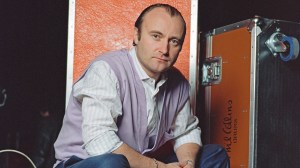
Phil Collins seen here following rehearsals in a London studio for his forthcoming Seriously tour, which begins in Japan. 14th February 1990 (Photo by Steve Woods/Mirrorpix via Getty Images) -
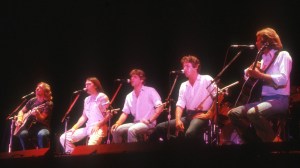
(L-R) Joe Walsh, Timothy B. Schmit, Glenn Frey, Don Henley and Don Felder of the rock band "Eagles" performing onstage in 1980. (Photo by Michael Ochs Archives/Getty Images) -
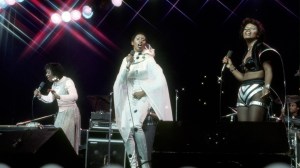
LOS ANGELES – CIRCA 1974: Singer Patti Labelle performs onstage with her group LaBelle in circa 1974 in Los Angeles, California. Also in the group were former Bluebelles, Sarah Dash and Nona Hendryx. (Photo by Michael Ochs Archives/Getty Images)