When Pink Floyd embarked on their 1987-88 tour for their thirteenth studio album, A Momentary Lapse of Reason, the band was in the middle of their third and perhaps most notable lineup change in their career: bassist Roger Waters was out, keyboardist Richard Wright was back in, and a U.S. Army representative was coming along for the ride, too.
The soldier might not have been playing anything on stage, but his presence certainly improved the band’s production value.
Videos by American Songwriter
Pink Floyd Brought A U.S. Army Representative On Tour
Ever since their creation, Pink Floyd has incorporated visual elements into their live performances. Using lasers, lights, and smoke machines, the band’s stage set-up is as mesmerizing as the songs themselves, making it easy to see why they gained such immense popularity in the psychedelic-heavy days of the late 1960s and early 1970s. But with each passing year, the band looked for new ways to take their production level one step further. In the mid-1980s, Pink Floyd had green lasers and red lasers, but the band had their sights set on gold.
As music industry vet Paul Rappaport explained during a 2025 interview on the Ultimate Classic Rock podcast, Pink Floyd’s lighting designer, Marc Brickman, knew that gold lasers would set the band apart from similar light shows of the time. The only problem, of course, was that this type of laser, which the U.S. Army developed, was weapon-grade and incredibly dangerous. Rappaport described Brickman meeting with Army personnel, who called the lasers “very dangerous” and “not your typical lasers.” Nevertheless, they agreed to rent the lasers to the psychedelic rock band on one condition.
“You need to take a U.S. Army representative with you to every show,” the soldiers told Brickman. “He has to double-check all of the mirrors, all of the points where they’re going to be shot. Otherwise, it’s going to be dangerous, and we’re responsible.” Eager to elevate their live performances, especially considering this would be Pink Floyd’s first tour without their founding member and original bassist, Roger Waters, the band obliged.
The Cost Of Putting On A Pink Floyd-Worthy Show
Pink Floyd’s A Momentary Lapse of Reason tour had a lot to prove—both to the band members themselves and their fans. With Roger Waters out of the lineup and a tense legal battle over the use of the band’s name raging on, the remaining members of the band were determined to prove that they could be just as successful and groundbreaking without Waters. They demonstrated this with their impressive light shows and mid-performance theatrics, including anatomically correct, floating pigs and captivating video footage played on massive screens. Saucerful of Secrets: The Pink Floyd Odyssey author Nicholas Shaffner wrote that “even the near-full Moon [was] briefly dimmed” by the band’s grand finale during one tour stop in Columbus, Ohio.
The band did have its limits, though. As Paul Rappaport recalled on the Ultimate Classic Rock podcast, the U.S. Army offered Marc Brickman another piece of technology for potential use in their live shows. “The Army guy says to Brickman, ‘Listen, we’re experimenting with negative ions in the air. You guys play stadiums. If you want, we can do this thing for you where, over the stadium, we suck out all of the ions in a fast pace, and it will make a giant explosion. Do you want that?’”
“Brickman’s knees are knocking,” Rappaport continued, “and he goes, ‘Well, that sounds a little bit dangerous for the fans. Maybe I’ll just take the dangerous gold lasers and leave the next big dangerous thing to you guys.”
Photo by Nils Jorgensen/Shutterstock
More Features
-
LONDON, UNITED KINGDOM – JUNE 01: Willie Nelson performs on stage at the Hammersmith Odeon in London, England in June 1982. (Photo by David Redfern/Redferns) -
NEW YORK, NY – CIRCA 1985: Roland Orzabal and Curt Smith of Tears For Fears circa 1985 in New York City. (Photo by Robin Platzer/IMAGES/Getty Images) -

UNITED KINGDOM – APRIL 19: ROYAL FESTIVAL HALL Photo of Vashti BUNYAN (Photo by James Emmett/Redferns) -
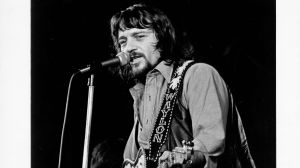
CIRCA 1975: Country musician Waylon Jennings performs onstage in circa 1975. (Photo by Michael Ochs Archives/Getty Images) -
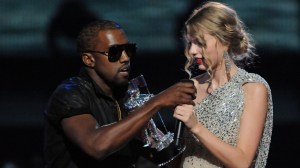
Taylor Swift and Kanye West at the 2009 VMAs -
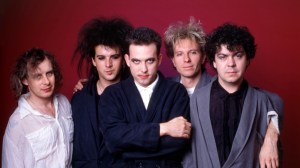
CLARKSTON – JULY 14: Guitarist Porl Thompson, bass player Simon Gallup, musician, songwriter and lead singer Robert Smith, drummer Boris Williams and keyboard player Laurence 'Lol' Tolhurst, all members of the English rock band The Cure, pose for a portrait backstage at the Pine Knob Music Theatre on July 14, 1986, in Clarkston, Michigan. (Photo by Ross Marino/Getty Images)