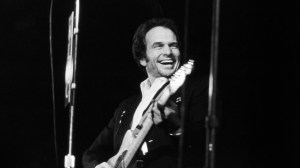
There are times when a musical event manages to live up to all the hype surrounding it. But more often than not, when we build something up too much, we tend to be let down by what actually occurs.
That certainly was the case when the original members of The Byrds reunited for an album in 1973. They simply couldn’t recapture the magic. And what seemed like a new beginning turned into a whimper of an ending for the legendary group.
Videos by American Songwriter
One Byrd Remaining
The British Invasion might have stolen the headlines in 1964 when The Beatles arrived in America. But America started to bounce back in 1965, led by The Byrds. Their debut album that year turned out to be wildly successful and extremely influential, even to the Brits.
The press called what The Byrds did folk rock. That was in part because of their early reliance on Bob Dylan songs for material. But in truth, the band touched on many genres of music while also creating styles of their own. Consider that the song “Eight Miles High” helped pave the way for the psychedelia trend in the second half of the 60s.
But the band was a volatile mix of personalities. Gene Clark, one of the principal songwriters, didn’t like traveling, so he departed first. The band fired David Crosby over artistic differences. Chris Hillman and Michael Clarke also skedaddled, until singer and guitarist Roger McGuinn was the only original member.
One More Go-Round
The Byrds struggled to maintain their level of artistic excellence due to the membership turnover (although they did rally for the influential country rock LP Sweetheart Of The Rodeo in 1968 with brief member Gram Parsons). With the non-McGuinn original members all at something of a crossroads in their careers circa 1972, a reunion seemed like a decent idea.
It also helped that David Geffen threw a lot of money at the quintet to get back together for a record on his Asylum label. They recorded their reunion album over a short stretch in October and November 1972. David Crosby, whose star had grown since he was a Byrds member thanks to his stint in Crosby, Stills & Nash, took over production duties.
Two songs apiece were contributed by the band’s four writers (Clark, Crosby, McGuinn and Chris Hillman). A trio of covers, one tackling a Joni Mitchell song and two others handling the work of Neil Young, padded out the record.
Failure to Take Flight
Titling the album simply Byrds, the group enjoyed decent sales when the record was released in March 1973. But critics didn’t find all that much to like. They commented on the fact that McGuinn’s ringing guitar, so emblematic of the band’s sound in the 60s, was largely absent.
The song quality was also a bit lacking. In later years, the band members admitted to being somewhat tentative around each other. They also failed to bring some of the best songs they had in their individual hoppers into the sessions, preferring to leave them for their own projects.
The disappointment of Byrds soon put a damper on the band’s hopes of continuing the reunion. Roger McGuinn released his first solo album a few months after the release, thereby ending the group’s recording career not long after folks expected it to be rekindled.
(Photo by Michael Ochs Archives/Getty Images)
More Features
-
Art Garfunkel performs on TV show, USA, 1975. (Photo by Michael Putland/Getty Images) -
Photo by Luciano Viti/Getty Images -
ANN ARBOR, MI – NOVEMBER 22: American singer, songwriter, and guitarist Boz Scaggs performs on November 22, 1980, at the Hill Auditorium in Ann Arbor, Michigan. (Photo by Ross Marino/Getty Images) -
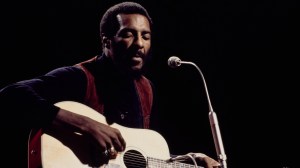
American singer-songwriter and guitarist Richie Havens, wearing a tan-coloured suede waistcoat over a black turtleneck sweater, plays a Guild D-40 acoustic guitar during a television appearance in London, England, circa 1970. (Photo by Tony Russell/Redferns/Getty Images) -
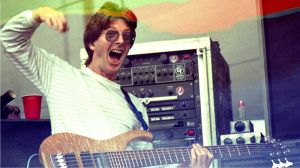
EUGENE, OR – (EDITORS NOTE: Multiple exposure made in camera) Phil Lesh of the Grateful Dead performs at Autzen Stadium on June 23, 1990 in Eugene, Oregon. (Photo by Tim Mosenfelder/Getty Images) -
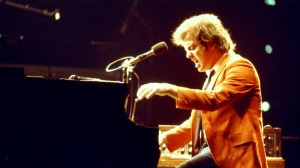
UNITED STATES – JANUARY 01: Billy Joel performs live on stage during his 1980 US tour (Photo by Richard E. Aaron/Redferns)