Using music for sound torture has been in common practice since the mid-20th century, much to the chagrin and frequent protests of musicians and bands who made that music (and even the ones who didn’t). Sound torture can include playing music or other audio at an uncomfortably loud volume for hours on end or even round the clock. Audio can range from slaughterhouse noises to the Howard Stern Show. All musical genres are fair game, from heavy metal to kids’ music.
Hypothetically speaking, shouldn’t all those bands and artists whose music is playing for 24 hours a day receive compensation for all that air time? Canadian electro-industrial band Skinny Puppy certainly thought so in 2014.
Videos by American Songwriter
This Band Invoiced U.S. Government For Using Music For Sound Torture
Skinny Puppy formed in Vancouver in the early 1980s and helped usher in the burgeoning industrial rock scene. Decades later, band members discovered the U.S. Department of Defense was using their music for the sound torture of detainees. The band said a former Guantanamo Bay guard, who also happened to be a Skinny Puppy fan, told the musicians about the torture tactic. Skinny Puppy founder cEvin Key told Vancouver’s CTV News the band found it offensive in both the psychological warfare aspect and, as a matter of principle, the compensation.
“We sent them an invoice for our musical services,” Key said, “considering they had gone ahead and used our music without our knowledge and used it as an actual weapon against somebody. I wouldn’t want to be subjected to any overly loud music for six to 12 hours at a time without a break.”
While speaking to the Phoenix New Times, Key said the former guard described their music as a weapon to “musically stun or torture people. We heard our music was used in at least four occasions. We never supported those types of scenarios. It’s kind of typical that we thought this would end up happening, in a weird way, because we make unsettling music. But it doesn’t sit right with us.”
Other Artists Have Spoken Up, Too
Skinny Puppy made headlines by invoicing the U.S. Department of Defense for $666,000 in 2014. But they’re certainly not the only musicians who have spoken up about the use of music for sound torture. Many artists held similar views as Skinny Puppy, arguing that the government should be legally liable for playing music without compensating the artist. Both Skinny Puppy and singer-songwriter David Gray have mused whether a lawsuit was viable. “But let’s face it,” Gray told The Guardian in 2008, “they’re outside the law on the whole thing anyway.”
Other musicians have expressed greater concern over whether the technique is worth pursuing in the first place. “These guys are not a bunch of high school kids,” Steve Asheim, drummer for Deicide, told The Guardian. (Per its reporting, Deicide was a favorite musical choice among military interrogators.) “They are warriors. They’re trained to resist torture. If I was a prisoner at Guantanamo Bay and they blessed a load of music at me, I’d be like, ‘Is this all you got? Come on.’” Of course, this is coming from a death metal drummer and someone who has never undergone government-level sound torture.
In 2008, Rage Against the Machine released a petition for Amnesty International to demand greater governmental transparency and an end to sound torture. These attempts to protest sound torture haven’t garnered the results activists expected, including payment of Skinny Puppy’s $666,000 invoice.
However, based on comments by Sergeant Mark Hadsell to Newsweek in 2003, the tactic’s efficacy will likely keep it around indefinitely. “If you play [heavy metal] for 24 hours, your brain and body functions start to slide. Your train of thought slows down, and your will is broken.”
Photo by Joe Raedle/Getty Images
Most Viewed
-
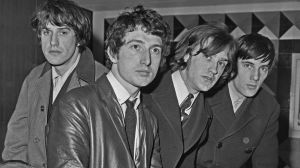
English rock band The Kinks at London Airport (later Heathrow), UK, 16th January 1965. They are flying to Australia for a concert tour. From left to right, Ray Davies, Pete Quaife, Dave Davies and Mick Avory. (Photo by Evening Standard/Hulton Archive/Getty Images) -
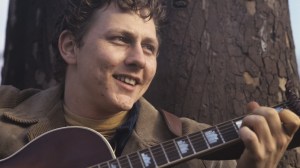
UNITED KINGDOM – JANUARY 01: Portrait of American folk singer Bob Lind in 1966. (Photo by David Redfern/Redferns) -
Italian-American vocal group The Four Seasons, circa 1963. Left to right: Frankie Valli, Tommy DeVito, Bob Gaudio and Nick Massi (1935 – 2000). (Photo by Hulton Archive/Getty Images) -
ATLANTA – OCTOBER 27: Willie Nelson Performs at the Great Southeast Music Hall on October 27, 1975 in Atlanta, Georgia. (Photo by Tom Hill/WireImage) -
Couple Disco Dancing on Colorful Dance Floor (Photo by Dennis Hallinan/Getty Images)