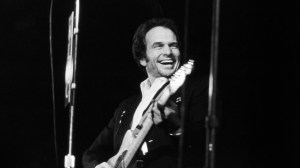
The only thing that could make a made-for-TV band coming under FBI investigation stranger is if, decades later, that band sued the Federal Bureau of Investigation for files pertaining to their musical ensemble. In a storyline certainly suited for showbiz, those very things occurred in the late 1960s and 2022, respectively.
The odd turn of events seems to prove that there is plenty of time for, er, monkeying around when you reach retirement age. (Sorry, we had to.)
Videos by American Songwriter
How a Made-For-TV Band Became Subjects Of An FBI Investigation
The Federal Bureau of Investigation’s counterintelligence program, or COINTELPRO, was a byproduct of the burgeoning “New Left” movement of the 1960s that promoted the end of the Vietnam War. FBI director J. Edgar Hoover considered this political movement “a threat to the American way of life,” per the U.S. Department of Justice. Thus, the FBI established COINTELPRO to “infiltrate, disrupt, and otherwise neutralize the entire dissent movement.”
Unsurprisingly, musicians were leading the way in this counterculture movement against violence, war, and the establishment at large. Indeed, the 1960s saw a move toward the “peace and love” attitude pervasive in the hippie movement. Artists perpetuated this movement through their songs, live performances, and interviews.
This public dissent landed the Monkees in the FBI’s investigative crosshairs. In a heavily redacted file available on the FBI’s website, the Bureau described the Monkees and their “quite successful” series. “This series…features four young men who dress as ‘beatnik’ types and is geared primarily to the teenage market. During recent weeks, the four stars of the show have been making public appearance tours throughout the U.S.”
“The Monkees’ concert was using a device in the form of a screen set up behind the performers, who played certain instruments and sang as a ‘combo,’” the report continued. “During the concert, subliminal messages were depicted on the screen which, in the opinion of [redacted], constituted ‘left wing innovations of a political nature.’ These messages and pictures were flashes of riots in Berkeley, anti-U.S. messages on the war in Vietnam, racial riots in Selma, Alabama, and similar messages which had received unfavorable response from the audience.”
Decades Later, The Surviving Monkees Member Sued The FBI
Nothing significant came of the FBI investigation into the Monkees’ anti-war rhetoric. The band fell out of popularity by the start of the 1970s. Hits like “I’m a Believer” and “Daydream Believer” were left in a flower-power haze of nostalgic antiquity. Decades later, Micky Dolenz became the only surviving member of the band. Being the sole steward of the Monkees’ legacy, Dolenz decided to try to obtain the rest of the FBI’s files.
Dolenz and his lawyer, Mark S. Zaid, attempted to acquire the files through a Freedom of Information Act request, to which the FBI has a response time of 20 days. The Bureau cited significant backlogs that would make such a response time impossible. “This means that we’re headed into court,” Zaid told Rolling Stone in 2022. “I tell all my clients, ‘If you are serious about getting your documents, then we need to litigate it.’”
The FBI files currently available involve a heavily redacted report, quoted above, and brief information about another report that was “redacted entirely.” Zaid hypothesized that the completely redacted file likely has information about the FBI informant’s identity. At the time of this writing, no updates about Dolenz’s suit against the FBI are public. Dolenz’s legal team told NPR that “whatever information is turned over from the FBI may be used in original work, including a film, book, or documentary.
Photo by Michael Ochs Archives/Getty Images
More Features
-
EUGENE, OR – (EDITORS NOTE: Multiple exposure made in camera) Phil Lesh of the Grateful Dead performs at Autzen Stadium on June 23, 1990 in Eugene, Oregon. (Photo by Tim Mosenfelder/Getty Images) -
UNITED STATES – JANUARY 01: Billy Joel performs live on stage during his 1980 US tour (Photo by Richard E. Aaron/Redferns) -
ara Evans performs "Suds In The Bucket" during 39th Annual Academy of Country Music Awards – Show at Mandalay Bay Resort and Casino in Las Vegas, Nevada, United States. (Photo by M. Caulfield/WireImage for Bragman Nyman Cafarelli) -
Photo by David Warner Ellis/Redferns -
UNSPECIFIED – CIRCA 1970: Photo of Biff Rose Photo by Michael Ochs Archives/Getty Images -
MINNEAPOLIS, MN – AUGUST 29: Elvis Costello performs at the Orpheum Theatre in Minneapolis, Minnesota on August 29, 1984. (Photo by Jim Steinfeldt/Michael Ochs Archives/Getty Images) -

Photo by Jason Kempin/Getty Images for Country Music Hall of Fame and Museum