If Frank Zappa says something is better than The Beatles, then you know one thing is certain: whatever that “something” is, it’s going to be weird. Likely very, very weird. And that’s undoubtedly an adjective one could use to describe the out-of-tune and offbeat stylings of the cult-favorite pop band, The Shaggs. The trio was made up of three sisters, Dorothy, Betty, and Helen Wiggin, and lasted for around ten years—much to the teenagers’ chagrin.
The Shaggs’ origin story is as strange as the music they left behind. It begins with their father, Austin Wiggin Jr., being told by his clairvoyant mother that he would have daughters who would play pop music in a band. She also predicted that Austin would have two sons after his mother died and that he would marry a woman with reddish-blonde hair. When both of those prophecies came true, Austin took it upon himself to pull his three teenage daughters out of school.
Videos by American Songwriter
From there, Austin homeschooled his children, providing them with mail-in classwork and calisthenic classes he led. When they weren’t studying, they were practicing. But honestly…you couldn’t tell.
How The Shaggs Became Reluctant Cult Figures in Pop Music
If you’ve never had your ears blessed with the sounds of The Shaggs, allow us to preface it with this: their musical legacy is revered by some of the greatest rock ‘n’ roll icons of the 20th century. Frank Zappa famously called them “better than The Beatles,” per The Guardian. Patti Smith was a huge fan. Even Kurt Cobain, frontman of Nirvana, cited The Shaggs’ one album, Philosophy Of The World, as one of his favorites. Simply put, there is a lot of star power backing them up.
But for the average music lover—especially those who don’t favor the avant-garde—The Shaggs’ music is almost unlistenable. There are no discernible rhythmic structures. Both guitars are out of tune and strummed haphazardly. The melodies and lyrics aren’t something the general public would describe as “beautiful” or even “passable.” And that was by design. The Shaggs didn’t want to be in a band. They wanted to go to school and be regular girls. Their sound is a direct reflection of their lack of desire to get better at their instruments.
After their father died of a heart attack in 1965, their tenure as a band was over. Their music was almost lost to the annals of time, if it hadn’t been rediscovered in a dusty vinyl bin by NRBQ saxophonist Keith Spring and in Boston’s WBCN stockpile by Frank Zappa. From there, The Shaggs began to gain a reputation amongst abstract lovers who respected the musicians who were vouching for the all-girl band.
The Band Didn’t Know About Their Influence Until Years Later
Unsurprisingly, The Shaggs were just as divisive as the artists who idolized them. One press review described their album as “too horrible to comprehend,” while others said the synchronicity and polyrhythms they created—even if they were subconscious—were remarkable. Nevertheless, their cult following is rooted in how strange, off-the-wall, and unusual they are. It strengthens, not diminishes, their image.
Of their cult status, Dorothy Wiggins told The Guardian, “It’s amazing, really. We wouldn’t have expected that. We didn’t even know until years later.” Their first inkling that The Shaggs had left a greater impression on the musical world than they realized came in 1999, when Dorothy and Betty Wiggins reunited to play with the Sun Ra Arkestra. When they arrived at the concert, a crowd of eager fans was waiting to speak to them. Even at the time of this writing, The Shaggs have around 27,833 monthly listeners on Spotify.
Even still, Betty doesn’t think she would have done it over again if given the opportunity. “Truthfully, I don’t think I would have done any of it.” She added that if she hadn’t been forced into a band by her father, she could have “just had a normal life.”
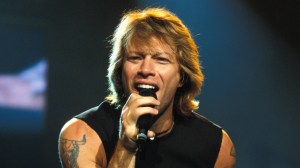
Photo by Lawrence K. Ho/Los Angeles Times via Getty Images
More Features
-
American singer and actress Madonna filming the video for her song 'Papa Don't Preach' in New York City, 1986. The video is being directed by James Foley. (Photo by Vinnie Zuffante/Getty Images) -
Guitarists and singers Andy Powell (left) and Ted Turner performing with British rock group Wishbone Ash at a Chritmas concert at Alexandra Palace, London, 22nd December 1973. (Photo by Michael Putland/Getty Images) -
Photo by Stanley Bielecki/ASP/Getty Images -
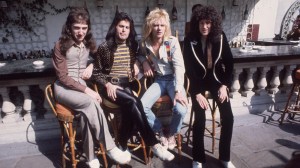
th September 1976: British rock group Queen at Les Ambassadeurs, where they were presented with silver, gold and platinum discs for sales in excess of one million of their hit single 'Bohemian Rhapsody'. The band are, from left to right, John Deacon, Freddie Mercury (Frederick Bulsara, 1946 – 1991), Roger Taylor and Brian May. (Photo by Keystone/Getty Images) -
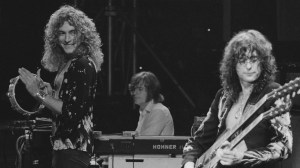
Left to right: Robert Plant, John Paul Jones and Jimmy Page, of British heavy rock group Led Zeppelin, performing at Earl's Court, London, May 1975. The band were initially booked to play three nights at the venue, from 23rd to 25th May, but due to public demand, two more concerts were later added, for 17th and 18th May. Total ticket sales were 85,000. (Photo by Michael Putland/Getty Images) -
Troy Gentry of Montgomery Gentry -
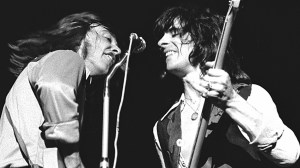
Badfinger performs at Pasadena Civic Auditorium Pasadena, CA 1972; Various Locations; Mark Sullivan 70's Rock Archive (Photo by Mark Sullivan/Contour by Getty Images)