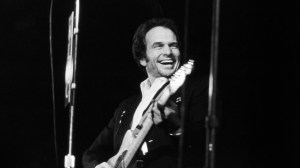
Perhaps it’s because he’s somewhat self-deprecating about his talent. Or maybe his crowd-pleasing tendencies have thrown us off guard. But for whatever reason, Rod Stewart doesn’t get enough credit for the depth and scope of his artistic accomplishments.
There was a stretch in the 70s when Stewart, both on his own and within the confines of a band, did better work than just about anybody in the rock milieu. At the center of it all was a 1971 solo album recorded in between tours. It made him both a critical and commercial juggernaut.
Videos by American Songwriter
Faces and Names
Entering 1971, Rod Stewart’s profile in the United States was still somewhat muted. He was better known in the UK. His band Faces had emerged from the quite popular Small Faces. That ensured that they had some recognition right from the jump.
Stewart was given the opportunity to do solo work as well, starting in 1969 with the album An Old Raincoat Won’t Ever Let You Down. His first two albums found him quite comfortable covering the material of others. He also occasionally wrote his own stuff, even though he never quite saw himself as a songwriter.
He settled into the studio in late 1970 to make this third album. This time around, he acted as the sole producer for the first time. But Stewart didn’t exactly run a tight ship. He was all about getting the instrumentalists together, quickly finding the song in a couple of takes, and then retiring to the nearby bar to celebrate a hard day’s work. Even Stewart himself didn’t consider that he was making a masterpiece.
“Maggie” Makes It
One of the songs that Stewart recorded for that album told the story of one of his youthful sexual escapades. Guitarist Martin Quittenton helped him with the music. Stewart also made the decision to add a mandolin (played by Ray Jackson of the folk band Lindisfarne) to the track.
But he didn’t think very highly of the song upon its completion. For one, it didn’t really feature a traditional chorus. And the track clocked in at over five minutes, not exactly the length that fit well in tight AM radio slots.
For all those reasons, Stewart nearly left it off the album. He also stuck it on the B-side of first single “Reason To Believe”, a tender cover of a Tim Hardin classic. But then an enterprising DJ took a liking to the B-side and started playing it. Others followed. And that’s how “Maggie May” turned Rod Stewart into an international superstar.
‘Story’ Time
In what seemed like a heartbeat after that turn of events, Rod Stewart found himself with the No. 1 song and album in both the US and UK in 1971. The song drew people to the LP. And the people who came found a wealth of pleasures on the album, titled Every Picture Tells A Story, once they arrived.
Stewart, the producer, coaxed natural, inspired performances from the performers. And Stewart, the interpreter, came through with winning versions of both the songs he covered and his own outstanding originals, including the title track and “Mandolin Wind”.
The hot streak continued for Stewart when Faces followed that up with their own masterpiece of an album, A Nod Is As Good As A Wink…To A Blind Horse. Every Picture Tells A Story catalyzed all that success, as Stewart matter-of-factly rose to the top of the rock world in between trips to the pub for a pint.
(Photo by Fin Costello/Redferns)
More Features
-
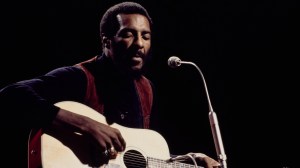
American singer-songwriter and guitarist Richie Havens, wearing a tan-coloured suede waistcoat over a black turtleneck sweater, plays a Guild D-40 acoustic guitar during a television appearance in London, England, circa 1970. (Photo by Tony Russell/Redferns/Getty Images) -
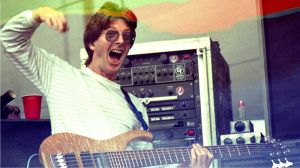
EUGENE, OR – (EDITORS NOTE: Multiple exposure made in camera) Phil Lesh of the Grateful Dead performs at Autzen Stadium on June 23, 1990 in Eugene, Oregon. (Photo by Tim Mosenfelder/Getty Images) -
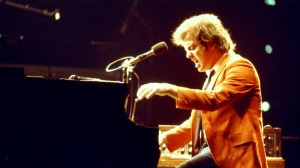
UNITED STATES – JANUARY 01: Billy Joel performs live on stage during his 1980 US tour (Photo by Richard E. Aaron/Redferns) -

ara Evans performs "Suds In The Bucket" during 39th Annual Academy of Country Music Awards – Show at Mandalay Bay Resort and Casino in Las Vegas, Nevada, United States. (Photo by M. Caulfield/WireImage for Bragman Nyman Cafarelli) -
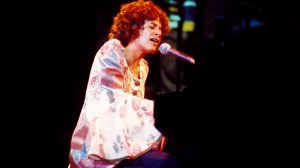
Photo by David Warner Ellis/Redferns -
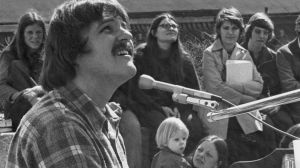
UNSPECIFIED – CIRCA 1970: Photo of Biff Rose Photo by Michael Ochs Archives/Getty Images -
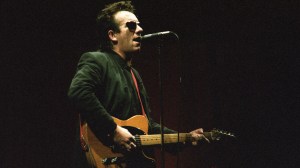
MINNEAPOLIS, MN – AUGUST 29: Elvis Costello performs at the Orpheum Theatre in Minneapolis, Minnesota on August 29, 1984. (Photo by Jim Steinfeldt/Michael Ochs Archives/Getty Images)