
Even the best of the best can’t stay on top of their game forever. Inevitably, a decline from a peak must come, especially if a group stays around for a long time. And nobody has stayed around longer than The Rolling Stones.
The Stones went on an extended run of brilliance that carried the band through five calendar years in the late 60s and early 70s and four albums, one of which was a double LP. At the end of it all came Goats Head Soup, which just couldn’t quite keep up with its predecessors.
Videos by American Songwriter
An Incredible Run
It began with a gardener. Keith Richards’ gardener, to be exact. He startled Mick Jagger awake one night while he was writing at Keith’s estate. When Jagger asked who he was, Richards replied, “Jumpin’ Jack”. Jagger added the word “Flash”, and the Stones had the title of their new single in 1968.
That song represented a bruising return to blues-based rock after a dalliance in psychedelia put the band on the wrong foot. Following on the lead set by that track, the Stones recorded the album Beggars Banquet, an unforgiving masterpiece and the first of four standout LPs in a row.
It was followed by Let It Bleed, Sticky Fingers, and Exile On Main St. The last of those albums found the band forced out of England by tax problems, recording the bulk of the four sides at Richards’ French villa. The tour de force of a record made it clear the Stones were on top of the rock and roll world. What would they do for an encore?
A Tired Band
Even as the Stones released hit after hit, generally followed up with successful tours, the money and legal issues that had them on the move for Exile didn’t let up. They recorded their next album, Goat’s Head Soup, in a variety of locales, including a stint in Jamaica. The pace crept up on them.
So too did the hard living. Excess had always been a part of the Stones’ image. But drug use by the band members began to produce diminishing artistic returns. The band also heavily relied on guest players, while bassist Bill Wyman was sidelined for all but three tracks on the album.
More than any of those other reasons, however, a general feeling of “What do we do now?” might have been the ultimate factor that stymied Goat’s Head Soup. Their previous four albums had been so monumental and influential that the Stones, as they admitted after the fact, suffered from a lack of inspiration and motivation.
A Slightly Bland ‘Soup’
While Goats Head Soup is painted as a failure compared to what came before it, most other bands would have given anything to release something on that level. Commercially, it did gangbuster business, reaching No. 1 on the album charts in many areas of the world, including the US.
The lead single “Angie”, a heartfelt ballad of lost love, also rose to No. 1 on the US singles charts. The album also found the band trying funk moves on the single “Doo Doo Doo Doo (Heartbreaker)”, a relatively new musical twist for them. But many of the non-singles were lethargic (we’re looking at you, “Can You Hear The Music”.)
Goats Head Soup began a stretch of albums by the Stones that didn’t quite rise to the heights of their predecessors. They didn’t show the same kind of spark again until 1978, when the dance/punk hybrid Some Girls snapped them out of their mini-malaise.
Photo by Watal Asanuma/Shinko Music/Getty Images
More Features
-
Lindsey Buckingham from the rock group Fleetwood Mac. (Photo by Robin Platzer/Getty Images) -
IN CONCERT – Shoot Date: January 15, 1974. (Photo by ABC Photo Archives/Disney General Entertainment Content via Getty Images) BARRY WHITE -
Photo by Tucker Ranson/Archive Photos/Hulton Archive/Getty Images -
Local Boy Tom Cochrane is cruising on his first No. 1 hit, 'Life is A Highway', and it brought crowd to its feet at Massey Hall last night. -

English musician Brian Jones (1942-1969) of The Rolling Stones plays a sitar during a performance by the band on the set of the Associated Rediffusion Television pop music television show Ready Steady Go! at Wembley Television Studios in London on 27th May 1966. The group would perform three tracks on this edition of the show, 'I Am Waiting', 'Under My Thumb' and 'Paint It Black'. (Photo by Ivan Keeman/Redferns) -
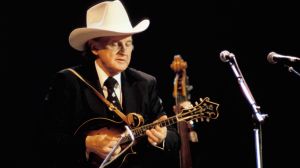
UNSPECIFIED – JANUARY 01: Photo of Bill MONROE (Photo by David Redfern/Redferns) -
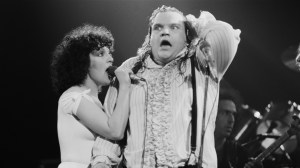
American singers Karla Devito and Meat Loaf performing on the Bat Out Of Hell Tour, USA, March 1978. (Photo by Michael Putland/Getty Images) -

NEW YORK, NEW YORK – OCTOBER 28: Jennifer Nettles performs during the PAC NYC ICONS OF CULTURE Gala at Perelman Performing Arts Center on October 28, 2025 in New York City. (Photo by Dimitrios Kambouris/Getty Images for Perelman Performing Arts Center (PAC NYC))