George Martin chose his projects carefully after his work with The Beatles. In the years following their breakup, he generally showed that his magic touch hadn’t abandoned him, often helping the acts he produced hit new high points.
In 1981, Martin produced an album for the Australian group Little River Band. Even as he assisted them to an artistic pinnacle, the band was tearing apart at the seams.
Videos by American Songwriter
The River Rises
Many of the acts that George Martin chose to produce in the wake of The Beatles’ dissolution shared some common traits with the Fab Four. In the case of Little River Band, they brought the kind of pristine vocal harmonies that adorned so many wonderful Beatles’ singles.
The Australian group broke out in the second half of the 70s by finding a sweet spot in between several different trends. Their music easily fit with the soft-rock boom that was taking over at that time. But with those harmonies and their slick studio arrangements, they also resembled the West Coast rock sound that was in its heyday.
Little by little, they wedged their way onto American radio. In 1978, their single “Reminiscing” shot to the Top 5 in the US. They seemed like an ascendant band at that time, and a series of hits in the next few years seemed to confirm that view.
However, Little River Band’s makeup was a recipe for disaster. The band featured several different writers who generally worked separately from each other. That meant that there was always a struggle to determine which songs should be singles and what tracks should comprise each album. Disagreements inevitably arose.
Martin as Mediator
George Martin might not have realized it, but he was inviting a powder keg into his studios in Montserrat when he agreed to produce Little River Band’s 1981 album Time Exposure. By that point, the band had already undergone several instances of lineup turnover. That issue was about to intensify.
Time Exposure included the debut on record of the band’s new bassist, the American Wayne Nelson. Nelson brought with him plenty of singing talent to go with his instrumental expertise. That infringed upon the territory of Glenn Shorrock, who had been the band’s primary lead singer up to that point.
On top of that, guitarist David Briggs didn’t take too well to Martin’s instructions in the studio. Different factions of the band were essentially squaring off against each other. It likely gave Martin flashbacks to the final days of The Beatles.
A Hit Anyway
Somehow, when Time Exposure arrived, none of the fissures were audibly evident. In fact, no other Little River Band LP could boast as many hit singles. “The Night Owls”, “Take It Easy On Me”, and “Man On Your Mind” all went to the Top 15 in the US charts.
But it was the work of a band in the midst of serious turmoil. David Briggs and Glenn Shorrock soon left the group. And, perhaps unsurprisingly, George Martin didn’t make it back for a return engagement with the band.
Little River Band managed a few more hits in the 80s, though nothing of the magnitude of what emanated from Time Exposure. The rest of the band’s history continued along the same lines, with intra-band drama sharply contrasting the sweet sounds they made on record.
Photo by G Coleman/Fairfax Media via Getty Images
More Features
-

English singer Dusty Springfield (1939-1999), performs on the set of her TV show 'Dusty' at BBC Television Centre in London, circa 1967. The show ran for two series between August 1966 and September 1967. (Photo by David Redfern/Redferns) -
Photo by Paul Natkin/Getty Images -
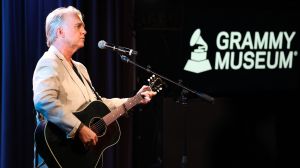
LOS ANGELES, CALIFORNIA – Shaun Cassidy performs at An Evening With Shaun Cassidy at GRAMMY Museum L.A. Live on September 04, 2025 in Los Angeles, California. (Photo by Monica Schipper/Getty Images for The Recording Academy) -
NEW YORK – JANUARY 27: Singer/songwriter Van Morrison performs at a Warner Brothers party at Steve Paul's The Scene nightclub on January 27, 1969 in New York, New York. (Photo by PoPsie Randolph/Michael Ochs Archives/Getty Images) -
MINNEAPOLIS, MN – AUGUST 29: Elvis Costello performs at the Orpheum Theatre in Minneapolis, Minnesota on August 29, 1984. (Photo by Jim Steinfeldt/Michael Ochs Archives/Getty Images) -

Photo by Jeff Kravitz/FilmMagic