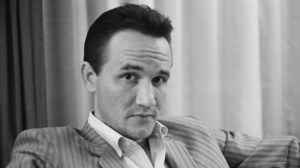
History has proven that Peter Gabriel and Genesis could be quite successful independent of each other. But that eventuality seemed far-fetched in 1975. That’s when Gabriel announced he was moving from the group that he had spearheaded in their rise from obscurity to stardom.
In fact, most people predicted that Genesis would soon fade into oblivion following this major change. But the remaining members of the group quickly found a new frontman, one who was in their midst all along.
Videos by American Songwriter
Prog Powerhouses
Genesis offers a great example of how rock bands benefited from record companies’ patience in the 70s. Their initial releases eked out onto the market without much attention from fans or the press. But they were given time to find their artistic footing, eventually developing a strong foundation of followers among the prog-rock community.
Peter Gabriel, the group’s lead singer and one of its main songwriters, served as the main catalyst for this transformation. His increasingly out-there stage costumes helped separate the band from other prog-rock bands, who tended more toward the anonymous.
More than that, Gabriel’s artistic vision slowly came to define Genesis. He came up with the concept for The Lamb Lies Down On Broadway, the band’s 1974 double album that earned them their best response to that point. But it wasn’t long from then that Gabriel decided he needed to go his own way.
Gabriel’s departure had been decided upon in November 1974, when he told the band that he was leaving following the completion of the tour for The Lamb Lies Down On Broadway. The band hid it from the press so as not to impact enthusiasm for the tour. By the middle of 1975, rumors were running rampant in the music press about it.
Gabriel Goes
Gabriel offered multipronged reasons for leaving. He wanted to spend more time with his family after having his first child. The pressures of being out in front of a lucrative rock band were getting to him. And, as he explained in an essay published in Melody Maker in September 1975, he wanted a bit more artistic freedom going forward:
“I believe the use of sound and visual images can be developed to do much more than we have done. But on a large scale it needs one clear and coherent direction, which our pseudo-democratic committee system could not provide.”
When the news broke, many music experts felt like Gabriel had sounded the death knell for the band. For their part, however, the remaining members of Genesis (Mike Rutherford, Tony Banks, Steve Hackett, and Phil Collins) never flinched. If anything, they wanted the chance to prove themselves in the absence of Gabriel, who earned the lion’s share of the attention from the press.
Phil Steps Up
Only they needed a singer to continue. They auditioned several vocalists for that purpose. During those auditions, Collins would often sing the parts to the candidates to give them an idea of how it should go. It wasn’t long before the group realized that the drummer could handle the gig just fine.
With Collins out in front, Genesis slowly started moving to more of a song-oriented strategy, paving the way for massive success in the 80s. Gabriel’s solo career took a little longer to hit those heights. After a series of critically acclaimed albums, he eventually got there with So in 1986. It all turned into a win-win scenario, an outcome few would have predicted when Gabriel first left.
(Photo by Michael Putland/Getty Images)
More Features
-
MINNEAPOLIS, MN – AUGUST 29: Elvis Costello performs at the Orpheum Theatre in Minneapolis, Minnesota on August 29, 1984. (Photo by Jim Steinfeldt/Michael Ochs Archives/Getty Images) -
Photo by Jason Kempin/Getty Images for Country Music Hall of Fame and Museum -

UNITED KINGDOM – JANUARY 01: WEMBLEY ARENA Photo of Johnny DUNCAN and Janie FRICKE, w/Johnny Duncan (Photo by David Redfern/Redferns) -

LONDON, UNITED KINGDOM – JANUARY 11: Debbie Harry of Blondie performs on stage at Hammersmith Odeon on January 11th, 1980 in London United Kingdom. (Photo by Pete Still/Redferns) -

lake Shelton, presenter Video Director of the Year (Photo by Frank Mullen/WireImage) -
Photo by Robert Kern/Getty Images