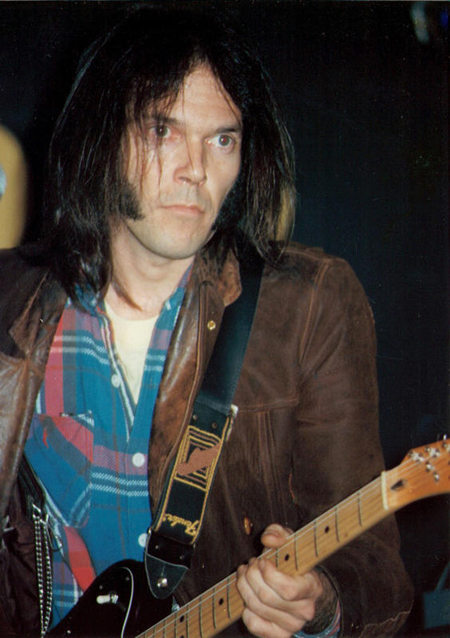
Neil Young, at Nashville’s Exit/In. 1977.
But, either way, Dylan had forever left his mark on Music City.
“What happens is that all of a sudden people are coming there who would never have come there,” relishes McCoy. “It was like the floodgates opened. Joan Baez, Buffy St. Marie, Simon and Garfunkel, The Byrds, Leonard Cohen, Paul McCartney, Peter, Paul and Mary, Manhattan Transfer, Ringo Starr. They’d never come before Dylan came. It was almost like he…,” he pauses, “approved Nashville. In folk-rock music, he was the guru. Once he came here, it was like, ‘Man, it’s cool to go there, Let’s go.’ He validated that we didn’t only do hillbilly music.”
*****
“I credit Dylan for bringing the folkies more than bringing the rockers,” says Norbert Putnam from his home in Jackson, Tennessee. “The rockers had already been there. Elvis had already done ‘Heartbreak Hotel.’ So, Nashville had rock. That wasn’t a problem.”
Putnam came to Nashville in the ‘60s from Muscle Shoals, Alabama, and was soon playing bass on Elvis records and getting session calls to work with Owen Bradley. Putnam got into the studio business and opened up Quadraphonic Studios with his partner David Briggs. They weren’t open long before they became known around town for being a place to record folk or rock.
“I did Joan Baez’s ‘The Night They Drove Old Dixie Down.’ [That] was the first hit cut at Quad. I think Neil was next.”
Neil Young’s landmark 1972 album Harvest was a new sound for the rocker. At one point, Young’s plan was to record a live solo album of the new songs he was writing like “Old Man” and “A Man Needs A Maid.” But, as fate would have it, Young wound up meeting producer Elliot Mazer.
“Elliott was in town the week that Neil was on the [Johnny Cash Show] show with Linda Ronstadt and James Taylor,” recalls Putnam. “It took a week to do the show basically. They would rehearse for a couple of days and then they had all of these new songs. Next thing I know Elliott is calling me seeing if I can play bass for him because Neil wants to track for a couple of days. They did ‘Heart Of Gold’ and James Taylor plays banjo on some of it and sings harmonies, and so does Linda Ronstadt. That was the second year we’d been open.”
Mazer helped put together the band of Nashville session players that would continue to pop up on Young’s records for decades, ace players like Tim Drummond, Ben Keith and Kenny Buttrey (who also played on Dylan’s Nashville sessions). Young and Mazer, much like Dylan and his producer Bob Johnston, were all attracted to the ease of recording in Nashville.
“Elliot Mazer was a big part of the Nashville movement. Elliott was a New York record producer. He loved coming to Nashville because the Nashville musicians could quickly sketch out. We picked up our instruments and played it back to them flawlessly. Elliott had never seen anything like that in New York.”
*****
As was the case with Dylan and Young, serendipity brought yet another of the world’s biggest rock stars to Nashville in 1974. Paul McCartney just happened to be looking for a place to lie low and record, hot off the heels of Wings’ 1973 smash hit Band On The Run.
Paul McCartney’s lawyers, Lee and John Eastman, also represented Buddy Killen, who was the head of Tree, the publishing house now owned by Sony. One of Tree’s hot young writers, Curly Putman, had just bought the type of farm that McCartney was looking to rent.