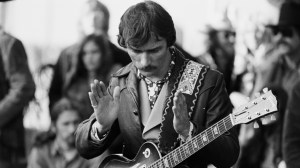
Anyone here remember the 1966 Roy Orbison single “Twinkle Toes”? We forgive you if you don’t. Yet for a long while, it looked like that song, which peaked at No. 39 on the US pop charts, would be Orbison’s last Top 40 hit.
23 years later, Orbison once again landed in the Top 10. Unfortunately, the success of that final hit single of his came after his death just weeks earlier.
Videos by American Songwriter
Roy’s Rise and Decline
Roy Orbison pretty much invented the high-drama rock ballad in the early 60s. His elastic voice, combined with his knack for arrangements that coaxed every bit of emotion out of the song he was singing, made his weepers hit at a different level than those of any other artist.
Not only was he influential, but he was highly successful as well. From 1960 to 1964, Orbison knocked off nine Top 10 singles, most of which he had a hand in writing as well as singing. As mentioned above, however, his success rate dropped off considerably in the mid-60s.
What happened to Orbison that caused him to fall off from that massive peak? Changing tastes in music as the 60s progressed left him struggling to stay relevant with younger audiences. In addition, Orbison suffered a series of personal setbacks that made it hard for him to find his groove again. But a comeback was coming, even if it took a while to get there.
A Wilbury Twist
In the 80s, folks trying to hold onto the traditional feel of rock and roll during such a time of tumultuous musical change looked back to the glory days and started to honor the people who made them so special. Roy Orbison was a natural choice for that kind of reverence and praise. It helped put his name back into the public consciousness.
He was inducted into the Rock and Roll Hall of Fame in 1987. A concert featuring luminaries like Bruce Springsteen, Elvis Costello, and Jackson Browne joining Orbison as he played his favorite songs earned a cable television release. But these events were just a prelude to the biggest comeback event of them all.
Orbison had begun recording with Jeff Lynne of ELO as producer for a new album when he ended up at an impromptu session with Lynne, Tom Petty, and Bob Dylan for a George Harrison B-side. That led to the formation of The Traveling Wilburys, whose 1988 debut album charmed the music world.
The “It” Factor
While the Wilburys soared, Orbison continued to put together his comeback album. Even before the supergroup formed, Lynne and Petty wrote “You Got It” for Orbison to sing. Featuring a classic pop arrangement with plentiful springs, Orbison soared through the record with all the majestic command she showed on his classic songs.
Orbison finished sessions for the album Mystery Girl in November 1988. While out on tour a few weeks later, he suffered a heart attack and died at the age of 52. The album arrived in January 1989.
The outpouring of sentiment for Orbison certainly helped “You Got It” when it was released as the album’s first single. But knowing how Orbison had returned to the public eye in the few years before, it’s likely he would have ended up with a hit anyway. The song became his first Top 10 hit in a quarter-century, a potent conclusion to a monumental recording career.
(Photo by © Hulton-Deutsch Collection/CORBIS/Corbis via Getty Images)
More Features
-

Photo by Rob Verhorst/Redferns -

Portrait of American R&B & Disco singer Minnie Riperton (1947 – 1979), Los Angeles, California, 1975. (Photo by Steve Schapiro/Corbis via Getty Images) -

Troy Seals was inducted into the Nashville Songwriters Hall of Fame in 1988. (Photo courtesy of the Nashville Songwriters Hall of Fame) -
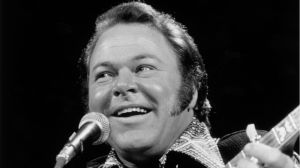
circa 1975: American country musician Roy Clark sings and plays banjo at a microphone on stage during a concert performance. Clark was co-host of the country music variety television series, 'Hee-Haw.' (Photo by Fotos International/Getty Images) -
Photo by Michael Ochs Archives/Getty Images -

Photo by Gie Knaeps/Getty Images