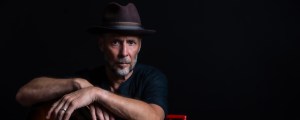
Sam Baker
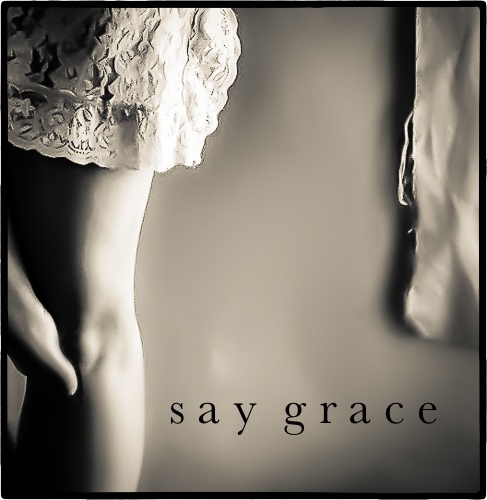
say grace
(self-released)
Rating: 4 stars out of 5
For those who believe artists must suffer for their art, Sam Baker meets the requirements.
In 1986, as a young man in his early thirties, he was on a tourist train to Machu Picchu in Peru when leftist terrorists blew it up, killing seven people – including those Baker was sitting with. He was severely injured – brain damage, cut artery, blown-in eardrums – and had numerous surgeries during a long, painful recovery.
I found an Associated Press account of the bombing archived on the Internet, but I would argue it is a forgotten occurrence now and was not much more than a footnote to current events when it happened. Terrible for the victims, but not very important in the scheme of things. Life goes on, right?
Yet listening to the extraordinarily crafted, deeply affecting songs on the 59-year-old Texan’s fourth album, say grace, it’s easy to presume that tragedy shaped his worldview and his music.
He brings grace notes – subtle humor, respect, even love – to subjects whose daily struggles are overlooked or discounted as being important. And he tries to do them justice – his lyrics consist of concise, finely honed descriptions and minute observations that almost never succumb to obvious, generic statements about feelings or emotions.
His efforts are a sign of his devotion. And his songs aren’t judgmental – beyond the fact Baker judges his characters worthy of the time spent to do them right.
Yet, at the same time, to quote from this album’s eerie, foreboding “The Tattooed Woman,” he’s often aware that “rain is coming/that’s how it feels.” Fear of a future beyond one’s control drives this album, too.
On “Migrants,” a song enriched by Joel Guzman’s sweet but sad accordion flourishes, Baker mourns the death of Mexican immigrants who die – “they looked like dried leaves scattered in the sun” – trying to find a walking route into the U.S. His empathy is deep, and when Baker sings “They got twelve lines in a Midwestern paper/On the pages with the ads for shoes,” you wonder if he’s channeling how little news coverage his own tragedy merited. It’s a worthy companion to Woody Guthrie’s “Deportee (Plane Wreck at Los Gatos).”
An obvious influence on Baker’s writing would be John Prine’s generously humane songs about everyday working folks and their odd romantic couplings, like “Donald and Lydia” and “In Spite of Ourselves.” But while Prine also uses exaggeration for humorous effect, Baker stays rigorously true to a naturalist description of what characters like his would do and think.
For instance, his standout “Ditch” is told from the point of view of a ditch digger happy to have a job in this economy and whose exasperation with his “crazy ass wife” reveals how tender their bond is:
“My wife God bless her and for what it’s worth
Thinks she and Taylor Swift were twins at birth
Were twins at birth/Separated at birth
Earth to wife/Wife to earth”
While “Ditch” is a straightforward portrait of a workingman, “Road Crew” uses the image of a road crew on Sunday morning as a metaphor for all the hearts broken on a Saturday night. Yet it’s not obvious or sophomoric about it, and the song’s “sha la la” bridge, with its Lou Reed overtones, is especially effective.
His voice is expressively recitative with hints of both weariness and wonder, but it rises to confident musicality to highlight the melodic chord changes and bridges of his compositions. He has a knack for a pop hook.
While the record has an overall spare sound, primarily the yearning, rugged folksinger and his acoustic guitar, Baker the producer varies things with back-up singers and session musicians on piano, pedal steel, electric guitar (Gurf Morlix on “Feast”) and strings.
The first song – “Say Grace” – starts with Anthony da Costa’s gently spacey, country-soul guitar riff establishing Baker’s command of mood. The horns that end “Isn’t Love Great,” for instance, carry it off with an elegiac closing that conjures a New Orleans street band beckoning spectators to join the procession.
Writing this well must be exhausting, which could be why the 14 songs include an instrumental inspired by a French medieval folk melody and an old hymn on which he doesn’t sing (the meditative “Sweet Hour of Prayer”). You can also sense his reach exceeding his grasp on two darker, more theatrical-style songs – the Tom Waits-like “Feast,” inspired by a line from a Yeats poem, and the piano-driven “Button by Button,” which has a Kurt Weill-like analytic quality but whose lyrics perhaps raise questions they can’t resolve.
Baker is one of the finest of the modern-day veteran Texas troubadours. And what’s good on this album – a strong majority of the songs – mark him as a major songwriting force, one whose reputation should soon be garnering him attention far beyond Texas. Long time coming.
More Album Reviews
-
Photo via cover of ‘Butter Miracle, The Complete Sweets!’ by Counting Crows -
Photo by Will Von Bolton -

Will Heath/NBC via Getty Images