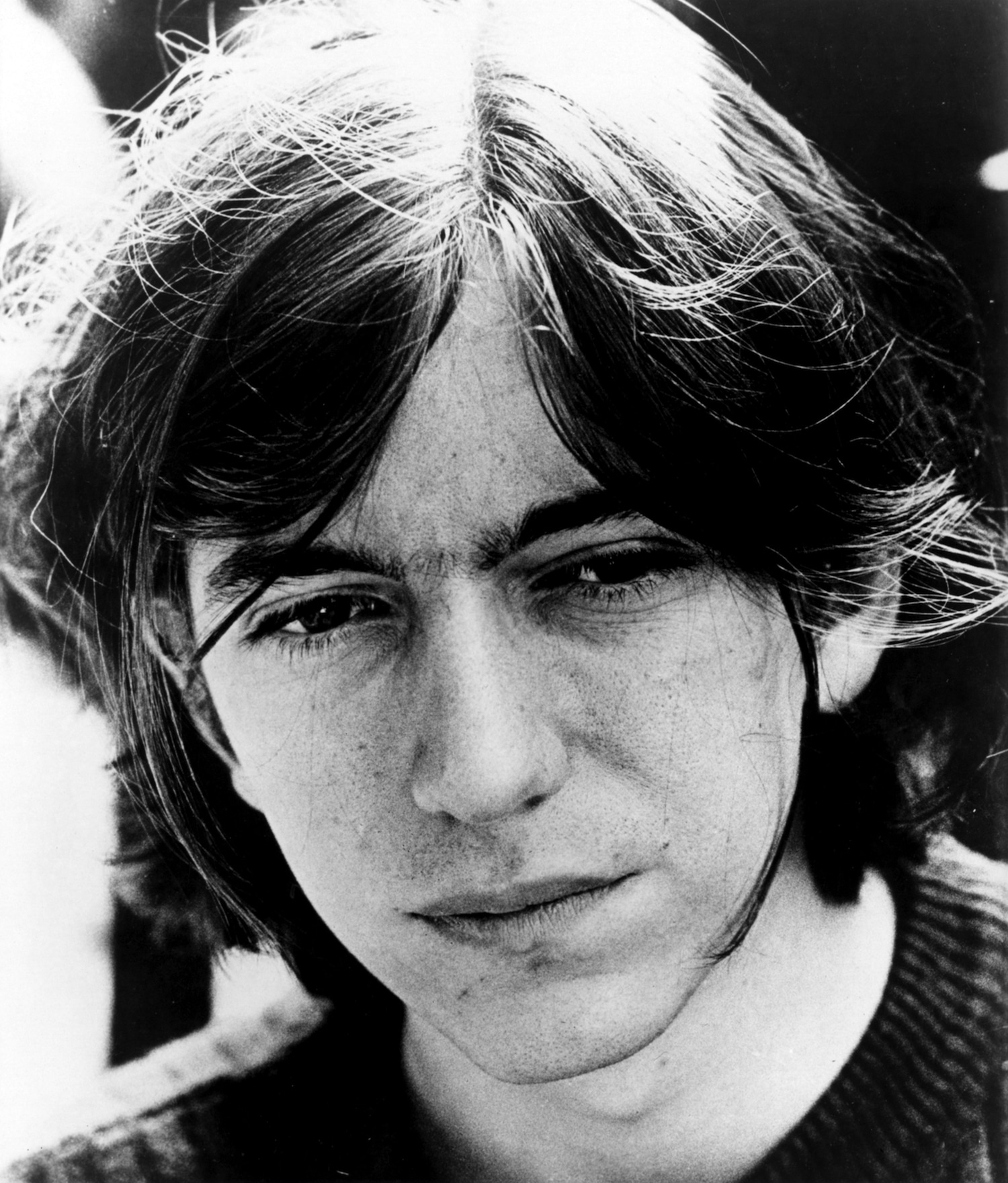
Scott Fagan’s life has been defined by a handful of chance discoveries. As a young songwriter, he discovered his mother’s friendship with a legendary New York songwriter and producer. As a fledgling artist, his debut album was repurposed by one of America’s most prominent visual artists. And as an adult, he discovered he was the father of an indie rock cult hero. By all accounts, Scott Fagan should be famous. But somehow, the singer, songwriter and musician, who was almost one of the first signees to the Beatles’ label Apple Music and called members of the Picasso and Pissarro family close friends, is still relatively unknown.
Born in 1945 New York to a saxophone player and a modern dancer, Fagan spent his early years living in an artist’s community in St. Thomas, Virgin Islands. An aspiring musician, he hopped aboard a ship called “Success” as a deck hand in 1964 and eventually made his way from Miami to New York City. When he got there, his music career began instantly — the legendary Doc Pomus, a Rock and Roll Hall of Fame inductee known for writing songs for Ray Charles, Ben E. King and Elvis Presley, signed Fagan to personal management and production deals on his first day in New York, thanks to that particularly fortuitous family connection.
“When I was on my way to New York, my mother got a phone number from a friend of hers who was a friend of a friend whose husband would write with this professional songwriter sometimes,” Fagan says. “When I got to New York I had eleven cents and I used ten of it to call this number. [Pomus] said, ‘Well, come on over here, let me hear what you got.’”
Pomus and his frequent collaborator Mort Shuman became Fagan’s mentors, with Fagan beginning studio work nearly immediately after signing on with the two. “I was doing demos right away. I signed to Columbia Records; did a single for them; signed to Big Top; did a single; signed to BANG Records.” He was playing with Jimi Hendrix’s Jimmy James and the Blue Flames for $5 a night, writing with Van Morrison at BANG and even had veteran manager Herb Gart, with whom he’d eventually sign, tell him one day he’d be “bigger than Presley.” In 1968 he wrote and released South Atlantic Blues, a brilliant work of psychedelic folk that should have established Fagan as one of the best artists to come out of the ’60s. Instead, the album went virtually unheard, only finding a small bit of attention when artist Jasper Johns, having come across the album in a cutout bin, created a series of lithographs called “Scott Fagan Record.”
“We pull up to the MoMA, and there, on the wall like some Egyptian temple, is ‘Scott Fagan Record’ with these spotlights shining on it, and it’s a great big opening for Jasper Johns,” he says, explaining he was, as a “semi-savage from the islands who [didn’t] know who Jasper Johns [was],” initially skeptical of the invitation he received from Johns to attend the piece’s opening.
Fagan later had another brief (and startling) step back into the limelight in the early 2000s when he found out, via a broadcast of NPR’s show Fresh Air, that Magnetic Fields frontman Stephin Merritt is his son.
“I was a homeless kid [in the Virgin Islands] when I spotted across the room this bohemian, eye-fluttering lady, and we got together and had great colorful and adventurous times in the islands, and Stephin was conceived on a houseboat there,” Fagan says. “But I didn’t know he existed until I was in Oxford, Mississippi, when an ex-wife called to say, ‘There’s a kid on the radio saying that you’re his father. What’s going on?’ And it was Stephin on Fresh Air.”
The two wouldn’t meet for years, eventually coming together at a 2013 premiere of the Doc Pomus documentary A.K.A. Doc Pomus. Following the meeting, Fagan attempted a Kickstarter campaign that would fund an album of Merritt covers, but the campaign failed to raise enough money. He still hopes the two can collaborate in the future.
“The first time I heard his stuff, it was the weirdest, weirdest experience. It was, ‘Jesus, I don’t remember writing that song.’ Or, ‘Why did I go that way instead of this way with it?’ And they weren’t my songs. They were his songs. It was the weirdest experience.”
Now, almost fifty years after South Atlantic Blues’s initial release, a small label called Saint Cecilia Records is re-releasing Fagan’s lost debut album. Thanks to label owner Chris Campion’s chance discovery of Fagan’s record, the 70-year-old songwriter finally has a second chance at getting his music out to the world.
“Saint Cecilia is the guardian saint, the patron saint of music,” Fagan explains. “In Nashville, every other person ought to be wearing a Saint Cecilia medal.”
The reissue also gives Fagan the chance to tell his story, including a history of the album and his later career, a conversation with Merritt, and a limited number of reproductions of those famed Johns lithographs. While Saint Cecilia is a far cry from BANG, it’s certainly been a godsend for Fagan, who is still writing and still working, still hoping that the rest of his work, like so many other things in his life, will finally be found.