
When I was playing around with my Dad’s guitar when I was a kid, I discovered you could “snap” the strings by pulling up on them to get a sound like a chicken “talking.” You know, like “buck-buck-buckaw.” I could also do a cow, a cat, a seagull and a mosquito, but I digress.
James Burton is the first guy I heard who used that kind of sound in the context of a song. He used to be the main reason I watched Ozzie & Harriet because he was Ricky Nelson’s guitar player. Listen to his guitar on “Workin’ Man Blues,” “Branded Man,” and “Mama Tried” by Merle Haggard and you’ll hear that staccato “popping” sound from his Fender Telecaster that is the quintessential chicken picking sound. I don’t know who first used the term “chicken pickin’” but I heard it first in the ‘80’s.
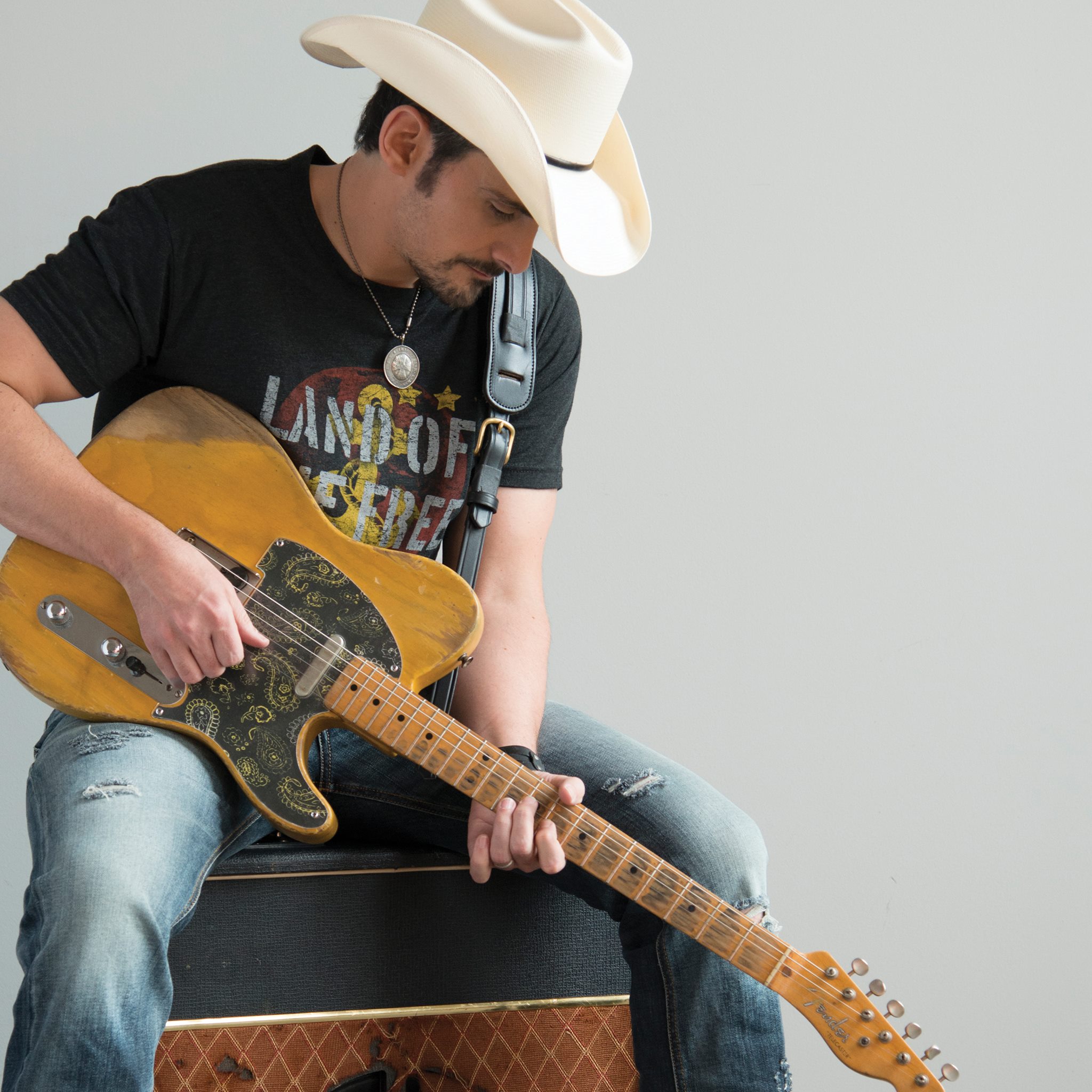
Although chicken pickin’ is a playing style usually associated with country music, it has been used in other genres. Players like Albert Lee, Ray Flacke, Brent Mason, Vince Gill, Johnny Hiland , Tommy Emmanuel and Brad Paisley are experts at this style of playing and most of them play Telecasters, the guitar usually associated with the style. The guitar sound is usually bright and percussive. Having low “action” and using relatively light gauge strings help to get the right sound, too.
Traditionally, the guitar sound is pretty “clean” but Brad Paisley’s sound is a little grittier. You might try an overdrive pedal, but don’t overdo it. A little compression and delay helps, too. To get this sound, you usually use a combination of flat-pick and fingers (called “hybrid” picking ) or thumbpick and fingernails. The Merle Travis, Chet Atkins, Jerry Reed style employs a thumbpick. With a thumbpick, you pick mostly with your index and middle finger, and if you use a flatpick, you use your middle and ring finger. You can use this technique to play Earl Scruggs-ish banjo rolls, too. I’ll give examples of this in the next issue.
Whether you use a thumbpick or not, most chicken-pickers use something on their fingernails to make them harder, because steel strings tend to tear up your fingernails. Jerry Reed was a monster chicken-picker, but he usually used nylon strings, which are much easier on your nails. Chet used acrylic nails, and often wore a golf glove on his right hand to protect them. Some people use nail hardener, cut up ping-pong balls, or superglue. The acrylic nails work well for me, but you have to make sure you get them replaced in a timely fashion. If you’re used to using your nails, and one of them breaks right before a session or a gig, it can get really awkward. “I can’t play right, I broke a nail” is never a cool thing to say.
A common technique used in this style is the use of “double stops” (playing two notes at the same time). These notes are usually a third or a sixth apart. If they’re thirds, the two notes will be on adjacent strings. If they’re a sixth apart, there’ll be a string in between them. I’ll have diagrams in Part 2 to illustrate this.
Another technique used in the chicken-pickin’ style is to emulate a pedal steel by bending notes. You bend one note up a half step or a whole step on the b or g string, while holding another note or notes stationary. When you bend a note, you want to have the exact pitch of the note you’re bending to in your head. Your ear will hopefully tell you when to stop bending.
Yet another technique is doing arpeggios with open strings mixed in with fretted notes. “Jerry’s Breakdown” by Jerry Reed is a classic example of this technique. He has several recorded versions, but the one I like is a duet with Chet Atkins.
Using a lot of hammer-ons and pull-offs also give an added dimension to this style of playing. You can get as many as five notes with one stroke of the pick by combining these two techniques.
You really need to watch somebody do this to get the whole picture. Look for Brent Mason playing “Hotwired” on YouTube and you can see how he does it. He uses all off the techniques mentioned here and makes it sound easy. For him, that is. Then there’s a live version of “One -Way Rider” with Albert Lee, Vince Gill and Danny Gatton trading solos.
To make the best use of these techniques, virtually every great chicken-pickin’ song is in one of the “guitar friendly” keys: A ,E, G, D or C. Unlike rock or blues, soloing in this style doesn’t entail playing patterns based on scales, but using chord shapes and arpeggios. Next issue, we’ll get more into the technical aspects of this style, with diagrams and tablature to illustrate specific techniques.
This article was originally published in the September/October 2012 issue.