WELCOME TO THE PARTY
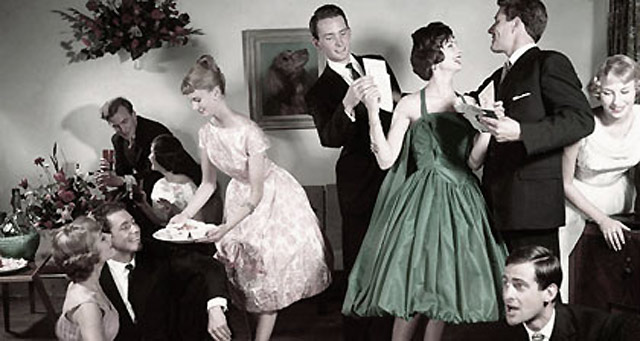
Song form is like a cocktail party. Each person (or section) has a different personality and a specific role to play in the group. In great songs, all the sections come together in a wonderful and fluid musical conversation. Often, musical confusion and or boredom can happen when a section tries to do more than it should.
CONTRAST IS KEY!
It’s not only important to understand what each one of these sections do in a song, it’s also extremely important to note that they are contrasting sections. Meaning, what happens structurally in a section can tell you what NOT to do in another.
So, let’s meet the characters at this party and find out whom everybody is and what they’re supposed to be doing:
VERSE: The Storyteller
Let me introduce you to “Verse”, the poet in your song. He’s the one who’s got all the details, and he can’t wait to share them with you. Like a movie director, he sets the scene, and he’s full of wonderful ways to describe the scenes or emotions in your song. He loves using descriptive tools like simile and metaphor. Musically, he’s usually located in a lower range compared to the Chorus. He’s also in charge of developing the song, moving either the story or the emotion and deepening it as the song goes on.
CHORUS: The Diva
Chorus always speaks right after Verse is done, and she usually repeats herself… A lot. She doesn’t get too involved in the details of things, but is quickly able to summarize what Verse is saying. The line that she repeats is known as the Hook or Title of a song. Musically, the higher the better for Chorus. She enjoys the spotlight, and there’s nothing that makes her shine than being higher in melodic range than Verse. If constructed correctly, it’s easy to sing along with her.
PRECHORUS: The go-between
(aliases Transitional Bridge, Ramp or Build)
When a song has a Pre Chorus, it’s his job to run interference between Verse and Chorus. He creates a musical ramp between the two so that Verse’s conversations flow smoothly into the Chorus. Musically, the prechorus usually has a build type feel.
BRIDGE: The Best Friend
Otherwise known as the Primary Bridge, this guy likes to hang out after verse and chorus have done their thing for a while. Then he chimes in with a section that’s related to the Chorus. Musically, the bridge is usually a departure from the song. He is a bridge to a related subject, and then he comes back into the main form of the song
REFRAIN: Diva’s Sister
Another song form is called the verse/refrain or AABA song form. Refrain is just like her sister Chorus, but she’s a section of few words. Unlike the chorus, refrain is able to boil everything Verse has just said down to one line that sums up the whole situation. Also unlike Chorus who musically likes to have her own space, Refrain likes to stay close to the Verse. Sometimes she’s at the top of the verse and sometimes she’s at the end of the verse. When she’s placed at the end of the verse, Refrain cadences to the tonic (the home base note) melodically so that we, as listeners recognize that she’s important.
I REPEAT: CONTRAST IS KEY!
If your verse is slow, with lots of musical space between lyric lines, then the following section (whether it’s a chorus or pre-chorus) should be more tightly and densely composed. And vice versa. If your verse is densely packed with rhythms and rhyme, open up your chorus. Give it some space to breathe by using longer note values. This is important because sometimes, it can be the cause of “writer’s block” in a song. Sometimes songs don’t get finished because they’re too similar in form and so it feels too long and monotonous.
Here are the most common song forms found in popular music plus some examples for you to listen to.
Verse/refrain, verse/refrain, etc. etc.
Example: Bob Dylan, “Hurricane”
Verse/refrain, verse/refrain, bridge, verse/refrain
Example: Patty Griffin, “Let Him Fly”
Verse/Verse/Chorus, Verse/Verse/Chorus, Bridge, Then Verse/Chorus or sometimes just a Chorus
Musical Example: Green Day, “21 Guns”
Verse/PreChorus/Chorus, Verse/PreChorus/Chorus, (Bridge – sometimes it’s also just a musical break with no lyrics) then Verse/Prechorus/Chorus
Musical Example: Bruce Springsteen, “Glory Days”
Write wonderful sections and make sure they’re communicating effectively with each other and doing what they’re supposed to be doing. Make sure to create contrast and you’ll be surprised at how wonderful the party can be!
Get More Coaching At Songwriter U
Susan Cattaneo is a Boston-based singer-songwriter releasing her fourth album Haunted Heart January 21st (buy it here). Her music has been played on country and Americana radio in over 30 countries, and she recently was a regional finalist for the New Mountain Stage contest. In addition to her performing career, Susan has been teaching Songwriting at the Berklee College of Music for 15 years.