
the faqs.
It’s gorgeous and 80-something-degrees here next to the small lake in my hometown. I should’ve worn shorts because the sun is giving me a burning feeling through my Lululemon leggings. Other than an occasional flock of geese that waddle by, it’s just this sunflower quilt, my Instagram, and me. I just asked the internet to ask me anything about songwriting (because as a songwriter who now moonlights as a rural Kansas prairie mom, I have time for such things). The questions are rolling in, and I thought it might reach more folks if I dug in on the top five most frequently asked questions I get. Drumroll, please.
1. How do you get song ideas?
Song ideas are like little flies buzzing around the world all around you. If you’re not paying attention, you don’t really notice them. You don’t really see them. But if someone asks you to find one, you probably can. You just have to look. Most of my ideas come from listening to others talk. Maybe they’re talking to me. Or maybe they’re talking to someone else. Or maybe they’re a superhero on a kid’s television show or a headline in a magazine. But they will simply not be found if you’re not looking for them. Sometimes one of those little flies lands on your arm and bites you so hard you can’t ignore it. My favorite ideas are when a little word has a buzz to it (like the sound of little fly wings, dare I say?) And I get to figure out how to make that word have a meaning that will take you down a path in your mind. Fly away.
Videos by American Songwriter

2. What is one song you wish you’d written?
Call me cliché, but “The House That Built Me.” The third song I ever wrote was a song called “The House Dad Built.” My dad was a general contractor and quite literally built my childhood house himself. He poured the concrete, framed the walls, and laid the tile, and it took forever. But that mentality of building something brick by brick very much applies to songwriting culture. If you put too much pressure on any one brick to be the magic one that makes your career a masterpiece, you will most likely be disappointed. But if you focus on laying those bricks every day, you will one day look up to see something so tall and sturdy—a catalog—a body of your work that will tell the whole story. When I heard “The House That Built Me,” it made me realize how far I had come since I wrote “The House Dad Built.” No one will ever hear that song. But for a while, it was the best one I had. And if I had stopped there, I wouldn’t have gotten here.
3. What would you tell your younger self?
Nobody else knows what they’re doing either. When I first started co-writing—heck, for my first 5 years of co-writing—I thought I was wearing a sign on my forehead that said, “When will you figure out I’m not supposed to be here?” It was as if the other writers in the room had mastered what I was merely practicing. The effect of that was me not writing what I wanted to hear or what I thought was cool, but instead imitating what I thought I should be writing—mainly to show the other co-writers that I was capable. But the first time I wrote with my close friend Jimmy Robbins in probably 2011, he said, “Just do what you do. That is enough.” And it opened up a whole world to me that had always been there. Years later, on the other side of that room, I still walk in with nerves and uncertainties about what I’m doing. I’m just not pretending like I know anymore.
4. What comes first — music or words?
For me, it’s the words. Every lyric is a conversation and in the most magical of ways—that are definitely bigger than me—the words are the vehicle for my melodies.
5. What advice would you give to a new writer?
If you are truly meant to be a writer, then trust yourself. When a word sounds like a title, trust that little voice that pings you. If the co-write on your calendar doesn’t make a lot of sense at face value, but you are curious about what might happen if you show up, trust that. If everyone in the room likes the line, but you think you can beat it, trust that. If no one bites at the song at first, but you know in your gut it’s great, you can trust that. Because writers are as wrong as they are right. But it is the way you lean on yourself and your own instincts that will take you and your songs where they are uniquely made to go.
Photo by Claire Schaper
More Features
-
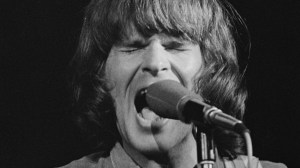
Photo by Archive Photos/Getty Images -
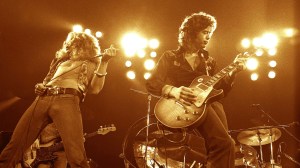
UNITED STATES – JUNE 01: Photo of Jimmy PAGE and Robert PLANT and LED ZEPPELIN; L-R. Robert Plant, Jimmy Page performing live onstage (Photo by Robert Knight Archive/Redferns) -
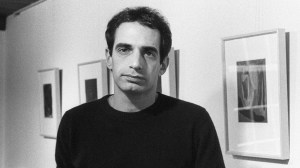
Donald Fagen, (Steely Dan). Pullitzer Hotel, Amsterdam, Netherlands, 10th December 1982, (photo Rob Verhorst/Redferns) -
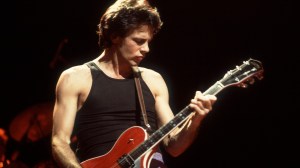
Rick Springfield at the Holiday Star Theater in Merilville, Indiana, November 18, 1981. (Photo by Paul Natkin/Getty Images) -
James Taylor -

Jo Dee Messina on 9/15/98 in Chicago, Il. (Photo by Paul Natkin/WireImage) -
UNSPECIFIED – JANUARY 01: Photo of Buck Owens (Photo by Michael Ochs Archives/Getty Images)