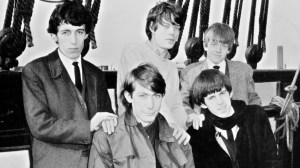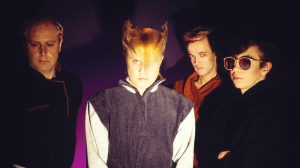
They were both immensely talented rock bands. They both enjoyed careers that lasted for a chunk of the 1970s. But one band became one of the biggest acts of the era, while the other fell into obscurity. I’m talking about Led Zeppelin and Big Star, the latter of which is one of the most underrated acts of the 1970s. They could have easily been as big as Led Zeppelin. But because of some notably poor decisions on behalf of their label, Big Star only lasted a handful of years before breaking up in 1975, without much in the way of charting success.
It’s an unfortunately common tale that seems to affect genuinely talented musicians a lot, even way back in the 20th century. Without the right backing and the right promotional choices, even the greatest musicians among us slip through the cracks.
Videos by American Songwriter
Big Star should have been big stars. Today, they’re known as one of the pioneers of what we know as “jangle pop.” “Thirteen” is beloved by many, but not nearly as many as the song deserves. And the only reason Big Star didn’t flourish during their heyday was because of their label.
Big Star Never Got as Big as They Should Have Because of Label Tomfoolery
Big Star released two records while together. Four total, not including live records in retrospect. But they achieved little in the way of commercial success in the early 1970s. They would come to an end in 1975 after just a few years together. Though, they would reunite in 1993 before coming to a final end in 2010. They really shone in the 70s, though, and I was surprised to learn that fans weren’t blinded by their light at the time.
That was because their original label, Stax, was ill-equipped to distribute rock music records. Drew DeNicola, the filmmaker behind the Big Star documentary Big Star: Nothing Can Hurt Me, once gave some insight into the band’s downfall in 2013.
“With the first record, it was that Stax wasn’t equipped to be distributing rock records,” DeNicola explained. “They had relationships with mom-and-pop record stores in Black neighborhoods. [The] promo guys really didn’t know what to do with Big Star. With the second record, it had to do with what seemed to be a great idea: it was gonna be that Columbia was gonna distribute Stax, and then they would have gotten that stuff into big-box retail outlets. But what happened there was Clive Davis, who’s hugely known in the music world, was the one who brokered that deal… and then he was fired. So the whole thing fell apart after that.”
Big Star was never as big as Led Zeppelin, but they certainly deserve way more retrospective attention and reverence today. I recommend giving #1 Record and Radio City a spin.
Photo by Michael Ochs Archives/Getty Images
More Features
-

NASHVILLE, TENNESSEE – SEPTEMBER 25: Dallas Frazier performs at "Songs That Tell a Story," the final Marty Stuart Artist-in-Residence Show at Country Music Hall of Fame and Museum on September 25, 2019 in Nashville, Tennessee. (Photo by Terry Wyatt/Getty Images for Country Music Hall of Fame and Museum) -
Alice Cooper posing in his hotel room, Amsterdam -
April 1964: Legendary American rock'n'roll singer Roy Orbison (1936 – 1988) at Dolphin Square in London. (Photo by Moore/Fox Photos/Getty Images) -
HOLLYWOOD – DECEMBER 13, 1975: Disco singer Gloria Gaynor performs a song on December 13, 1975, in Hollywood, California. (Photo by Michael Ochs Archives/Getty Images) -
Singer Mahalia Jackson singing at reception in hotel. (Photo by Don Cravens/Getty Images) -

Circa 1965, American country singer and songwriter Loretta Lynn performs on stage at the Grand Ole Opry, Nashville, Tennessee, 1960s. (Photo by Getty Images/Getty Images)